
The Hotel Opening That Should Never Have Happened: A Missed Opportunity in Salou

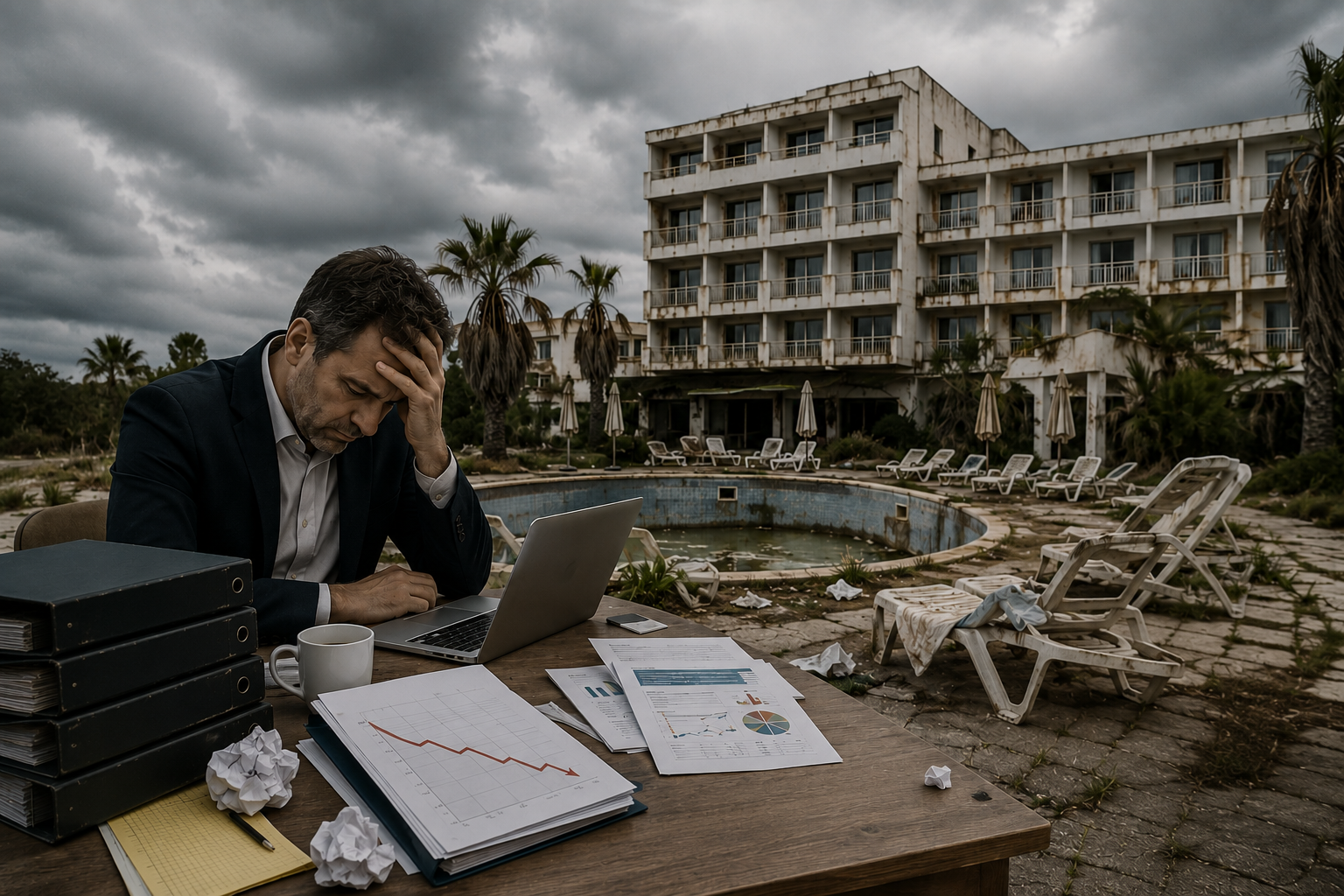

There are professional experiences one remembers with satisfaction because they made it possible to build something valuable. Others are remembered for the results achieved, the teams developed or the challenges overcome. And then there are those experiences that remain in one’s memory because they represent exactly the opposite: projects that had every ingredient for success and yet ended up wasting much of their potential due to a series of poor decisions that could have been avoided.
Years ago, I took part in the pre-opening and opening of a large resort hotel in Salou. This was not a small independent property or an experimental project. We are talking about a hotel with more than 350 rooms, located in one of the Mediterranean’s most established tourist destinations. A destination with decades of experience welcoming domestic and international visitors, an exceptional hotel tradition, and competition made up of properties that had spent years refining their products, services and operations.
For that very reason, opening a hotel in Salou required more than sound investment. It required respect for the market. It required understanding that guests had multiple alternatives and that competing against well-positioned hotels demanded flawless execution from day one. There was no room for improvisation. There was no room for learning on the job. There was no room for basic mistakes.
However, from the first months of the pre-opening, I began to notice signs that deeply concerned me. Construction was not progressing at the pace required to ensure a proper summer opening. The rooms were visibly behind schedule. The public areas had still not been fully completed. Recruitment was moving far more slowly than a hotel of that size required. Middle managers were arriving late, or had simply not joined at the point when they should have been actively involved in developing the operating procedures.
My professional responsibility was to raise those risks. And that is exactly what I did.
I remember expressing my concerns on numerous occasions about the actual opening timeline. It was not a matter of pessimism, nor a lack of commitment to the project. Quite the opposite. The more involved I became with the hotel, the more evident it was that we were taking unnecessary risks. I even closed certain dates for sale because I understood that we would not be able to deliver the guest experience that was being promised. Those dates were later reopened by head office because the high season had to be capitalised on.
That situation caused me enormous frustration. Not because someone might disagree with my judgement. Disagreement is part of any healthy organisation. What was truly concerning was seeing that decisions seemed to be driven more by wishful thinking than by reality. As though acknowledging the project’s limitations were more dangerous than ignoring them. As though accepting that we would not be ready in time were a greater defeat than opening a hotel that was unprepared to open.

Stop managing isolated systems. Start managing the whole hotel.
HotelGEX connects guests, operations, Revenue, F&B, Groups & Events and Management into one intelligent hotel context — so every decision starts with a clearer picture.
Over the years, I have come to the conclusion that those were not really execution issues. For a long time, I thought construction was delayed, recruitment was progressing slowly, or there were shortcomings in planning. Today, I believe all those factors were simply consequences of something far deeper. The real problem was the culture that had taken hold around the project.
That culture stemmed directly from the management approach of the person holding ultimate executive responsibility within the organisation. There was a constant conviction that reality would eventually adapt to decisions made from the top, regardless of any evidence to the contrary. Operational warnings appeared to hold little value when they conflicted with a decision that had already been made. Rather than an environment in which ideas were analysed and debated, it often felt like an organisation where decisions had already been taken and everyone else was simply expected to execute them.
The most disappointing aspect of that experience was not discovering that someone could make mistakes. We all make mistakes. What was truly frustrating was observing how the organisation seemed incapable of listening to information that contradicted its own expectations. When a company stops listening to those closest to the operation, it also stops learning. And when it stops learning, it inevitably begins making increasingly costly mistakes.
Some decisions are still difficult for me to understand today. One of them was the obvious imbalance between the capacity of certain services and the volume of guests the hotel was expected to accommodate. It was difficult to understand how a property with more than 350 rooms could have a restaurant that was clearly insufficient to comfortably meet expected breakfast demand. When I raised this concern, the response was that we should organise seating shifts.
The response itself did not surprise me as much as the reasoning behind it. This was not about correcting a structural limitation. It was about accepting it as inevitable and shifting responsibility for managing it onto the operation. The same applied to other aspects of the project. The inadequate number of sun loungers for hundreds of guests was another example. The solution was never to acknowledge a planning error. The solution was always to improvise, adapt or find ways to live with it.
Over time, I understood that this way of operating was not the result of isolated decisions. It was part of a management philosophy according to which structural problems had to be permanently absorbed by operational teams. As though excellence meant compensating for mistakes rather than preventing them.
However, there was one specific conversation that definitively shaped my perception of the project. The decision had been made to outsource the housekeeping department and, when I voiced my reservations, I heard a statement that I still consider one of the most bewildering I have heard in my professional career.
The explanation was that departments which did not add value could be outsourced, and that housekeeping was one of them.
I remember exactly how that statement made me feel. It was not merely disagreement. It was bewilderment. Because it revealed a profound misunderstanding of what a guest is actually buying when they book a hotel room.
Books to run a hotel with judgement
Written from the general manager’s chair: technology, guest experience, leadership and management.
 Directing HotelsWhat Nobody Tells You Before You Sit in the General Manager’s Chair
 The Intelligent HotelData, Artificial Intelligence and a New Way to Run Hotels
 The Guest JourneyDesigning Customer Experience Across the Entire Hotel Journey
 Leadership and High-Performance Team ManagementPeople, Experiences and Results in Today\\\'s Hospitality
Guests are not simply buying a bed to sleep in. They are buying trust. They are buying peace of mind. They are buying the assurance that what they have booked will meet the expectations created before their arrival. And a huge part of that perception depends precisely on the work carried out by the housekeeping department. To consider it as not adding value is to misunderstand the very essence of the hotel business.
When opening day finally arrived, exactly what many of us had feared happened. There were unfinished rooms, rooms that could not be put into service, procedures that had yet to be fully established, and teams that had barely had time to get to know one another. I remember finding myself surrounded by professionals I did not know, and who did not know me either. Many of them held positions of responsibility within the hotel and had been recruited without those of us who were expected to lead the operation being able to take part in the process.
It created a strange feeling: trying to build a team while the match was already being played; trying to implement procedures while guests were already arriving; trying to create a culture while the operation demanded immediate answers.
Then the guests arrived. And with them came the first reviews.
The negative reviews did not surprise me. Many of them reflected exactly the issues that had been flagged for months. What did surprise me was the organisation’s response to the situation. Rather than thoroughly analysing the causes of the complaints, reviewing processes or correcting structural failures, it began pursuing a strategy aimed at generating positive reviews that could offset the negative ones and push them further down the online platforms.
I remember that moment with a deep sense of professional disappointment. Because I understood that the priority was no longer to solve the problems. The priority was to manage the perception of the problems.
And there is an enormous difference between the two.
Excellent organisations use criticism to learn. Mediocre organisations use criticism to defend themselves. And the worst ones try to hide it.
The problem is that reality always prevails in the end. Especially in destinations such as Salou, where guests are constantly comparing, where competitors operate at a very high level, and where reputation is built day by day through real experiences, not through strategies designed to disguise results.
Perhaps what still saddens me most about that experience is that many of the problems were entirely avoidable. They were not the consequence of an economic crisis, a pandemic or an extraordinary market circumstance. They were the consequence of decisions. And when problems arise from poor decisions, it is inevitable to wonder how many opportunities have been wasted along the way.
Even today, I remain convinced that hotel had everything it needed to become a benchmark within its destination. It had the location, the investment, the market and the potential. That is precisely why it remains one of the most disappointing experiences of my career. Because it taught me that hotels rarely fail due to a lack of resources. Much more often, they fail when they stop listening, when humility disappears from meeting rooms, and when ego occupies the space that should be reserved for knowledge, experience and common sense.
This article ends here. The archive does not.
Lead Hospitality brings together 1200 English articles published since 2018: years of experiences, decisions and lessons you can keep exploring.
What would you like to explore next?
Choose a direction and keep reading around what you want to solve, learn or challenge.