
The “We’ve Always Done It This Way” Culture: The Silent Threat Holding Hotels Back

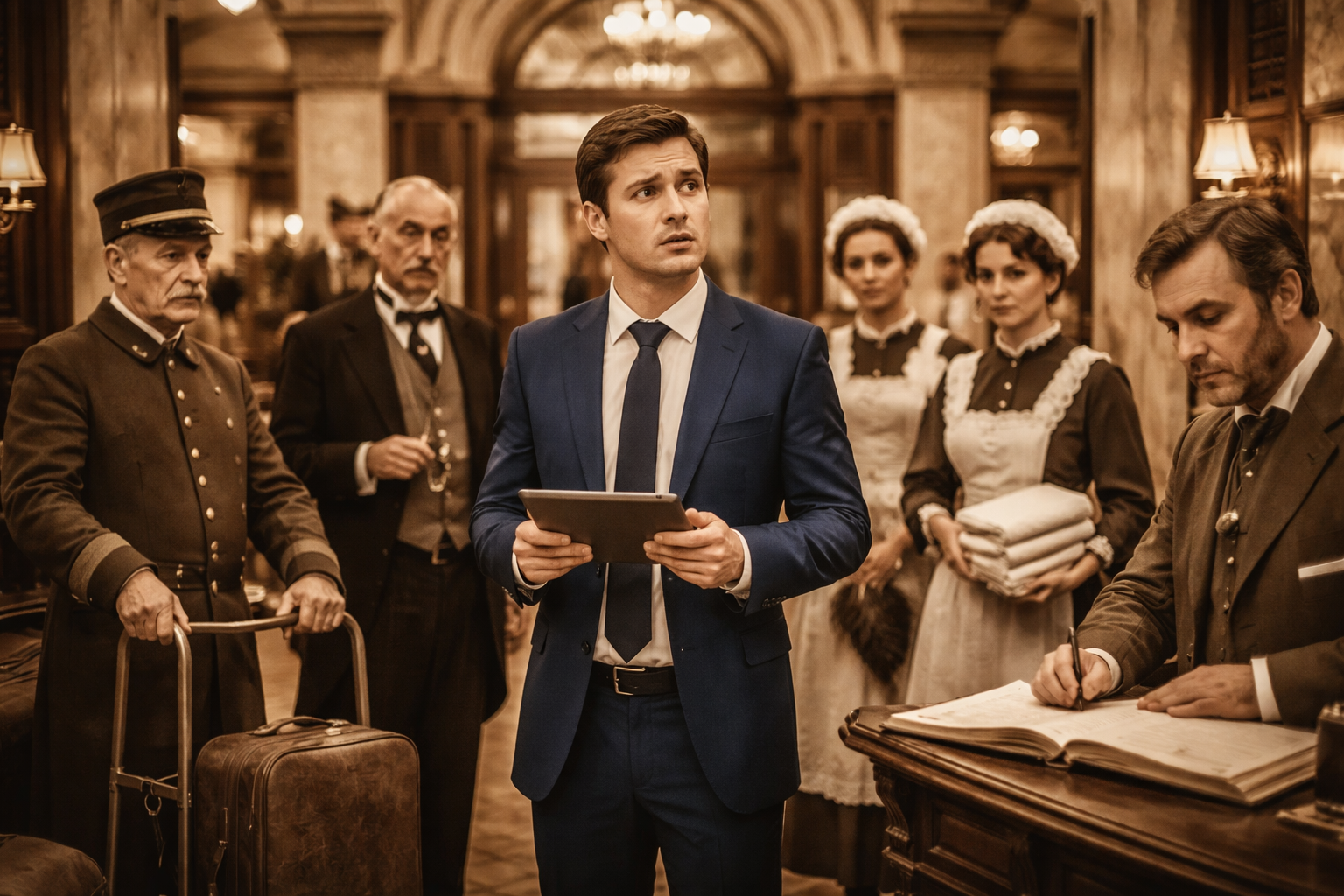

There are phrases that, when they surface in a leadership meeting, serve as a quiet warning that something is not right. They are not insults, open criticism or ill intent. In fact, they are often said naturally, almost with pride.
One such phrase is “that’s how we’ve always done it”.
I have heard it in hotels of every size: from small family-owned properties to large establishments with complex structures. And it always has the same effect: it freezes the conversation, blocks critical thinking and brings any attempt at progress to a halt.
The problem is not tradition. Hospitality relies heavily on it.
Service rituals, attention to detail and respect for certain standards are part of the essence of the sector. The real difficulty arises when tradition becomes an excuse not to think.
When an organisation stops questioning why it does what it does, innovation quietly disappears. And the most dangerous part is that no one notices immediately. For a while, everything continues to work… until one day the market moves forward and the hotel is left behind.
In my experience, organisational inertia is one of the greatest enemies of progress in hospitality. It does not appear in financial reports or management dashboards, yet it may be the factor that explains why some hotels thrive while others merely survive because of their location or heritage.

When tradition becomes a strategic constraint
The culture of “that’s how we’ve always done it” does not emerge by chance. In many hotels, it is the result of years of operational stability, teams that have learned to solve problems by repeating familiar formulas, and structures that reward continuity more than reflection.
The problem arises when that stability turns into inertia.
I have observed several very clear symptoms that tend to emerge in organisations trapped in this mindset:
- Processes that no one can explain. Many hotels have procedures that are followed to the letter, but when someone asks why they are done that way, no one really knows how to answer. The process is repeated because it has always been repeated. And when a system is maintained without reflection, it stops evolving.
- Teams that execute but do not question. One of the clearest indicators of a stagnant culture is when the team stops suggesting improvements. Not because they lack ideas, but because they have learned that there is no room to question how things are done.
- Decisions based on habit rather than strategy. The promotions calendar, packages, pricing policy or even the way shifts are organised sometimes respond more to the hotel’s history than to current strategic thinking.
- Fear of changing what “works”. This is perhaps the most common argument: “if it works, why change it?” But in reality, many things work simply because the market has not changed enough yet.
- A false sense of operational security. Repetition creates comfort. But comfort rarely creates competitive advantage.
Paradoxically, many hotels believe they are protecting their stability when, in reality, they are weakening their ability to adapt.
Organisational inertia: the invisible enemy of progress
There is a curious phenomenon in hospitality: many companies consider themselves dynamic because they operate in a highly active sector. But operating in a dynamic environment does not necessarily mean being dynamic.
A hotel may have high occupancy, an experienced team and a strong reputation… and still be deeply stagnant in its way of thinking.
Organisational inertia tends to manifest itself at several levels:
- Operational inertia. Procedures remain unchanged for years. No one reviews whether they are still efficient or whether today’s guest expects something different.
- Commercial inertia. The hotel continues to sell to the same type of guest, the same segments and with the same value propositions it used a decade ago.
- Cultural inertia. New ideas create discomfort. Not because they are bad, but because they require deeply ingrained habits to be questioned.
- Leadership inertia. Those in charge end up spending more time maintaining the system than rethinking it.
The result is that the hotel enters a kind of organisational autopilot mode.
It works. It operates. It generates revenue. But it stops evolving.
And in a sector where guests are constantly changing—their expectations, consumption habits, price sensitivity and perception of service—standing still is the equivalent of moving backwards.
Why some hotels evolve while others remain trapped
I have observed that hotels that manage to evolve share one very clear cultural trait: they do not accept inherited processes without questioning them regularly.
My published books
This does not mean they change everything all the time. It means they understand that every procedure must have a current strategic purpose.
In these hotels, uncomfortable but necessary questions emerge:
- Why do we sell this package and not another?
- Why do we continue to segment this way?
- Why does this process take so long?
- Why should the guest have to adapt to our system rather than the other way around?
These questions create something very powerful within an organisation: operational critical thinking.
In hotels where this happens, the team does not merely execute. It thinks too.
And that completely changes the dynamics of the business.
How to break the culture of “that’s how we’ve always done it”
Changing an organisational culture cannot be achieved through motivational speeches or occasional brainstorming sessions. It requires a consistent discipline of review and questioning.
In my experience, several practices can go a long way towards breaking this inertia:
- Audit processes every year. Not to verify whether they are being followed, but to ask whether they still make sense.
- Invite new perspectives to question the system. People who come from outside can often see inefficiencies that those who have been in the organisation for years no longer notice.
- Measure results, not traditions. If a procedure exists only because “it has always been that way”, it probably has no valid strategic rationale.
- Create a culture in which asking questions is not uncomfortable. When teams feel that questioning is risky, they stop doing it.
- Separate respect for tradition from resistance to change. Tradition can inspire a hotel’s identity. But it should never limit its evolution.
Hospitality is a fascinating industry because it combines tradition, human service and constant adaptation to the market.
But precisely because of this particular combination, the greatest risk is not always competition or technological change. Sometimes, the greatest risk is organisational comfort.
If you ever hear the phrase “that’s how we’ve always done it” in your hotel, it may not be a sign of stability.
It may be an invitation to ask the most important question of all:
What if it should no longer be done that way?
This article ends here. The archive does not.
Lead Hospitality brings together 1200 English articles published since 2018: years of experiences, decisions and lessons you can keep exploring.
What would you like to explore next?
Choose a direction and keep reading around what you want to solve, learn or challenge.