
Leadership Styles in Hospitality

Albert BarraOctober 6, 2022 · 6 min read
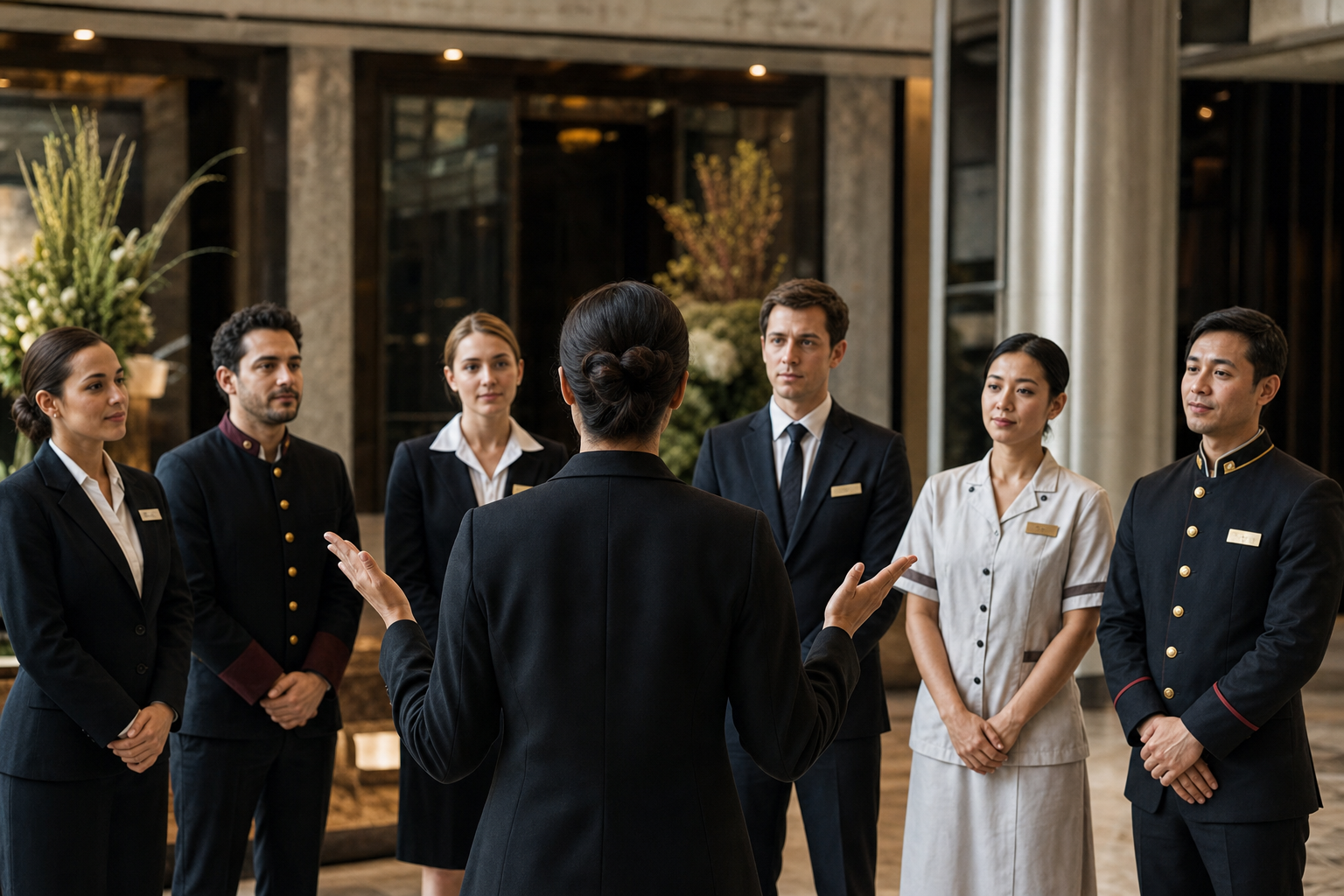

Leaders play a crucial role in a successful business environment. The hospitality industry has suffered a major setback due to the Covid-19 pandemic.
Therefore, it is crucial for hospitality leaders to step up and support the recovery process. This article explores some of the best leadership styles for a successful career in hospitality.
Highly successful leaders use a combination of leadership styles or just one selective approach.
Leadership is a fluid activity that is constantly evolving and driving business growth. The most appropriate style is determined by an organisation’s culture and vision.
Everyone should adopt a management style that suits their strengths and personality.

Becoming a great leader in the hospitality industry is not for everyone, but we can all at least take the right step. To move in the right direction, it is crucial to know what types of leadership styles exist in the hospitality business sphere. The most significant leadership styles for a successful career in hotel management are discussed below:
Transformational Leadership
Transformational leadership is considered a fundamental strategy for building success. Through effective communication and teamwork, transformational leaders motivate and inspire their teams, setting them on the path to success. This can be a game changer in the hospitality industry, as it is highly people-focused. They set challenging goals and high expectations for every hospitality employee, resulting in improved performance. Characteristics of transformational leadership in the hospitality industry:- Ability to take appropriate risks
- Take risks and make difficult decisions.
- Share your company’s collective awareness.
- Motivate those around them
- Embrace new ideas.
- Although the leader has the final say on decisions, group members are encouraged to contribute their thoughts and opinions.
- Promotes creative values.
Democratic Leadership
Democratic leadership is another highly popular leadership style across all industries. It is also known as participative leadership, as it allows hospitality leaders to frequently seek help and input from their subordinates. Individual creativity can benefit the hospitality organisation, and this leadership category often delivers higher levels of job satisfaction. However, because this technique involves more than one person in the decision-making process, it takes longer to implement and show results. Characteristics of democratic leadership:- Although the leader has the final say on decisions, group members are encouraged to contribute their thoughts and opinions
- Promotes creative values.
Laissez-Faire Leaders
In French, the phrase ‘laissez-faire’ literally means ‘let them do’. Leaders who adopt a laissez-faire approach are recognised for their hands-off style, which has been criticised for its weak definition of the management role. In creative roles and businesses with experienced staff, this leadership approach is beneficial. However, to make the most of this type of leadership, active performance monitoring and clear communication of expectations from the leader are required. Think of leading hoteliers such as Ritz-Carlton and Bill Marriott as examples of this leadership style. Characteristics of laissez-faire leadership- Taking a hands-off approach
- Training and support
- Employees make decisions.
- Recognition and acceptance of shortcomings.
Transactional Leadership
Someone who emphasises order and structure in their work is referred to as a transactional leader. They are likely to be responsible for military operations, large businesses, restaurant operations, or multinational projects that require rules and procedures to meet deadlines or move people and materials in an orderly manner. Hospitality leaders and chefs who employ this approach focus on specific duties and inspire their followers through rewards and penalties. MasterChef classes and popular programmes such as those featuring celebrity chef Gordon Ramsay demonstrate this type of leadership style. Characteristics of transactional leadership:- Well-structured policies and procedures are desirable.
- Strict adherence to instructions.
- Increases efficiency and productivity
- Tendency to be inflexible.
- Resistant to change
Autocratic Leadership
Autocratic or dominant bosses exert control over their staff and rarely accept or acknowledge the opinions or recommendations of their subordinates. Staff rarely respect leaders who rule with an iron fist, which can lead to high turnover and absenteeism. Flexibility is uncommon in an autocratic workplace. The hospitality industry appears to have evolved away from this type of leadership style. However, many hospitality organisations and their leaders still seem resistant to change. Characteristics of autocratic leadership:- Allows very little participation from organisation members and requires leaders to make virtually all decisions.
- Allows leaders to impose their techniques and work processes.
- Makes the group feel that they are not trusted with key decisions or responsibilities.
- Tends to produce highly organised and inflexible situations.
- Encourages ingenuity and original thinking, but discourages originality.
- Establishes regulations that are usually well defined and articulated.
Charismatic Leadership
A leader who uses their communication skills, persuasion and charm to influence others is described as charismatic. Because of their ability to connect with people on a deep level, charismatic executives are especially effective in businesses facing a crisis or striving to move forward. This is the leadership style the hospitality industry needs at this moment to recover in style. Characteristics of charismatic leadership Every charismatic leader therefore has a unique presence. However, most charismatic leaders share several crucial characteristics:- Excellent communicator
- Compassionate and relatable
- Confident
- Motivational
- Captivating and charming
- Optimistic
Strategic Leadership
This leadership style involves a leader who is effectively the organisation’s highest authority. Strategic leaders, however, are not limited to the company’s most senior executives. They engage a broader range of people at every level who aspire to live, work, or lead a high-performing life, team, or organisation. Because of its particular focus, this is considered the most preferable leadership style. Key characteristics of strategic leadership in hospitality- Senior management involvement
- Large-scale resource requirements have an impact on a company’s long-term success.
- Future-oriented
- Cross-functional or multi-business implications
- Decisions that are not self-generating
Bureaucratic Management
Bureaucratic leadership paradigms are best suited to administrative organisations where rules must be followed and a hierarchy must be established. It is easy to relate this type of management to the hospitality industry. This leadership style establishes a fixed code of instructions, regulations and guidelines that leaders strictly observe and ensure their employees comply with as well. Hotel management is deeply rooted in this type of management and, therefore, leaders need a paradigm shift to move towards transformational leadership. However, this type of management can be beneficial for the hospitality industry due to shrinking profit margins and increased competition. Characteristics of bureaucratic management- Well-organised management focused on procedures, not necessarily on people.
- A genuine hierarchical system.
- Task-oriented and diligent