
Spain Accommodation Barometer 2026 Confirms a Strong Moment for Hotels — But It Also Sounds a Warning


The publication of the 2026 Accommodation Barometer in Spain, produced by Booking.com and Statista, offers an excellent snapshot of the mood within our sector. The data convey optimism, growth and confidence. And, frankly, I believe this is good news for everyone involved in Hospitality.
However, as I read the report, I could not help asking myself one question: are we interpreting these results correctly?
Because enjoying favourable conditions is one thing; building a business that is prepared to remain competitive when those conditions change is quite another. The difference between the two may seem small when demand is strong, but it becomes enormous when the market stops driving growth.
In my view, that is the real takeaway from the report. The data point to a strong sector, with improved expectations, greater investment, higher occupancy and a clearly more positive business outlook than that seen the previous year.
But they also reveal a warning that should not be ignored: favourable market conditions cannot replace strategy, leadership, operational efficiency or the development of a strong value proposition.
Much More Than Optimism: What the Barometer Is Really Telling Us
The figure that probably best encapsulates the current state of Spanish Hospitality is that 82% of hoteliers expect their business to develop positively over the next six months, while 76% consider their property’s current situation to be good. In addition, seven out of ten professionals report having experienced positive developments over the past six months.
These are excellent figures, particularly when compared with the European average and other Mediterranean markets. They reflect confidence, recovery capacity and a clearly favourable business outlook.
But it is precisely when things are going well that it becomes easiest to stop questioning whether we are actually improving. I have seen hotels take credit for successes that really belonged to the market. When demand rises, almost everyone improves their results. The difference becomes apparent when the market stops driving growth.
That is when the hotels that have worked on their value proposition, the quality of their teams, the efficiency of their processes, guest loyalty and the consistency between price, service and experience are the ones that endure.
That is why I believe the greatest risk reflected in this Barometer does not appear in any of its charts. It is overconfidence.
Another particularly interesting finding is that more than 60% of Spanish accommodation providers have increased both their average daily rate and occupancy, clearly recovering the momentum seen before the slowdown of 2025. Access to financing is also improving, while investment intentions are growing once again.
All of this is positive, but I do not believe the future will depend solely on continuing to increase ADR. Every additional euro a guest pays automatically raises their expectations. Today’s guest compares much more closely, reads reviews, notices details, weighs up experiences and expects to receive value that is clearly superior to the price paid.
The next competitive advantage will no longer be simply selling more expensive rooms. It will be ensuring that guests leave convinced they would have paid even a little more for the experience they received.
And that difference is not created by Revenue Management alone. It is created by people, execution, hotel culture and the ability to turn a commercial promise into a real experience.
- Raising prices without elevating the experience is a fragile strategy. It may work during a cycle of strong demand, but it ultimately erodes the perception of value and increases guest sensitivity to any failure.
- Increasing occupancy without controlling operations can destroy profitability. More rooms sold do not always mean better results if overtime, incidents, compensation costs and team fatigue increase.
- Investing is not simply about refurbishing. It also means improving processes, training middle managers, reviewing standards, reinforcing security, optimising distribution and taking care of the employee experience.
One of the sections that caught my attention most is the one devoted to digital resilience. Spain shows a higher level of preparedness than the European average. 72% of accommodation providers consider their level of cybersecurity preparedness sufficient, although at the same time 13% acknowledge having experienced an incident over the past year, almost double the European average.
Rather than interpreting this solely as bad news, I believe it may mean that Spanish hotels are better at detecting incidents because they have more controls in place and a stronger security culture.
However, I continue to see a common mistake: treating cybersecurity as a matter exclusively for the IT department. It is not. It is a strategic and operational matter.
A PMS outage, an interruption to the payment system, fraud, a data breach or prolonged unavailability of sales channels can directly affect revenue, reputation and guest confidence.
For this reason, senior management must know, at a minimum, the contingency protocols, backup systems, critical access points, internal responsibilities and communication procedures in the event of an incident.
Hotel cybersecurity is not demonstrated by a folder full of procedures. It is demonstrated when a hotel can continue operating under pressure without losing control of the business.
The report also confirms that seasonality remains one of the major structural challenges facing Spanish Hospitality. The main tool used to combat low demand continues to be discounting, accompanied by more flexible cancellation policies, collaboration with digital platforms, facility adaptations, local partnerships and event organisation.
All of this makes sense. But I still believe that, in many cases, we are addressing the symptoms rather than the cause.
It is not enough to sell at lower rates out of season. We need to create reasons to travel out of season.
The difference is enormous.
Hotels that simply lower prices end up competing with one another. Those that develop gastronomy, wellness, sports, culture, nature, meetings, themed break or relevant event propositions are able to compete against seasonality itself.
And that is a far smarter battle.
- A discount may accelerate a decision, but it rarely creates desire. If guests cannot find an appealing reason to travel, a lower rate may not be enough.
- Reducing seasonality requires a product offering. It cannot be achieved through campaigns alone, but through experiences that make sense during lower-demand months.
- The destination is part of a hotel’s inventory. Partnerships with restaurants, producers, shops, cultural organisations, sports facilities and local organisers can expand the offering without requiring the hotel to take on the full investment.
- Flexibility must be designed thoughtfully. Making booking easier is positive, but an excessively flexible policy can increase cancellations, disrupt forecasting and undermine demand quality.
Another particularly interesting aspect is the growth of event-driven tourism. 61% of accommodation providers state that they have received this type of demand, while 72% report a direct increase in room revenue as a result of these events.
However, the study itself reminds us of something we often forget: events also create operational pressure, increase workloads, alter the usual guest profile and can negatively affect the experience of other guests if they are not planned properly.
Filling a hotel for a weekend always seems like good news. But doing so while damaging the satisfaction of guests who might otherwise return over the next ten years can become bad business.
Profitability should never be measured by occupancy alone.
When an important event takes place, most hoteliers raise prices, adjust schedules, pay overtime, tighten terms and conditions, introduce length-of-stay restrictions and shift inventory towards the direct channel. All of these are logical decisions, but they must be integrated into an overall plan.
An event should not be managed as a simple anomaly in demand. It should be treated as an operational micro-scenario, with its own forecast, segmentation, staffing, commercial policy, security plan, communication strategy and experience monitoring.
I also find the section dedicated to consumer confidence in online booking highly relevant. The factors valued most are surprisingly straightforward: immediate access to customer service, data protection, clear presentation of the total price, secure payment processing, and transparent cancellation and refund policies.
It is curious. We invest enormous amounts in advertising, creativity, campaigns and automation, yet we sometimes forget that trust remains one of the main commercial drivers.
Without trust, there is no conversion. And without conversion, there is no marketing strategy that works.
Guests do not simply need to find a good offer. They need to understand it, trust it and feel that someone will respond if a problem arises.
That is why transparency should not be regarded as an administrative obligation. It is a positioning tool.
The Barometer also devotes considerable attention to the local impact of accommodation providers. Nearly half of Spanish hotels allocate more than 50% of their non-labour operating budget to local suppliers, while 49% open certain facilities to local residents who are not staying at the property.
This figure confirms something I consider essential: a hotel should not operate with its back turned to its surroundings.
The restaurant, spa, terrace, meeting rooms, cultural activities or certain services can become points of connection with the community, diversify revenue and reinforce the property’s social legitimacy.
Books to run a hotel with judgement
Written from the general manager’s chair: technology, guest experience, leadership and management.
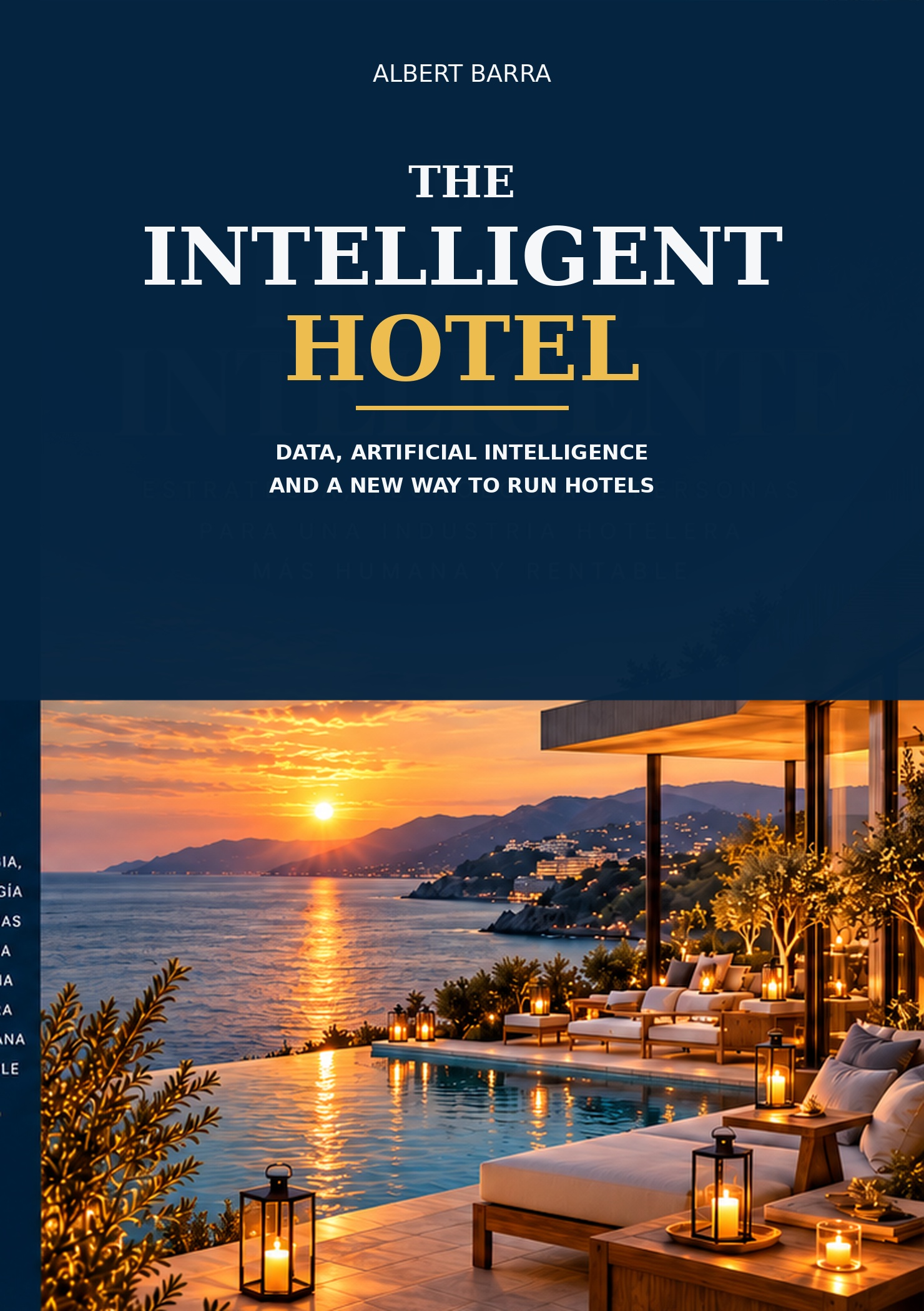 The Intelligent HotelData, Artificial Intelligence and a New Way to Run Hotels
 Directing HotelsWhat Nobody Tells You Before You Sit in the General Manager’s Chair
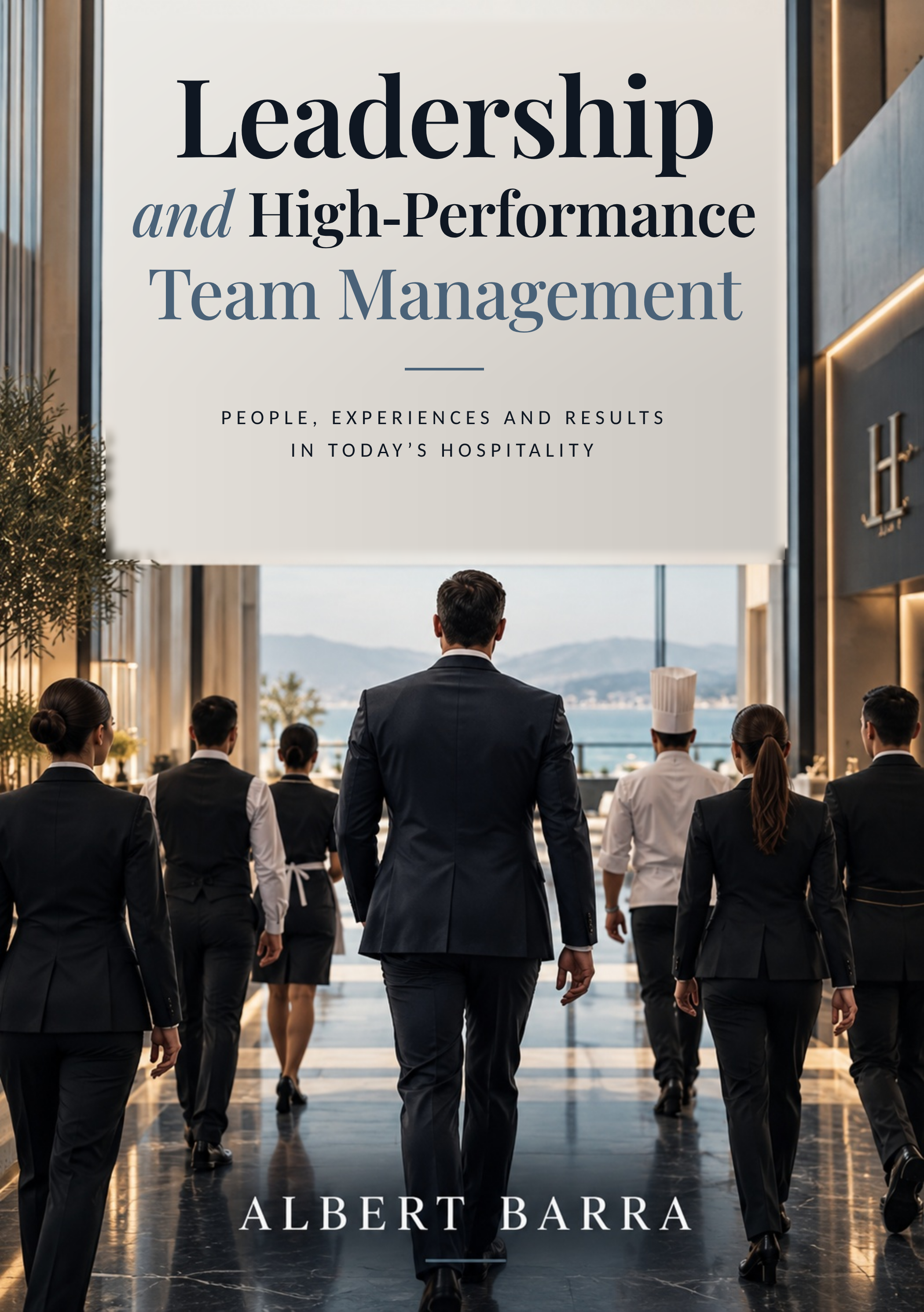 Leadership and High-Performance Team ManagementPeople, Experiences and Results in Today\\\'s Hospitality
 The Guest JourneyDesigning Customer Experience Across the Entire Hotel Journey
Local integration also contributes to the authenticity of the experience. A hotel that buys locally, hires locally, collaborates and participates in its area is more likely to offer hospitality with its own distinctive identity.
Meanwhile, the report notes that more than eight out of ten Spanish accommodation providers already collaborate, or would be willing to collaborate, with local authorities in emergency situations. This willingness demonstrates that Hospitality plays a far broader role than simply providing accommodation.
Hotels are infrastructures for welcoming people, logistics, food provision, communication and shelter. In certain circumstances, they can become essential allies in a community’s resilience.
The regulatory burden is also significant. 61% of accommodation providers state that they have had to adapt their administrative processes as a result of new legislation, while 37% consider this adaptation burdensome.
This figure reflects an everyday reality: regulatory complexity consumes time, resources and management attention. This is not about questioning the need for regulations, but about recognising that every new obligation requires processes, training, control and follow-up.
In independent hotels, where the organisational structure is usually leaner, this burden can draw management teams away from essential strategic and operational tasks.
Regarding institutional promotional campaigns, the report states that 81% of respondents have not yet noticed an appreciable change in demand. This result does not necessarily mean that these campaigns are ineffective, but it does remind us that promoting a destination requires time, coordination, continuity and a genuine product proposition.
Communication can attract attention. But only the experience can establish sustained demand.
My View: The Report Is Positive, but the Future Will Be Decided Inside Hotels
My overall assessment of the Barometer is positive. It reflects a Spanish Hospitality sector that is dynamic, confident, investing and better prepared than many other European markets.
However, I also believe we must avoid an overly complacent interpretation. A sector can grow while simultaneously accumulating weaknesses. It can improve rates while eroding margins. It can increase occupancy while exhausting its teams. It can invest in facilities while neglecting its service culture.
That is why I would have liked to see greater attention paid to leadership, the employee experience, team engagement, productivity, absenteeism, training and the quality of middle management.
The report addresses investment, technology, pricing, distribution, regulation, events and seasonality. But it barely explores the most important asset of any hotel: its people.
I am convinced that the true competitive difference in the coming years will not lie solely in having the best PMS, the best RMS or the most efficient distribution channel.
It will be defined by hotels capable of building engaged teams, strong cultures and organisations that continually learn.
Because technology can be purchased.
Refurbishments can be copied.
Commercial strategies can be imitated.
What remains genuinely difficult to replicate is an excellent service culture.
I also believe it is important to interpret the study’s methodology with caution. The Spanish sample consists of 80 professionals within a European survey of 1,240 participants. It is a valuable basis for identifying trends, but it should not be used as though it were an absolute description of the full diversity of Spanish accommodation.
In addition, some of the interviews coincided with increased geopolitical tensions in the Middle East, a context that may have influenced perceptions of risk and expectations.
The value of the Barometer, therefore, does not lie in offering a definitive truth, but in highlighting trends that each hotel should test against its own reality.
I would use the report as a starting point for asking some uncomfortable questions:
- Does our growth come from a genuine improvement in positioning, or simply from the overall increase in demand?
- Is the increase in ADR accompanied by an equivalent improvement in the guest experience?
- Does our additional occupancy generate margin, or merely more operational workload?
- Do we have a genuine contingency plan for technology failures and cyber incidents?
- Are we creating demand out of season, or are we simply discounting rates?
- Do events reinforce our positioning, or do they undermine the experience of our regular guests?
- Is our hotel integrated into its local area, or merely located there?
- Are we investing as much in people as we are in the building?
My first recommendation would be to use this favourable moment to strengthen what guests do not always see, but ultimately perceive: processes, preventive maintenance, training, standards, security, workforce planning and coordination between departments. Good times are the best time to address weaknesses, not hide them behind a healthy profit and loss account.
The second would be to review the relationship between price and value. Every rate increase should be accompanied by a specific improvement in the experience, even when it does not involve major investment. Sometimes, additional value is found in impeccable cleanliness, swift response times, breakfast quality, genuine care or the ability to resolve an incident without turning it into a minor national drama.
And the third would be not to confuse confidence with complacency. The Spanish sector has genuine reasons for optimism, but the market does not grant permanent advantages. Hotels that use this moment to learn, invest wisely and consolidate a culture of excellence will be prepared for the next cycle. Those that merely celebrate the positive figures may discover too late that the wind changes direction as well.
Report source: 2026 Accommodation Barometer in Spain.
This article ends here. The archive does not.
Lead Hospitality brings together 1200 English articles published since 2018: years of experiences, decisions and lessons you can keep exploring.
What would you like to explore next?
Choose a direction and keep reading around what you want to solve, learn or challenge.