
After Check-Out, the Memory Test Begins: What Will Guests Remember About Your Hotel?

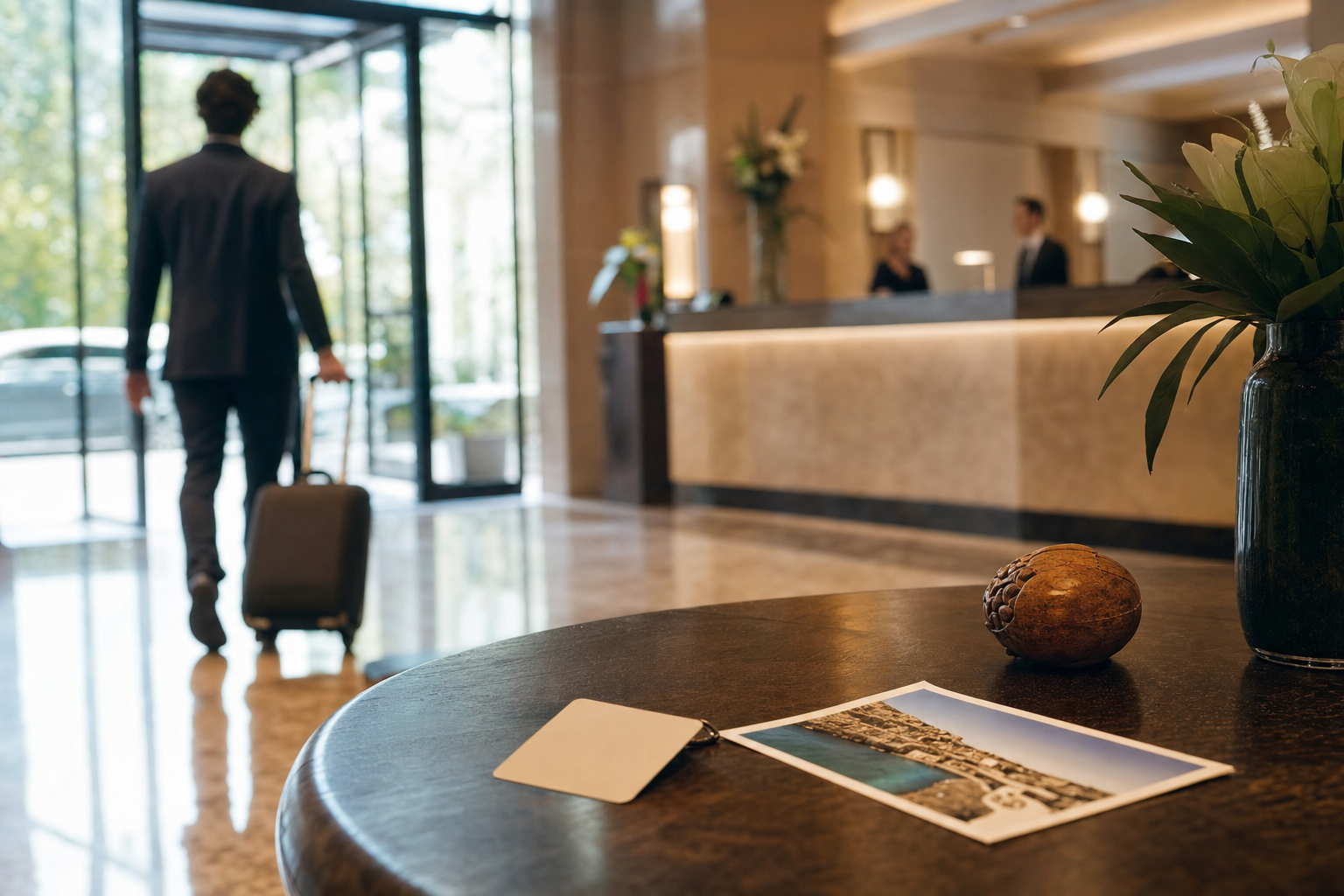

For many years, I treated check-out as the final act of the stay. The bill had to be settled correctly, the guest thanked by name, any outstanding questions resolved and a final pleasant impression left. Once the door closed and the taxi pulled away from the entrance, operations considered the job complete. The guest had departed, the room returned to inventory and the hotel’s attention shifted to the day’s arrivals. It was understandable logic, but incomplete.
Operationally, the stay ends when we close the folio. In the guest’s mind, something very different happens: a process of selection, simplification and reinterpretation begins. Details blend together, some disappear and others take on an importance they may not have had while they were happening. The room, breakfast, a conversation, an issue or the farewell cease to be separate episodes and begin to form a story. The guest is no longer living the hotel experience; often without realising it, they are deciding which hotel they will remember.
Over the years, I have learned that the hotel experienced and the hotel remembered do not always coincide. A stay may have worked reasonably well and still be reduced to an uncomfortable incident on the final morning. It may also have included a failure and yet remain a positive experience thanks to an honest recovery, a human gesture or a particularly thoughtful ending. Memory does not behave like an audit that adds up every touchpoint. It builds an abbreviated, emotional and manageable version of what happened.
The problem is that much of hotel marketing enters the scene after check-out with all the subtlety of a linen trolley rolling down a silent corridor. Before the guest has unpacked, they receive a survey, a review request, a promotion, a loyalty programme invitation and, sometimes, another message asking whether they would like to book again. We confuse continuing the relationship with continuing to ask for things. Instead of helping to consolidate the memory, we introduce commercial noise.
That is why I believe the post-stay period should be regarded as a distinct phase within the hotel guest experience. Its role is not merely to obtain feedback or trigger an immediate new booking, but to protect, enrich and activate the memory the guest takes away. Artificial Intelligence can help us greatly with this task, provided we use it to interpret context, connect signals and choose the right moment—not to manufacture emotions the hotel never created.
The hotel experienced and the hotel remembered are two different products
Within the hotel, we manage facts: the room was ready, the service was delivered, the problem was resolved and breakfast opened on time. Outside the hotel, the guest retains representations. They remember that they rested, felt cared for, discovered something new or had to insist too much. For hotel management, this distinction is fundamental because repeat business, recommendation and future reputation depend less on the stay’s objective inventory than on the version that remains accessible in memory.
Academic research has long shown that tourism memory is not simply an archive of the past. An experimental study published in Annals of Tourism Research found that recalling positive tourism memories influenced mood and behavioural intentions. Another study involving 445 resort guests identified autobiographical memory of the experience as one of the mechanisms connecting the stay with customer retention. We are not, therefore, talking about a decorative dimension of hospitality, but a variable with commercial consequences.
Research published in 2025, initially based on the recollections of 1,000 consumers regarding positive and negative hotel experiences, found meaningful differences in the physical, social and emotional components people retrieved when remembering. This confirms something I have observed many times: guests do not remember the hotel as we organise it. They do not think in terms of Front Office, Housekeeping, Maintenance, Food and Beverage and Revenue. They remember scenes in which all those departments are blended together.
This transformation has an uncomfortable consequence. We can execute many things correctly and still leave a weak memory. Consistency prevents dissatisfaction, but it does not guarantee recall. A hotel can be clean, punctual, friendly and efficient, yet end up confused with ten other equally competent properties. In that case, the stay has fulfilled its operational purpose, but it has not built a distinctive commercial asset.
The opposite also happens. Some hotels try to design one great memorable moment while neglecting the service fundamentals. A spectacular detail does not compensate for a poorly maintained room, a sleepless night or an ignored complaint. Memory amplifies, but it does not absolve. Expecting an emotional post-stay message to rewrite a poor experience is not a loyalty strategy; it is narrative make-up.
The practical question is to identify what deserves to survive the passage of time. I am not referring only to extraordinary moments. On many trips, the most valuable aspect may have been something apparently simple: sleeping deeply, feeling that children were welcome, receiving useful guidance in an unfamiliar destination, having peace and quiet to work, or sharing a conversation that humanised the stay. Guest memory becomes stronger when the hotel can be associated with a clear personal meaning.
There is also a temporal tension worth understanding. Immediate feedback tells us how the guest feels when leaving, but not necessarily what they will retain a few weeks later. A response obtained twenty minutes after check-out captures a recent reaction. A later conversation may reveal which elements have survived once the experience has competed with flights, meetings, photographs, family conversations and the return to routine. Both types of information are useful, but they answer different questions.
A longitudinal study of remembered experiences and intention to return found that remembered positive affect changed over time and that longer-term memories had a particularly relevant impact on revisit intention. For hoteliers, the lesson is clear: it is not enough to measure whether the guest left satisfied. We need to understand what remains once immediate satisfaction has cooled.
Designing the post-stay period as a memory system, not a campaign
When I frame this idea in operational terms, I am not thinking about adding more emails to the hotel CRM calendar. I am thinking about building a simple architecture that connects what happened during the stay with the future relationship. Its starting point is not the promotion we want to send, but the memory worth preserving and the value we can continue to provide once the guest is back home.
To turn that intention into one of the more practical hotel strategies for the post-stay period, I would work around six decisions:
- Define the memory promise. Each priority segment should be able to associate the hotel with a recognisable idea. Rest, discovery, celebration, family care, connection with the destination or productivity are distinct territories. If we do not know what we want the guest to remember, any subsequent communication will be generic.
- Differentiate operational closure from emotional activation. An outstanding invoice or an issue requires speed. A positive memory may need some space before it is revisited. Sending everything at once simply because the system allows it confuses administrative needs, listening, reputation and sales. Strategic hotel planning also means putting timing in order.
- Create memory assets with genuine usefulness. A recipe sampled during the stay, a route recommended by a member of the team, a music selection linked to the trip, an authorised photograph or a short guide to continuing a wellness practice at home can all serve as triggers. This is not about giving objects away indiscriminately, but about extending the meaning of something the guest already valued.
- Reconstruct the scene, not just mention the booking. “Thank you for staying with us” shows that we have a record. “We hope you enjoyed that morning exploring the coast you discussed with our Front Desk team” retrieves a fragment of the experience. The second option can be far more memorable, but it requires reliable data, permission, sound judgement and wording that does not feel intrusive.
- Separate memory from discounting. Sending a promotional code immediately may generate conversion, but it can also reduce the whole experience to a transaction. First, it is worth reinforcing why choosing us was worthwhile; then, if appropriate, we can make it easier to return. Hotel profitability is not protected by training guests to remember our discount percentage better than our hotel.
- Measure persistence, not only reaction. Opens, clicks and reviews show activity, but they do not by themselves explain the quality of memory. It is worth observing the recurrence of specific details in comments, branded searches, direct traffic, recommendations, the richness of the story shared and the reasons guests express when they return.

My published books
Artificial Intelligence is particularly useful when it needs to work with many scattered signals. It can analyse authorised conversations, in-stay comments, incidents, spend, reviews and operational notes to suggest which moments appear to have carried the greatest emotional weight. It can also cluster patterns: families who remember logistical ease, business travellers who value quiet, couples who mention the team, or guests who associate the hotel with particular aspects of the destination.
What matters is that AI does not decide what the guest felt. It can formulate hypotheses, point to evidence and help the team review hundreds of interactions that would otherwise be buried manually. Its role should resemble that of an assistant saying: “These are the scenes that appear most frequently, and these are the signals supporting the interpretation.” The decision on how to respond, what to remember and when to remain silent still requires hotel judgement.
It can also help us develop differentiated post-stay orchestration. A guest who reported an issue should not automatically enter the same sequence as another whose stay was trouble-free. Nor does it make sense to address in the same way someone celebrating a personal occasion, someone travelling for work or someone who booked an experience linked to the destination. Segmentation should not be limited to demographic data or booking channel; it can incorporate the true meaning of the trip.
Rather than establishing a single cadence for everyone, I would test different timings and objectives. An early contact can confirm that the return journey was satisfactory or close an outstanding matter. Days later, relevant content can bring back a specific scene. Weeks later, if there is an honest reason, a new visit can be proposed. AI makes it possible to experiment with these windows, compare behaviours and learn which sequence works in each context without turning communication into automated pursuit.
There is, however, a boundary we should not cross. The more personal the data, the easier it is to move from recognition to a sense of surveillance. The fact that the hotel knows something does not mean it should articulate it. Before activating any data, I would ask myself one simple question: will the guest understand why we know this, and feel that using it provides them with value? If the answer is not clearly yes, I would rather not use it.
Governance also requires us to distinguish between facts, inferences and creativity. If the system knows that a family requested information about children’s activities twice, that is a fact. If it concludes that this was the most important moment of their trip, that is a hypothesis. If it invents that the children were fascinated, it is creating an emotion without evidence. Blending these three levels leads to messages that appear personalised but are false. And few things erode trust more than intimacy simulated by a machine.
I propose measuring this system through a small internal memory persistence index, not as another universal metric but as a learning tool. It can combine the spontaneous presence of differentiating elements in reviews, the richness of memories expressed by returning guests, the evolution of direct traffic, unaided hotel recognition and subsequent actions linked to recommendation or repeat stays. We do not need another number to decorate a dashboard; we need a measure that forces us to ask what we are actually making endure.
To avoid turning it into another mass survey, I would work with small samples, brief conversations and qualitative analysis. Asking selected guests several weeks later, “What is the first thing you remember about your stay?” can offer more than a battery of twenty questions. The spontaneous answer shows what won the competition for memory. If nobody mentions what we regarded as our great differentiator, we have a problem of design, execution or relevance.
A 2026 study that analysed 284,587 traveller-generated texts found that sensory intensity and diversity do not necessarily produce ever-greater recall; rather, the relationship may follow an inverted curve. I find the practical reading valuable: adding stimuli without judgement can overwhelm. Memory needs distinctive, coherent signals, not an internal competition to see how many extraordinary things can fit into a two-night stay.
If I had to begin tomorrow, I would not buy a tool first. I would bring together Operations, Marketing, CRM and Revenue to select three relevant segments and answer one question: “What do we want each of them to remember thirty days later?” Then I would review whether the experience genuinely delivers that meaning and which post-stay contact could help bring it back without asking for anything in return.
I would also advise auditing the messages we already send. It is worth looking at how many communications thank, how many request, how many sell and how many provide something the guest would want to keep. If they all ask for a review, a response, an enrolment or a new booking, we are not cultivating a relationship. We are extending the administrative check-out by email.
After check-out, the hotel no longer controls the experience, but it can still respectfully influence how it will be remembered. That is the real test of memory: whether, when photographs blur together and details fade, there remains a clear reason to talk about us, recommend us and return. AI can help us find and protect that reason, but only lived hospitality can create it.
This article ends here. The archive does not.
Lead Hospitality brings together 1200 English articles published since 2018: years of experiences, decisions and lessons you can keep exploring.
What would you like to explore next?
Choose a direction and keep reading around what you want to solve, learn or challenge.