
Three Days Running a Hotel Without Opening the PMS: The Afternoon I Nearly Did It Out of Habit

Albert BarraNovember 19, 2026 · 7 min read


Day 1: the morning without screens
I arrived at the hotel at 7:45, switched on my laptop and, for the first time in many years, did not open the PMS. I opened a conversation and wrote: “Good morning. What do I need to know today?” The response arrived within seconds: the day’s occupancy, arrivals and departures, rooms with both a departure and an arrival on the same day, open issues, and three matters requiring my attention before ten o’clock. This is what the HotelGEX management briefing does, except that instead of opening a dashboard, I asked for it in a single sentence. My first decision of the day came at 7:58. Normally, I do not make one before 8:40, because the first forty or fifty minutes disappear into reconstructing the day: opening the PMS, reviewing arrivals, checking the front desk email, asking Housekeeping how things are going. It was not that I was any smarter today. I simply reached the decision without having to go through the usual process.Day 1, afternoon: the booking I would have overlooked
In the afternoon, I asked for the following day’s arrivals. Seventeen bookings, eighteen rooms, with channel, assigned room and notes. Among them were two details that, in the PMS, I would have had to find by opening each booking one by one:- A returning guest with a spa circuit for two, deserving something more than a “welcome back”.
- A booking with a tasting menu with wine pairing and a €60 balance still to be collected. The kind of thing that gets forgotten at check-in and awkwardly requested at check-out.


Lead Hospitality Library
My published books
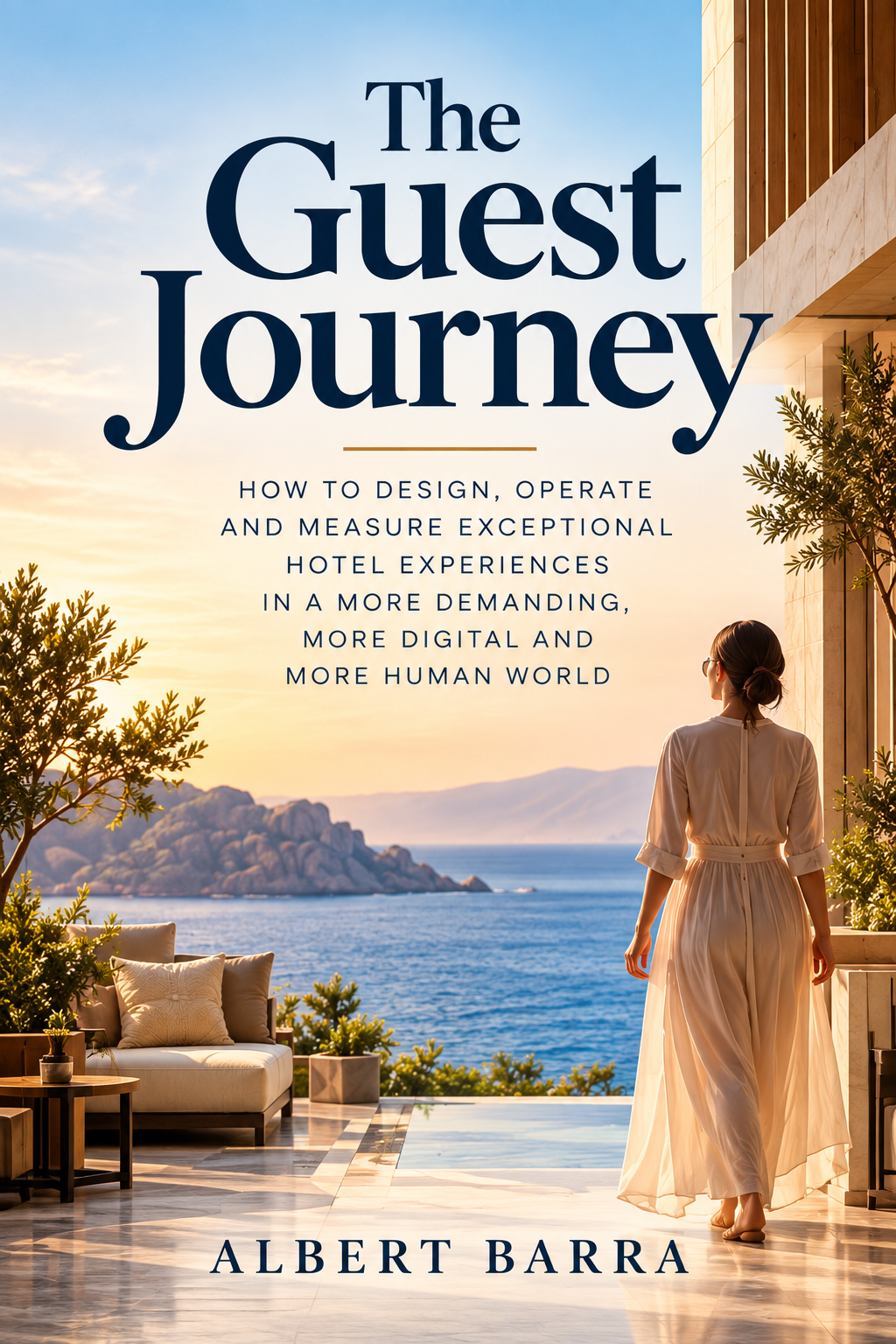
The Intelligent HotelData, Artificial Intelligence and a New Way to Run Hotels→Directing HotelsWhat Nobody Tells You Before You Sit in the General Manager’s Chair→The Guest JourneyDesigning Customer Experience Across the Entire Hotel Journey→
See all books Digital edition · Personal licence · Free or discounted for subscribers
Day 2: who is working tomorrow
One of the questions I repeat most often as a general manager is also the simplest: who is working tomorrow? I asked about Housekeeping and, in one line, I had the published rota: who was starting in laundry at seven, who was starting in Housekeeping at nine, who was off and who was on holiday. It may seem like a small thing. But cross-referenced with the following day’s departures, it allowed me to see in one minute that we were short-staffed for the morning and arrange additional cover before the Executive Housekeeper had to ask me. That is the difference between looking up a piece of data and making a decision with it, and that is precisely what AI-powered Housekeeping planning is about.Day 2: the first emergency opening
I promised to note every time I opened the PMS and explain why. It happened mid-morning on the second day. A corporate client needed the tax details on an invoice that had already been issued to be corrected. The conversation gave me the full context: which stay it was, the amount and which details needed changing. But the invoice correction had to be made in the billing system, and the assistant does not reach that far. I opened it, corrected it and closed it. Four minutes. I do not see it as a failure. It is exactly what I wanted to discover: where the conversation currently ends. And it makes sense for billing to be one of those limits. An invoice is not a query; it is a document with legal implications, and I would rather it retained its own control process. That is the authority matrix working as it should.Day 2, 18:30: the afternoon I nearly opened it out of habit
This is the one that has made me think the most. Late in the afternoon, for no specific reason, my hand went straight to the PMS icon. I did not need anything. There were no outstanding questions. It was pure reflex: twenty years of ending the day with one final look at the occupancy screen, like checking that you have locked the front door at home. I did not open it. I wrote: “Is there anything about tomorrow I should know before I leave?”. The answer was no: arrivals were ready, there were no open issues and forecast occupancy was 78%. That was when I realised something I had not expected to discover so soon. Much of the time I spend in the PMS is not work; it is reassurance-seeking. And reassurance can be obtained with a question.Day 3: when a recommendation is not enough
I asked the experiences and offers assistant for a proposal for a corporate package: wellbeing and business meetings during the week, which is exactly where we have the most unused capacity. The proposal was good: catalogue components, package price, sales rationale and target segment. And that was as far as it went. To turn it into a real package, I had to go to another screen and retype what the AI had already written. Exactly what I criticised when discussing hotels that enter the same data four times. So we changed it. From this week onwards, whenever a HotelGEX assistant proposes something specific, the response ends with two buttons: Execute proposal or Discard. If I press execute, it first shows me exactly what it is going to do, and it does nothing until I confirm. It creates a draft, within my permissions, and never publishes, sends, deletes or changes prices on its own. The package was in draft within two minutes. I reviewed it, adjusted the price and activated it myself. The AI proposes, I decide and the system executes. In that order, without skipping any of them.Day 3: the report I did not write
Every week, I prepare a summary for ownership: occupancy, revenue, variances, relevant issues and outstanding decisions. I usually spend close to two hours on it, most of that time extracting figures from different places and reconciling them. This time, I requested it through a conversation. The draft arrived in a couple of minutes. I spent another fifteen reviewing it, checking two figures and rewriting the conclusions paragraph, which is the only part a general manager really should write. What used to take up an afternoon now took as long as a coffee.The scorecard after three days
- Time to the first decision of the day: from around 50 minutes to an average of 13.
- Emergency PMS openings: one, to correct an invoice.
- Habit-driven openings avoided: at least one that I can admit to. Probably more.
- Responses I had to verify: three. All three were correct.
- Decisions made through conversation: 19 out of 22.
- Time spent on reports: from around two hours to twenty minutes for the weekly summary.
What I am taking away from these first few days
A few weeks ago, I wrote that hospitality AI must show where it gets what it knows. These days, I have tested that from the other direction: when an answer tells me where each figure comes from, I no longer feel the need to open the PMS to verify it. Trust does not come from the technology. It comes from traceability. Perhaps the greatest value of this challenge is not proving that a hotel can be run without the PMS. Perhaps it is discovering how much of what we did in the PMS was not actually management. In the next instalment, I will share how the scorecard evolves and whether I can make it through a full week without the usual screen. If you would like to see how this way of working functions, you can explore the live HotelGEX demo or request a demonstration using your hotel’s data.This article ends here. The archive does not.
Lead Hospitality brings together 1200 English articles published since 2018: years of experiences, decisions and lessons you can keep exploring.
CONTINUE FROM HERE
What would you like to explore next?
Choose a direction and keep reading around what you want to solve, learn or challenge.
01MAKE MOREProfitability, revenue and decisions that reach the bottom line.
02LEAD BETTERTeams, culture, talent and the conversations that matter.
03SELL BETTERPositioning, marketing, distribution and customers.
04CREATE EXPERIENCESService, loyalty and details guests remember.
05UNDERSTAND WHAT'S NEXTInnovation, AI and new ways of thinking about Hospitality.
✦SURPRISE MEShow me something worth five minutes of my time.