
The Hidden Cost of a Disorganised Hotel

Hotels closely monitor payroll, energy, purchasing, commissions and consumption, yet another cost is far harder to find in the profit and loss statement: the cost generated by rework, waiting, errors, duplication, unnecessary movement, recurring issues and delayed decisions. This article explores how to identify this hidden factory, translate disorganisation into financial data and apply Lean Hospitality principles to restore productivity without compromising service or reducing efficiency to a simple cost-cutting exercise.
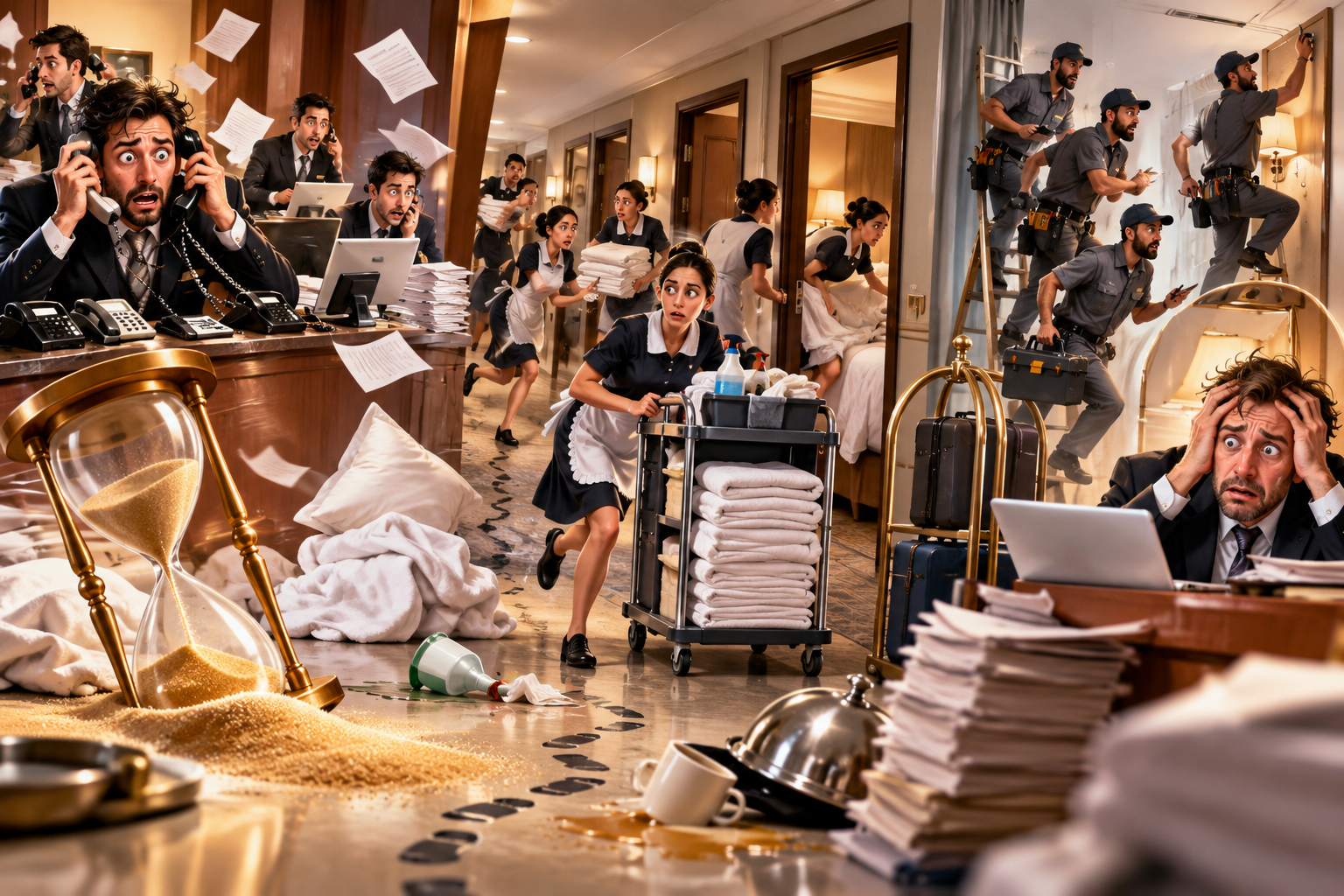

For years, I have reviewed operating statements in which virtually everything seemed to have an explanation. We knew how much we spent on staff, how much electricity had increased, what percentage of revenue went to commissions, how much laundry cost, what variance food and beverage consumption had accumulated, or how much a particular line item was affecting us. However, there was one figure that never appeared in any report: how much poor work was costing us.
I am not necessarily referring to working too little or having poor professionals. In fact, I have found some of the greatest inefficiencies precisely in exceptionally committed teams. People who rush, call, ask, correct, check again, solve problems and reach the end of the shift exhausted. The problem is that being very busy and being productive are not necessarily the same thing. A hotel can have everyone working intensely and still waste hundreds of hours every month.
Keep reading without waiting for the next reset
Your free access includes 6 reads per week. Subscribe to continue now.