
Running a Hotel in 2027 Will Require Redesigning Management Work

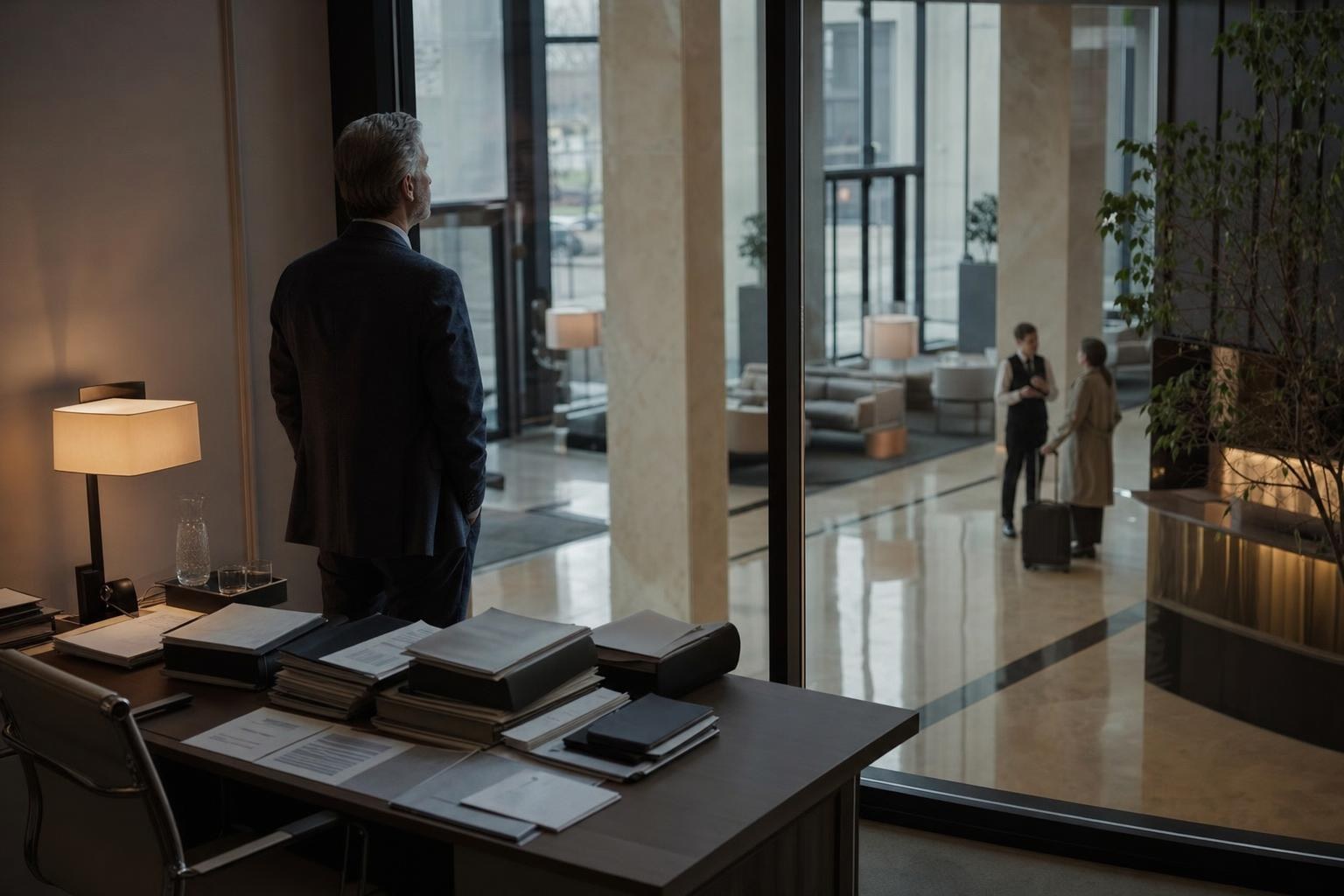

I imagine an ordinary morning in 2027 at a hotel with a degree of operational complexity. The daily report is ready before anyone arrives at the office. Relevant variances are explained, overnight incidents are grouped by priority, the forecast has been updated, shifts have been adjusted to the anticipated workload, and meetings have a proposed agenda built around outstanding matters. The surprising thing will not be that all this happens. The surprising thing will be remembering that there was a time when several people spent hours compiling it, organising it, checking it and explaining it all over again.
That scenario does not mean the hotel runs itself. Nor does it mean that experience, leadership or operational knowledge have lost their value. It means something rather more uncomfortable: a significant share of the activities we have traditionally associated with managing a hotel will no longer justify management time. Producing reports, chasing updates, transferring information between departments, preparing drafts, checking routines and authorising certain exceptions will remain necessary tasks, but it will become increasingly unreasonable for them to depend on a person sitting in front of a screen.
I have learned that roles rarely disappear all at once. First, some of their tasks are emptied out. Then expectations change. Finally, the organisation discovers that the title remains the same, even though the value expected from the person holding it is completely different. This is what will become more apparent in hotel management during 2027. The need to lead will not disappear. What will disappear are many of the occupations that allowed us to appear indispensable without having to demonstrate much judgement.
Transformation no longer belongs to some distant future. In 2025, 20% of European Union businesses with ten or more employees used some form of artificial intelligence technology, compared with 13.5% the previous year. At the same time, international estimates indicate that approximately one in four jobs has some degree of exposure to generative artificial intelligence, although task transformation is far more likely than full job replacement. Around 39% of professional skills are also expected to change or become partly outdated before 2030.
The useful question for Hospitality, therefore, is not how many roles automation will eliminate. The question is which part of management work adds genuine value when information, basic coordination and much of the follow-up can be handled differently. My answer is that 2027 will force us to distinguish far more honestly between three types of work: work that can disappear, work that can be automated with oversight, and work that should never be delegated because it involves accountability, legitimacy, human connection or consequences that are difficult to repair.
Tasks that will no longer justify management time
A significant part of many hotel managers’ working day still functions as a transfer hub. They receive information from one department, organise it, ask for what is missing, pass it somewhere else, and then check whether anyone has acted on it. This work can be exhausting and, in some hotels, takes up so many hours that it becomes confused with management itself. Yet moving information is not the same as making a decision. Chasing data does not mean understanding it either.
Automation will advance first into tasks that meet four conditions: they are frequent, follow relatively stable rules, produce verifiable outcomes and carry a low relational cost when carried out correctly. The more repetitive, traceable and reversible an activity is, the less sense it makes to reserve it for the organisation’s scarcest and most expensive resource: management time.

Stop managing isolated systems. Start managing the whole hotel.
HotelGEX connects guests, operations, Revenue, F&B, Groups & Events and Management into one intelligent hotel context — so every decision starts with a clearer picture.
In my experience, these are some of the tasks that will most quickly lose weight within management work:
- Compiling and consolidating reports. Sales, occupancy, costs, consumption, productivity, reputation, maintenance, absences and budget variances should no longer arrive as separate documents that someone must manually bring together. The value will lie not in preparing the report, but in asking the right questions, identifying relationships between indicators and deciding which variances warrant intervention.
- Drafting routine communications. Internal responses, summaries, minutes, procedures, operational messages, sales descriptions and first versions of certain documents can be generated in seconds. This does not remove responsibility for what is communicated. It shifts it towards review, context, accuracy and consistency with the hotel’s voice.
- Mechanical follow-up of commitments. Remembering deadlines, asking whether a task has been completed, updating statuses and sending reminders consume a considerable amount of attention. In 2027, any organisation that relies on one person to constantly remind others of what they agreed will have a design problem, not a memory problem.
- Initial classification of incidents. Many requests can be grouped according to urgency, impact, recurrence, affected guest, cost and responsible department. The machine can organise the noise. The person must decide what that noise means, why it recurs and when an apparently minor incident reveals a larger problem.
- Low-risk approvals. Minor gestures of goodwill, limited rate adjustments, recurring purchases, shift changes, service recovery and foreseeable exceptions should no longer be escalated out of habit. If a decision has clear financial limits, known precedents and reversible consequences, it can be resolved through predefined rules and authority.
- Descriptive preparation of forecasts. Explaining what has happened to demand, calculating trends, comparing booking pace and updating scenarios will become increasingly automated. In hotel Revenue Management, value will shift away from moving prices and describing curves towards governing objectives, uncertainty, segments, capacity, positioning and commercial risk.
- Basic coordination of calendars and meetings. Calling ten people together so that each can read aloud the part of a report the others could already have consulted will be difficult to defend. Meetings will need to be reserved for resolving tensions, choosing between alternatives, allocating resources and making decisions that require genuine conversation.
- Distribution of standard information. Schedules, policies, availability, instructions, services and frequently asked questions should not depend on a particular person being available. When information is stable, it should be accessible. When it changes, it should have an owner, a review date and a mechanism for updating it wherever it is used.
This will particularly affect roles that have built much of their identity around producing documents, controlling workflows or acting as mandatory intermediaries. The phenomenon is already visible in areas such as Revenue, Marketing, Reservations, Finance, Human Resources and Operations. It does not mean these functions will become less important. It means that administrative output will no longer be a sufficient demonstration of professional value.
Part of the control ritual that still characterises many hotels will also disappear. I mean emails copied to fifteen people, signatures that add no judgement, meetings called to reassure someone who does not trust, parallel spreadsheets, and reports prepared because someone requested them four years ago. Automation will make something we already know more evident: much of hotel bureaucracy exists not to improve operations, but to reduce hierarchical anxiety.
A warning is worth introducing here. Automating an unnecessary process does not make it a good process. It simply enables an activity we may need to eliminate to be performed faster. I have seen organisations invest time and money in digitising approvals that should never have existed, reproducing reports nobody used and adding alerts to problems that could have been avoided by redesigning the operation. The first question should not be whether a task can be automated. It should be whether it deserves to continue existing.
To answer that, I use a simple Management Disappearance Test. Before keeping a task on a manager’s agenda, I would ask these questions:
- Does the activity produce a decision, or merely transfer information? If it only compiles, summarises, converts formats or distributes data, there is a high probability that it can be automated or eliminated.
- Can its result be verified against objective criteria? The easier it is to verify accuracy, timeliness, cost or compliance, the easier it will be to delegate execution to a system and reserve exception management for the person.
- Is the decision reversible? A minor inventory change, a standard response or a limited approval can be corrected. A disciplinary conversation, a sensitive commercial promise or a decision affecting someone’s dignity require a different level of accountability.
- Is there a human cost if the context is misinterpreted? Two apparently identical situations may require different responses when vulnerability, conflict, trust, culture, privacy or personal relationships are involved.
- Does the task develop judgement within the team, or perpetuate dependency? If everything ends up in the office because no one else has authority, the activity may appear important while weakening the hotel’s collective capability.
- Would we still do it if we were designing the hotel from scratch today? This question often prompts interesting silences. It also eliminates quite a few spreadsheets.
The time savings will be significant, but they are not the main benefit. The opportunity lies in removing low-value work to recover management attention. Many hotels suffer from a culture of permanent urgency because qualified people spend their days reacting, checking and chasing. If automation merely allows us to answer more messages and produce more reports, we will have gained speed without improving management.
There is also a contradiction worth monitoring. The greater the visibility systems provide, the greater the temptation may be to intervene in every detail. Total traceability can fuel a new form of micromanagement: reviewing every exception, questioning every variance and turning every team action into data open to judgement. Technology can free people from mechanical control, but it can also create a hotel where everyone feels watched and no one dares to decide.
That is why automating well requires reviewing processes, authority and accountability at the same time. If a tool identifies an incident but nobody knows who can resolve it, we will merely have created another alert. If it recommends an action but everyone prefers to wait for approval, there is no autonomy. If it executes a decision and nobody then takes responsibility for its consequences, an accountability gap emerges that the guest, the team or the bottom line will eventually pay for.
Hotel management in 2027 should not be measured by how many workflows pass through the office, but by how many can function correctly without passing through it. This does not mean disengaging. It means building the criteria, boundaries and capabilities that allow the organisation to act consistently. A hotel that requires constant supervision is not well controlled; it is dangerously centralised.
The work that must remain deeply human
The most important part of the debate begins when we stop talking about efficiency. There are tasks a machine may perform with enormous precision and yet should not govern on its own. Not because people are always more accurate, which we clearly are not, but because some decisions require legitimacy, moral accountability, relational understanding and the capacity to answer for their consequences.
Managing a hotel means representing interests that do not always align. The guest wants an immediate solution. The team needs reasonable boundaries. Ownership expects results. The brand demands consistency. The operation has finite capacity. The community may demand responsibility. The business must protect margin, reputation and its future. No single indicator resolves these tensions on its own. Someone must decide what takes priority, what risk is accepted and which principle is non-negotiable.
In my view, these are the responsibilities that should never be fully surrendered to automation:
- Defining what kind of hotel we want to be. A system can analyse segments, prices, reputation and demand, but it should not decide the identity of the business. Choosing which guests to serve, which promises to make, which standards to uphold and which opportunities to reject belongs to hotel strategic planning.
- Taking decisions with consequences that are difficult to repair. Dismissing or promoting someone, closing a service, changing an employment condition, responding to a crisis, rejecting abusive behaviour or committing an investment requires an identifiable person who can explain and stand behind the decision.
- Holding conversations that affect dignity. Bad news should not be delivered as though communicating a password change. A sensitive complaint, conflict between people, a performance correction or a family situation requires listening, pauses, appropriate language and the ability to perceive what is left unsaid.
- Interpreting exceptions where rules conflict. Policies provide consistency, but Hospitality is full of circumstances that do not fit neatly into a box. Judgement emerges when two reasonable rules lead to incompatible responses and someone must weigh context, precedent, risk and humanity.
- Protecting the team when doing the right thing carries a cost. It is easy to talk about values when there is no commercial pressure, threat of a review or risk of lost revenue. Leadership in the hotel sector is demonstrated when the organisation supports someone who has upheld standards, even if giving the guest everything they want seems the most convenient option.
- Detecting the organisation’s real climate. A survey can measure responses and a dashboard can show turnover, absenteeism or productivity. Neither replaces an informal conversation, observing a briefing, a supervisor’s tone, a team’s silence or the sense that people have stopped raising problems.
- Developing judgement in others. Training is not simply about transferring procedures. It also means explaining why a decision was made, allowing someone to try, reviewing the outcome without humiliating them, and turning a reasonable mistake into shared learning.
- Being present in irreversible moments. An emergency, accident, harassment situation, reputational crisis, serious breakdown or conflict with human impact cannot be managed solely through an automated sequence. The team needs to know who is available, who decides and who will answer afterwards.
Human presence should not be confused with constant intervention. A manager who appears in every decision is not necessarily approachable; they may be preventing others from growing. The presence that matters is selective. It is reserved for moments of greatest uncertainty, greatest relational impact or least reversibility. It stays close when the organisation needs judgement and steps back when the team has sufficient capability.
This distinction will be essential in the hotel guest experience. Automating simple responses, anticipating operational needs and removing waiting times can greatly improve a stay. Indeed, much of the experience deteriorates because we force guests to waste time resolving avoidable friction. Yet a complex recovery, an emotional situation or an exceptional request cannot always be reduced to the statistically most likely response.
Books to run a hotel with judgement
Written from the general manager’s chair: technology, guest experience, leadership and management.
 The Intelligent HotelData, Artificial Intelligence and a New Way to Run Hotels
 Directing HotelsWhat Nobody Tells You Before You Sit in the General Manager’s Chair
 The Guest JourneyDesigning Customer Experience Across the Entire Hotel Journey
 Leadership and High-Performance Team ManagementPeople, Experiences and Results in Today\\\'s Hospitality
The same applies to guest data. The fact that a system can remember a preference, infer an intention or recommend an action does not mean we should always use that information. Personalisation requires discretion and permission. Sometimes, the best decision is to know something and not mention it. The question will not only be what the hotel knows, but what information it can activate without exposing the guest.
We must also avoid a dangerous idea: that human judgement is valuable simply because it is human. People accumulate biases, fatigue, impulses, preferences and errors. We can make poor decisions with admirable confidence, especially after a long meeting and before coffee. Preserving human intervention does not mean defending intuition without evidence. It means combining information, experience, challenge and accountability in decisions where an automated recommendation is not enough.
That is why I propose creating a Management Retention Map. Its purpose is to classify hotel activities according to four dimensions: reversibility, ambiguity, relational density and accountability. The result is not a list of tools, but an architecture of work.
- Reversibility. It assesses how costly it would be to correct a wrong decision. The greater the potential harm, or the more difficult it is to repair, the more necessary meaningful human review becomes.
- Ambiguity. It analyses whether clear rules exist or whether the outcome depends on context. Decisions involving incomplete information, conflicting objectives or uncertain precedents require deliberation.
- Relational density. It measures how many relationships may be affected and how intensely. Correcting a market code is not the same as intervening in a conflict involving a manager, an employee and a regular guest.
- Accountability. It determines who will have to explain the decision to the guest, the team, ownership, an authority or society. If nobody is willing to sign it with their name, it probably should not be carried out autonomously.
Based on these variables, each task can be placed at one of four levels. The first corresponds to activities that can be fully automated because they are repetitive, verifiable and reversible. The second includes automated tasks reviewed by exception. The third groups decisions assisted by systems but made by a person. The fourth is reserved for human responsibilities where technology can provide information, but cannot replace deliberation or accountability.
For example, consolidating the daily report could belong to the first level. Identifying a productivity variance and requesting an explanation, to the second. Changing a compensation policy after observing a pattern of complaints, to the third. Resolving a harassment complaint, a serious crisis or a decision that compromises people’s safety and dignity must remain in the fourth.
This map also helps prevent what I call automation abandonment. It occurs when a task is delegated because the system can perform it, but no one retains enough knowledge to challenge the outcome, intervene in an anomaly or continue operating if the system fails. Automating should not mean forgetting. There must always be an accountable person, an escalation route, accessible evidence and the ability to regain control.
In 2027, the most serious challenge may not be the replacement of roles, but the atrophy of judgement. If younger professionals receive only recommendations and learn to accept them, where will they gain the experience needed to recognise a bad recommendation? We used to develop judgement by carrying out tasks, comparing outcomes, making mistakes and talking with more experienced professionals. When some of those activities disappear, we will have to deliberately design new forms of learning.
This requires us to rethink hotel training. It will not be enough to teach people how to use tools. We will need to train them in critical thinking, business economics, difficult conversations, ethics, systems thinking, exception analysis and decision-making under uncertainty. Technical capability will remain important, but professional value will concentrate in connecting signals, understanding consequences and acting responsibly.
The way we evaluate those in positions of responsibility will also change. Measuring how many reports they produce, emails they answer or approvals they sign will become increasingly absurd. We should observe the quality of decisions, the autonomy they build, the reduction in recurring issues, the development of managers, the time recovered for the guest and the hotel’s ability to function without daily heroics.
Hotel profitability will also benefit from this redesign. Freeing up administrative hours can reduce costs, but the most important impact should come through better decisions, fewer repeated errors, faster responses and a greater ability to anticipate. An intelligent hotel is not the one that eliminates the most people, but the one that avoids consuming skilled talent on work that does not require it. This is also the central idea behind understanding hotel intelligence as the ability to make better decisions, rather than as an accumulation of tools.
To prepare for 2027, I would propose a ninety-day exercise. During the first month, every manager should record the tasks they spend time on, without embellishing them or grouping them under broad terms such as management, coordination or follow-up. In the second month, the team would classify each activity according to value, frequency, reversibility, context and the need for human intervention. In the third, it would select three tasks to eliminate, three to automate, three to delegate with authority and three human responsibilities that must be strengthened.
The outcome of that exercise should be reflected in agendas, job descriptions, training, indicators and decision rights. If we only install a tool but retain the same meetings, approvals, controls and expectations, automation will add another layer of complexity. The hotel will do the old and the new simultaneously, a speciality that is quite widespread in our sector.
My advice is not to start by asking which people you could save. Start by asking which work should no longer keep consuming people. The difference may seem semantic, but it completely changes the quality of the transformation. The first question quickly leads to cuts. The second forces us to understand processes, eliminate waste and protect the capabilities that sustain the business.
If I were preparing a hotel for 2027 today, I would review every management week and look for three things: information that still travels manually, decisions that are escalated unnecessarily, and important conversations that are being postponed. I would automate the first two cautiously and explicitly reserve time for the third. The future will not require us to be less present. It will require us to be present where it truly matters.
Managing a hotel in 2027 will be less compatible with hiding behind reports, overloaded schedules and routine approvals. Automation will remove many of those excuses. What will remain are judgement, accountability, conversation, learning and the ability to sustain difficult decisions. Quite a few office tasks may disappear. I trust that this will allow us to return to managing hotels better.
This article ends here. The archive does not.
Lead Hospitality brings together 1200 English articles published since 2018: years of experiences, decisions and lessons you can keep exploring.
What would you like to explore next?
Choose a direction and keep reading around what you want to solve, learn or challenge.