
Hotel Repositioning Lessons from a Chinese Restaurant

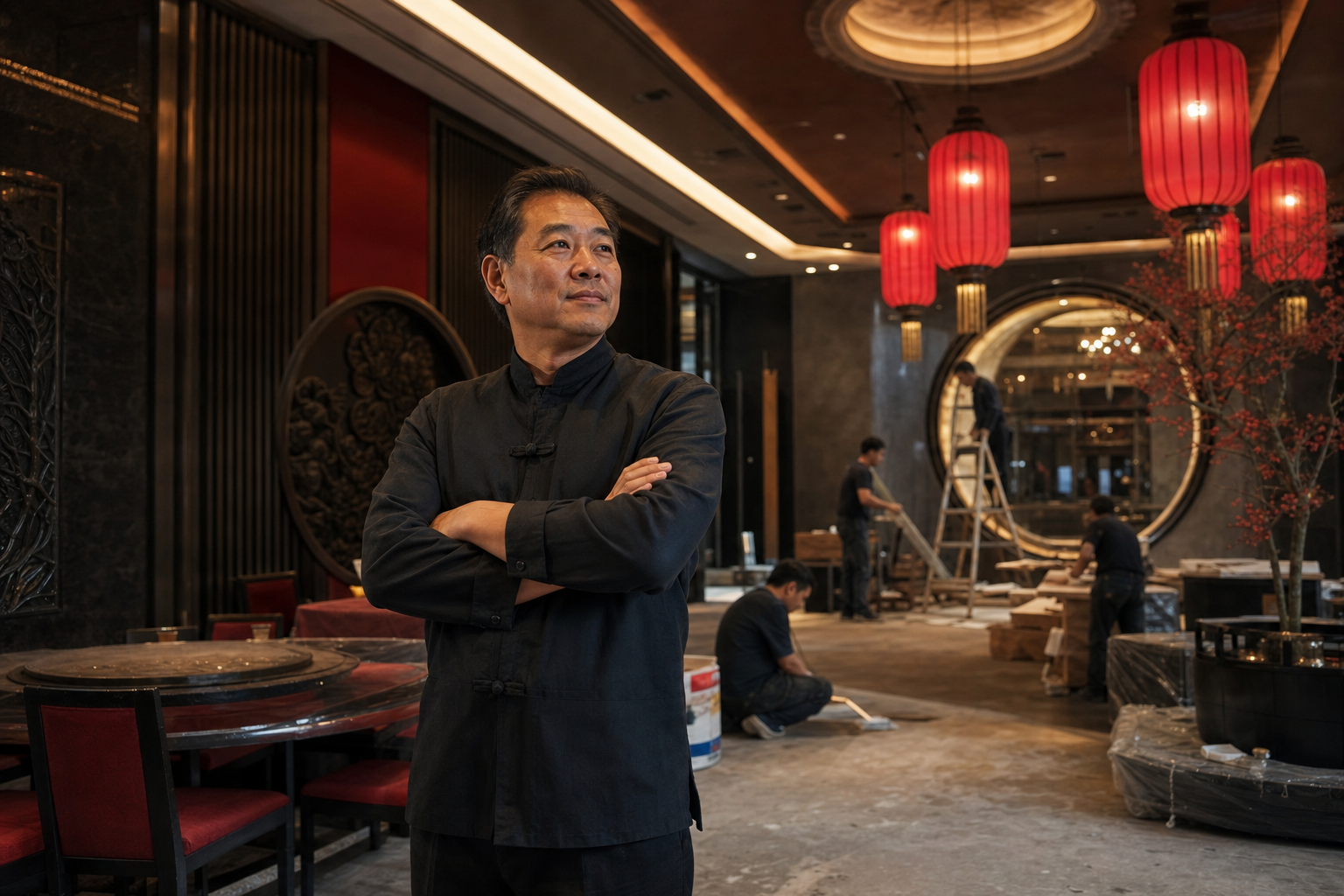

There is a Chinese restaurant near my home. Nothing new—we all have a Chinese restaurant near where we live. It is convenient; sometimes, when I do not feel like cooking, I go there to pick up some takeaway. It is not that I am passionate about Chinese food, but I have a particular weakness for Peking Duck.
The Chinese restaurant is run by a family—Chinese, of course: husband and wife, in-laws and children. They do not offer delivery, as they have plenty of customers in the restaurant and do not have enough staff to leave the premises to make deliveries. They do accept telephone orders for collection and takeaway.
A good location, personalised service and fair value for money—perfect for a modest neighbourhood like mine.

Every now and then, they remind the neighbourhood that they are there, as if to say, “Remember, we are here,” by distributing leaflets themselves. The leaflet drop consists of a mini version of their menu and set menus—just like every Chinese restaurant.
The thing is, when I got home last night, I opened the letterbox and found the mini-menu. As I was tired and home alone, I thought it would be a good idea to enjoy some magnificent Peking Duck. So I went to the restaurant.
When I arrived, I realised not only that it was closed, but also that it was being renovated and full of people working on it. I went in anyway because I did not know whether the kitchen was open.
I saw the owner, who calls himself Juan, and he is the smartest Chinese man I have met so far. This was my conversation with him. Without meaning to, he gave me a real lesson in Marketing, Management and Business Survival in Times of Stagnation.
Me: “Juan, is the restaurant closed?”
Juan:
“Yes, now stagnation, people not coming, few customers.”
Me: “And yet you have started renovating.”
Juan:
“Of course, fewer customers but everything cheaper. Cheap materials, cheap builder, cheap carpenter—better now.”
Me: “But if the restaurant is closed, why are you sending out advertising?”
Juan:

My published books
“I have thousands of leaflets. My wife doing nothing here, my daughter doing nothing here, mother-in-law doing nothing here. Better outside, on the street—not getting in the way, learning Spanish and doing marketing.”
Me: “But doing this while the restaurant is closed is pointless, isn’t it?”
Juan:
Pointless? No. You come here, yes? You like restaurant now? Nice, eh? Now you come back with family.
At times like these, when the most logical thing would have been to apply the strictest austerity measures, fire his mother-in-law, or find smaller and therefore cheaper premises, Juan gives us a masterclass:
- He has decided to invest in his business to create a better offering.
- He has not forgotten about marketing. He was forward-thinking, had promotional material left over, and is managing his resources appropriately by distributing it.
- He has not improvised, and he is also aware that his family will now learn Spanish, as they have time to do so.
These Chinese people really know their stuff. Juan does not need an MBA, to sit on a board of directors or to have a blog; he is simply forward-thinking and has common sense.
In Chinese writing, the symbols that make up the word for stagnation are formed by two words pronounced something like “wei ji”.
“Wei” means “danger” and “Ji” means “opportunity”, so Wei Ji—or stagnation—for Juan means danger and opportunity together, although he also understands it as a dangerous situation requiring special attention.
Will his business survive the stagnation? I have no doubt whatsoever.
This article ends here. The archive does not.
Lead Hospitality brings together 1200 English articles published since 2018: years of experiences, decisions and lessons you can keep exploring.
What would you like to explore next?
Choose a direction and keep reading around what you want to solve, learn or challenge.