
The Smart Hotel: Why I Wrote This Book

Albert BarraOctober 1, 2026 · 14 min read
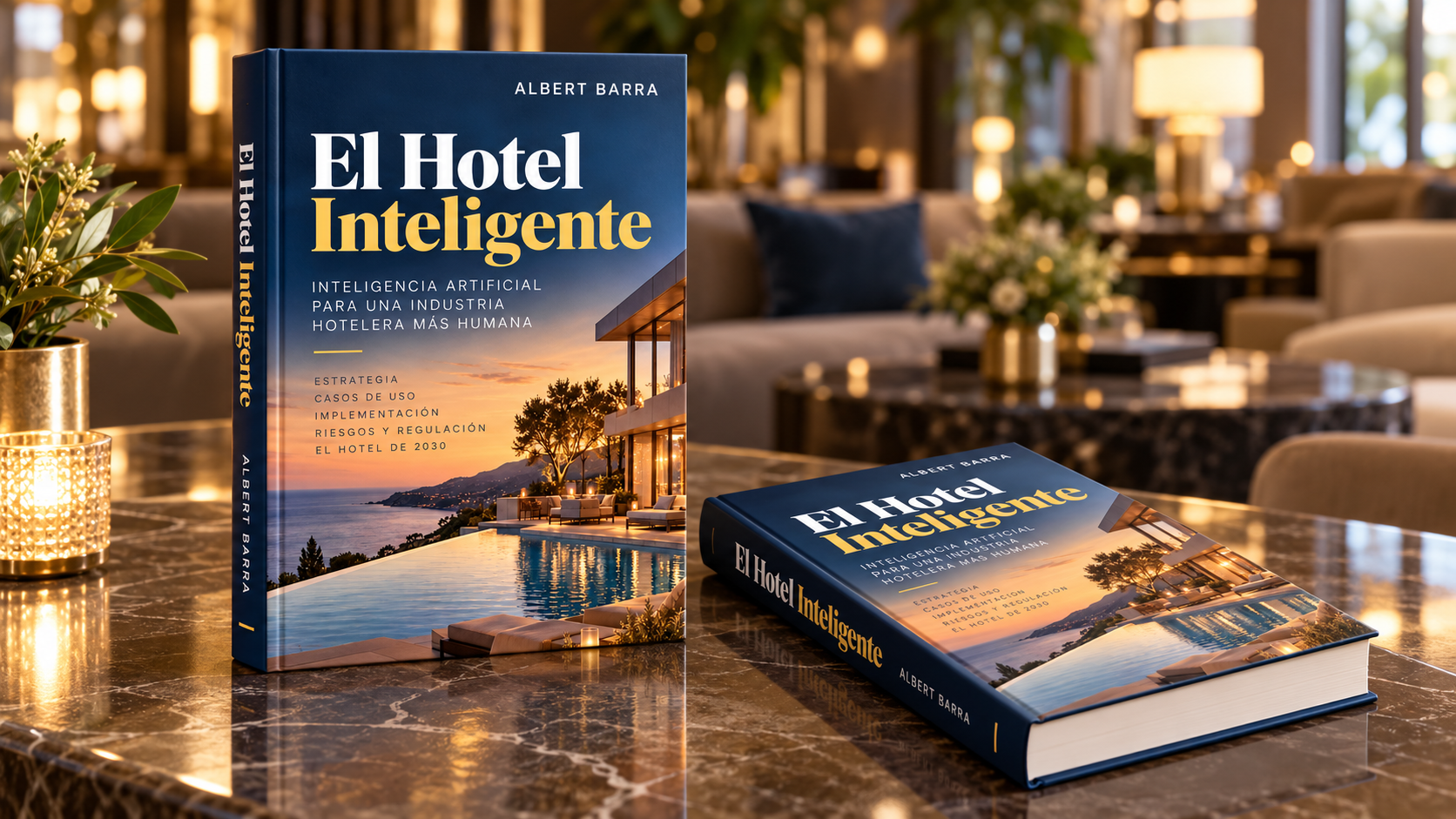
 This concern is what gave rise to The Intelligent Hotel: Data, Artificial Intelligence and a New Way of Managing Hotels. I did not want to write a book about tools, nor a collection of technology terms that would probably become outdated before reaching print. I wanted to write about hotels. About decisions. About guests, Revenue Management, operations, direct sales, people, productivity, strategy and leadership. And about how artificial intelligence, data and automation can transform each of these areas if we are able to use them wisely.
I also needed to write it because I see a growing contradiction. We have never had so much data and yet we continue to make too many decisions based on intuitions that are difficult to verify. We have never had so many systems and yet our teams still transfer information manually from one application to another. We have never known so much about consumer behaviour and yet we still offer extraordinarily standardised experiences. We have more technology, but that does not necessarily mean we have more intelligence applied to the business.
That is why the question running through the book is not how much a hotel can automate. It is far more important: how can we use technology to understand better, make better decisions and operate better without losing what turns accommodation into hospitality? That final part is essential. Because I can imagine extraordinarily automated hotels. What I am less certain about is whether I would want to stay in all of them.
This concern is what gave rise to The Intelligent Hotel: Data, Artificial Intelligence and a New Way of Managing Hotels. I did not want to write a book about tools, nor a collection of technology terms that would probably become outdated before reaching print. I wanted to write about hotels. About decisions. About guests, Revenue Management, operations, direct sales, people, productivity, strategy and leadership. And about how artificial intelligence, data and automation can transform each of these areas if we are able to use them wisely.
I also needed to write it because I see a growing contradiction. We have never had so much data and yet we continue to make too many decisions based on intuitions that are difficult to verify. We have never had so many systems and yet our teams still transfer information manually from one application to another. We have never known so much about consumer behaviour and yet we still offer extraordinarily standardised experiences. We have more technology, but that does not necessarily mean we have more intelligence applied to the business.
That is why the question running through the book is not how much a hotel can automate. It is far more important: how can we use technology to understand better, make better decisions and operate better without losing what turns accommodation into hospitality? That final part is essential. Because I can imagine extraordinarily automated hotels. What I am less certain about is whether I would want to stay in all of them.
From the digital hotel to the truly intelligent hotel
For years, we have used concepts that are not the same almost as if they were synonyms: digitalisation, automation and intelligence. A hotel can be highly digitalised and still lack intelligence. It may have a PMS, CRM, RMS, channel manager, booking engine, reputation tools, business intelligence, operational applications and dozens of additional solutions. It may even have enormous amounts of information. And yet it can still require someone to open five different screens to answer a simple question. For me, that distinction is fundamental. Digitalising means bringing processes and information into the digital environment. Automating means ensuring that certain actions take place without manual intervention. Intelligence means understanding context, connecting information and using it to make better decisions. The opportunity before us emerges when these three dimensions begin to work together. Imagine an apparently trivial request: a guest asks whether they can have a late check-out. The right answer may depend on forecast occupancy, that day’s arrivals, room type, pending Housekeeping tasks, the guest’s preferences, their history, their rate, their economic contribution, available inventory and certain commercial criteria. In many hotels, this information exists. The problem is that it is fragmented. Someone has to find it, interpret it and make a decision. If they are experienced, they will probably do it well. If they are short of time, they may not check everything. If several people are making the same decision, we will probably get different answers. That is where I begin to see the true intelligent hotel. It is not a building full of robots. It is not a reception desk without people. It is not a room where we can verbally ask a lamp to switch off — although I admit that sometimes it is easier simply to get up and press the switch —. It is a hotel capable of turning fragmented data into useful knowledge, and that knowledge into better decisions. The question, therefore, is not whether we will use artificial intelligence in hotels. We will. The truly interesting question is what for. In The Intelligent Hotel, I explore different areas where I believe the combination of data, automation and artificial intelligence in hospitality can bring about particularly relevant changes:- Understanding the guest better. For too long, we have confused storing data with knowing customers. Knowing that someone has a certain nationality, booked a particular room and stayed for three nights is information. Understanding what they valued about that stay, what motivated their trip, which experiences might interest them or what their next need could be is knowledge. AI makes it possible to begin connecting signals that previously remained isolated.
- Personalising without turning operations into chaos. We have always championed personalisation, but we know how difficult it is to deliver when a hotel is serving hundreds of people simultaneously. Intelligence can enable personalisation to stop depending exclusively on the memory of certain employees and become an organisational capability.
- Improving direct sales. A traditional booking engine displays rooms and rates. A smarter sales process should be able to interpret what the customer is really looking for, reduce uncertainty, recommend relevant alternatives and facilitate decisions. It is not simply about selling more, but about helping guests buy better.
- Evolving Revenue Management. I have devoted many hours of my professional life to analysing pick-up, demand, competitors, events, historical data, channels and booking behaviour. All that knowledge will remain necessary. But artificial intelligence greatly increases our ability to identify relationships, interpret scenarios and anticipate certain behaviours. The future of hotel Revenue Management will not simply involve calculating prices; it will need to understand the full business context much better.
- Connecting departments that have traditionally worked separately. Revenue knows one thing, Marketing another, Front Office another, Housekeeping another, and Management tries to put the puzzle together. A truly intelligent architecture can begin to connect demand, guests, operations, reputation and profitability. When that happens, information stops belonging to departments and starts belonging to the hotel.
- Reducing non-value-added work. Highly capable people spend a significant part of every day copying data, reviewing documents, preparing reports, answering repetitive questions or looking for information. Automating that work does not diminish hospitality. In many cases, it does exactly the opposite: it gives time back to people.
- Turning data into decisions. This is probably the point that interests me most. A dashboard can tell us what happened. An intelligent system should help us understand why it happened, what might happen next and what alternatives we have. The difference between the two concepts is enormous.
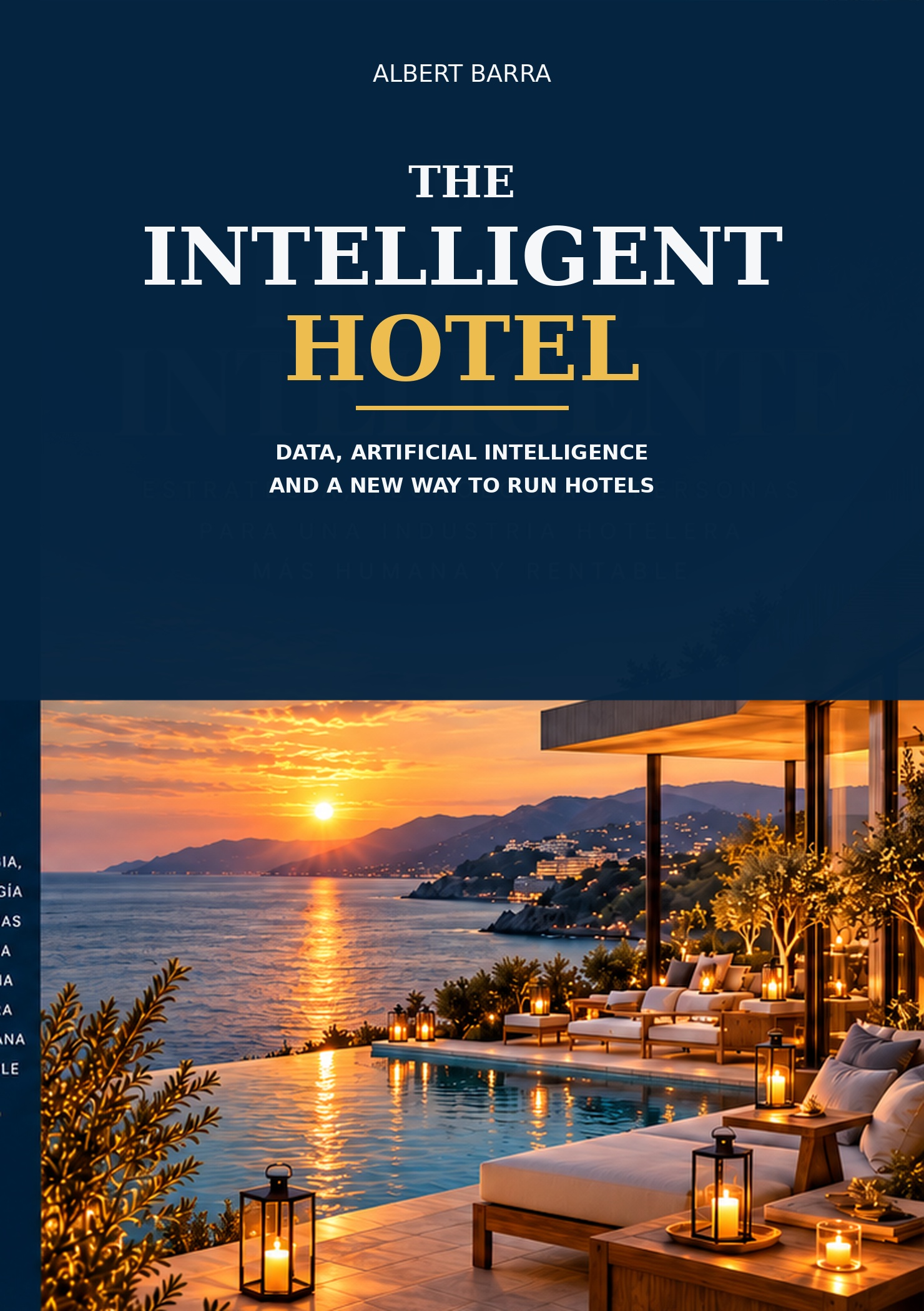
Recommended reading309 pages · PDF
The Intelligent Hotel
Data, Artificial Intelligence and a New Way to Run Hotels
Go deeper into how AI, data and automation are transforming hotel management, commercial performance and the guest journey.
Digital edition · Personal licence · Amazon soon
What this book means to me and how I imagine the hotel of 2030
Writing The Intelligent Hotel has also been a way of organising many questions that have accompanied me for years. After a long time working in hospitality, you end up accumulating experiences, mistakes, intuitions, debates, projects that worked and projects that seemed extraordinary in a presentation but proved far less extraordinary when they reached operations. The act of writing requires something quite healthy: turning those intuitions into arguments. It forces you to ask yourself why you think something. To look for where your reasoning may be wrong. To separate real trends from fashions. To distinguish between what is technically possible and what makes operational sense. And, above all, it forces you to imagine what kind of industry you want to help build. That is why this book has special meaning for me. It does not seek to explain exactly what the future will be like. I am rather wary of anyone who claims to know. It seeks to offer a framework for thinking about it. Because I believe we are entering a period in which some decisions that appear to be technological will, in reality, be profoundly strategic. How do we want to relate to our guests? Which decisions are we willing to delegate? Who will own customer knowledge? How will our systems connect? What data will we need? What capabilities will we need to develop in our teams? Which part of our value proposition will be human precisely because other parts have been automated? Where does personalisation end and intrusion begin? Who is accountable when artificial intelligence gets it wrong? These are uncomfortable questions. And that is precisely why they deserve to be asked. When I think about the hotel of 2030, I do not necessarily imagine a futuristic hotel. I do not need robots moving through every corridor or holograms welcoming guests. I imagine something far more useful. I imagine a hotel where information flows. Where we do not ask the same customer five times for something we already know. Where routine decisions are made quickly. Where managers have context before deciding. Where Revenue Management understands demand behaviour much better. Where Marketing truly understands the customer. Where operations anticipate needs. Where every colleague can get answers without having to chase information across different departments. Where guests decide when they want to interact digitally and when they want to interact with a person. And where management can devote less time to reconstructing the past and more time to designing the future. That hotel will be intelligent not because it uses artificial intelligence. It will be intelligent because the organisation learns. That distinction also explains why one of the book’s fundamental sections is its roadmap. I do not believe in transforming a hotel by purchasing twenty solutions at once. I believe much more in starting with real problems. Identifying a decision we make repeatedly. Measuring its cost. Understanding what information it requires. Asking ourselves whether we could resolve it better. Testing. Measuring. Learning. And only then scaling up. I have learned that innovation in hospitality works much better when it begins with an operational question than when it begins with a sales catalogue. Therefore, if I had to condense some of the principles that run through The Intelligent Hotel, they would be these:- Start with the problem, not the technology. If you cannot explain what you want to improve without mentioning artificial intelligence, you probably have not yet defined the project properly.
- Build a solid foundation of data and processes first. AI does not automatically fix fragmented, duplicated or incorrect information. Sometimes it simply allows us to make mistakes much faster.
- Measure real impact. Time saved, increased conversion, fewer errors, improved productivity, increased revenue, guest satisfaction or decision quality. If we do not define in advance what improvement means, any technology demonstration can seem spectacular.
- Keep people involved in the design. Those who carry out processes every day usually know where the friction lies that an organisational chart will never reveal.
- Decide what not to automate. I believe this is one of the most important skills of the next decade. Technological maturity will not be demonstrated by automating everything, but by knowing where human intervention creates the most value.
- Use AI to expand capabilities. The goal should be to enable a good person to do their job better, not simply to ask how many people we can eliminate.
- Build organisational learning. Every interaction, decision, outcome and incident should improve the hotel’s future capacity to make decisions.
This article ends here. The archive does not.
Lead Hospitality brings together 1200 English articles published since 2018: years of experiences, decisions and lessons you can keep exploring.
CONTINUE FROM HERE
What would you like to explore next?
Choose a direction and keep reading around what you want to solve, learn or challenge.
01MAKE MOREProfitability, revenue and decisions that reach the bottom line.
02LEAD BETTERTeams, culture, talent and the conversations that matter.
03SELL BETTERPositioning, marketing, distribution and customers.
04CREATE EXPERIENCESService, loyalty and details guests remember.
05UNDERSTAND WHAT'S NEXTInnovation, AI and new ways of thinking about Hospitality.
✦SURPRISE MEShow me something worth five minutes of my time.