
The Innovation Radar and the Capacity for Change in Hospitality

Albert BarraAugust 13, 2018 · 2 min read


In 2006, M. Sawhney, R. Wolcott and I. Arroniz of the Kellogg School of Management published The 12 Different Ways for Companies to Innovate. In it, they described the twelve paths companies could follow to develop innovation projects and presented a chart or tool that made it possible to visualise the company’s and its competitors’ position in terms of innovation: the innovation radar.
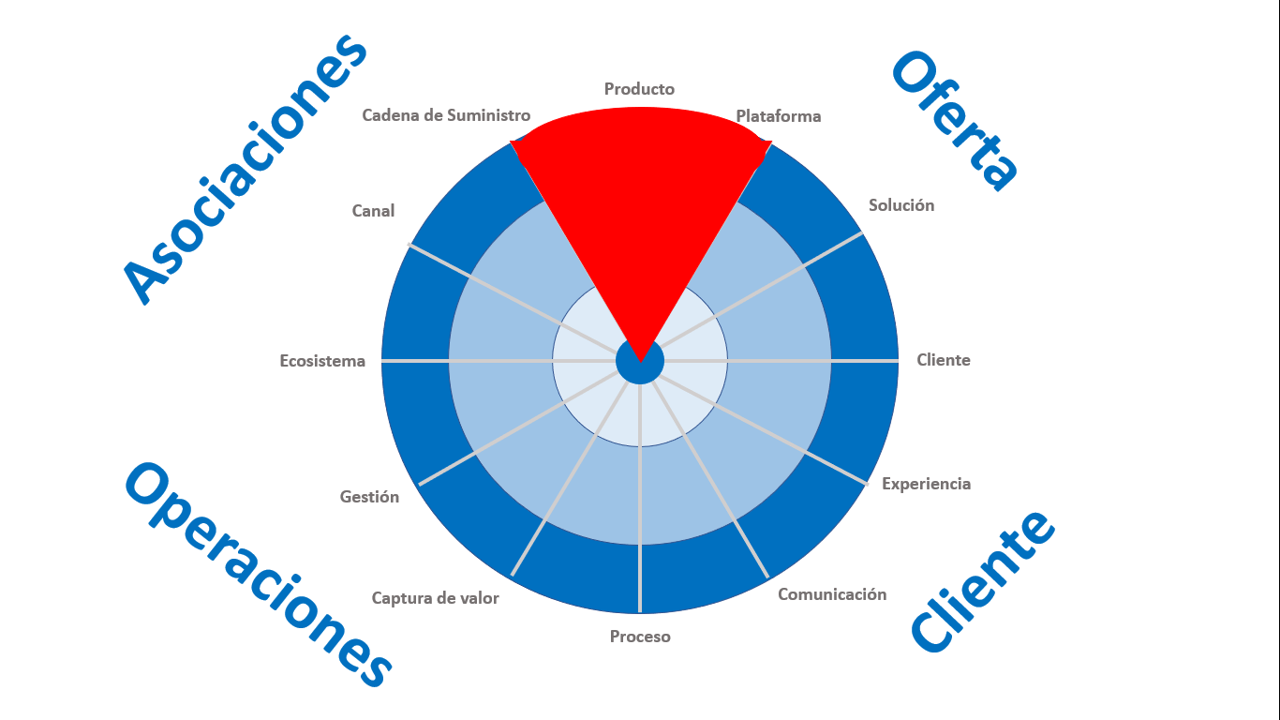
The radar is a chart showing the 12 types of innovation defined by Sawhney, Wolcott and Arroniz. These revolve around two axes that identify the four basic innovation pathways: what (the offering or product), who (customers), how (processes) and where (presence). From there, the other eight modes of innovation are broken down, always interconnected and built around these four fundamentals. For example, the offering and customer axes give rise to two further types of innovation: platform (the way the offering relates to the customer) and customised solutions (the needs the product addresses for the customer).
 Using this type of tool can be useful for identifying the innovation model we are developing and, if we combine it with the business model analysis canvas we have discussed on other occasions, we can see the implications for our business model and for any future developments we may undertake.
For example, we have the case of Starbucks. As shown in the accompanying chart, the coffeehouse chain innovates primarily in its offering and presence channels, as well as in the customer experience. By contrast, it adds very little value in the solutions it offers customers or in the value chain. Focusing on one innovation model and setting aside others is not inherently negative if we are aware of it, if we have developed it strategically and if we are able to translate that innovation into clear and tangible value for our markets.
There are no good or bad innovations, nor innovations of greater or lesser value. Every company must be aware of its strengths and weaknesses and work accordingly. The innovation radar enables us to clearly see which types of innovation we are developing and where we have room for improvement, always using it alongside other tools such as the business model analysis canvas, as mentioned above
Using this type of tool can be useful for identifying the innovation model we are developing and, if we combine it with the business model analysis canvas we have discussed on other occasions, we can see the implications for our business model and for any future developments we may undertake.
For example, we have the case of Starbucks. As shown in the accompanying chart, the coffeehouse chain innovates primarily in its offering and presence channels, as well as in the customer experience. By contrast, it adds very little value in the solutions it offers customers or in the value chain. Focusing on one innovation model and setting aside others is not inherently negative if we are aware of it, if we have developed it strategically and if we are able to translate that innovation into clear and tangible value for our markets.
There are no good or bad innovations, nor innovations of greater or lesser value. Every company must be aware of its strengths and weaknesses and work accordingly. The innovation radar enables us to clearly see which types of innovation we are developing and where we have room for improvement, always using it alongside other tools such as the business model analysis canvas, as mentioned above
Using this type of tool can be useful for identifying the innovation model we are developing and, if we combine it with the business model analysis canvas we have discussed on other occasions, we can see the implications for our business model and for any future developments we may undertake.
For example, we have the case of Starbucks. As shown in the accompanying chart, the coffeehouse chain innovates primarily in its offering and presence channels, as well as in the customer experience. By contrast, it adds very little value in the solutions it offers customers or in the value chain. Focusing on one innovation model and setting aside others is not inherently negative if we are aware of it, if we have developed it strategically and if we are able to translate that innovation into clear and tangible value for our markets.
There are no good or bad innovations, nor innovations of greater or lesser value. Every company must be aware of its strengths and weaknesses and work accordingly. The innovation radar enables us to clearly see which types of innovation we are developing and where we have room for improvement, always using it alongside other tools such as the business model analysis canvas, as mentioned above