Leadership has nothing to do with seniority or one's position in a company's hierarchy.
Leadership has nothing to do with titles.
Leadership has nothing to do with personal attributes.
Leadership is not management.
So, how can we summarise all these different perspectives on leadership?
I like to work with a very simple definition that I cannot claim as my own creation, but I also do not know where or from whom I heard it:
Leadership is moving people towards a common goal.
Let us break this down and see why it works so well for me. There are four distinct messages in this simple definition:
MOVING
The fact that the leader has some influence over the movement of the people working in the hotel is significant. I have written before about the importance of creating a motivating environment in which people can work. This motivating environment should inspire people to want to move, to want to be dynamic. It should help harness the natural motivation of the
team to succeed and contribute, thereby setting momentum in motion. And sometimes, when the situation requires more than a participative or consultative approach, pushing and pulling can also result in the desired progress. It is the ability to influence that will result in the movement we want.
PEOPLE
The leader does not move objects through the air. These are real people with real emotions and
needs. Although the
team should be moving forward, it is important to remember that part of the leadership role is bringing out the best in each individual. And the best way to do this is by adapting, applying different leadership tools according to people's needs and the situations they find themselves in.
COMMON
The hotel, and everyone who works in it, must work towards the same end. And that should be for the business to succeed.
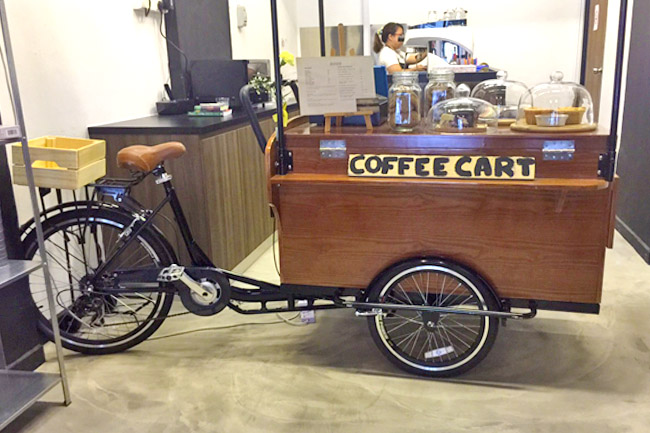
If people in the team are working towards independent purposes, it will be harder for anyone to succeed. Imagine you have eight members in your team; now think of them as horses harnessed to a cart. If each horse is attached to a different part of the cart and pulls in a different direction, the cart will eventually fall apart. At the very least, it will not move at all. Now think of the same eight horses, all pulling the cart in the same direction... now there is momentum! And survival!
GOAL
Which, of course, brings us to the final element: the goal, or objective. Every team must have something to aspire to and, as we have already seen, everyone must be aiming for the same thing. The goal must be clearly articulated and communicated transparently. And hopefully, it should also be realistic. Without a goal, the team has nothing to aspire to and nothing against which to measure its success or failure.
The final point I would like to make about leadership is the importance of balance. An effective leader needs to know how to address the needs of both people and the goal in order to be effective. Focusing purely on objectives, at the expense of the human side of things, may deliver some short-term gains, but in the long term it cannot be sustainable because we need the team to help us achieve our objectives.
If they feel they are not valued or taken into consideration on the path to success, they will not stay.
Likewise, focusing exclusively on people is not sustainable either. If the needs of the individual and the team always take priority over the need to achieve, then I call it “a happy crew on a sinking ship”. Part of the leader's role must be focused on the viability of the business.
That means that, to build a high-performing team in a high-performing hotel, it is about focusing on objectives, but in a people-oriented way. It is about achieving a viable balance between both approaches.