
4 min read•Albert Barra
How AI Is Shaping the Future of Hospitality

Albert BarraNovember 21, 2024 · 4 min read
Artificial intelligence is transforming hospitality by personalising the guest experience and optimising internal operations. From real-time chatbots to revenue management systems that adjust rates to demand, AI helps hotels anticipate guest needs and deliver exceptional service. Beyond automation, its real value lies in empowering people to create meaningful connections. Adopting AI is no longer optional—it is essential to remain competitive in an evolving market.
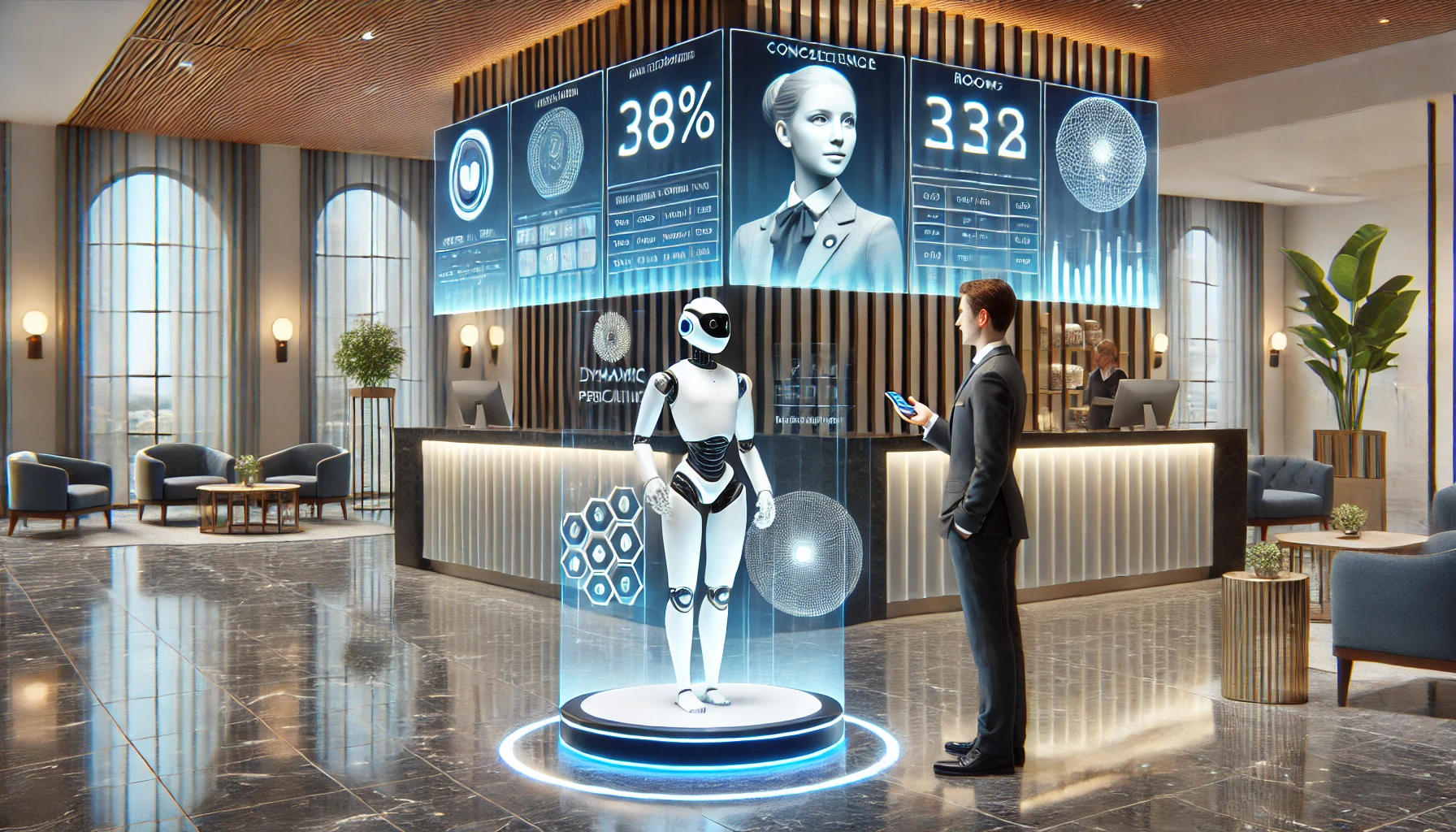
Artificial intelligence (AI) has ceased to be a futuristic promise and has become an essential tool in hospitality. In an industry where guest expectations grow by the day, the ability to anticipate their needs and deliver impeccable service makes all the difference. How is this achieved? The answer lies in the integration of advanced technologies that not only optimise internal processes, but also personalise the guest experience in ways unimaginable a decade ago.
Today, AI is transforming the way we operate hotels. From systems that automatically adjust rates based on demand patterns to virtual assistants that handle guest enquiries in multiple languages, AI is present in every corner of the business. But the most fascinating aspect is not only what it is already doing, but also its potential to revolutionise our industry even further. Are we truly ready to embrace this change? That is the question we must ask ourselves.
A key aspect of AI in hospitality is its ability to learn and improve over time. Thanks to big data analytics, machines can identify patterns, predict behaviours and recommend specific actions. For example, it is not science fiction to imagine systems that suggest the perfect cocktail for a guest based on their preference history. Far from being a luxury, this level of personalisation is becoming a necessity if we are to remain relevant in an increasingly competitive market.
But it is not only about enhancing the guest experience. AI is also redefining internal operational management. Repetitive tasks, such as room allocation and inventory management, can now be automated with a level of precision that reduces errors and frees up staff to focus on what matters most: human interactions. And that is where the true value of AI lies—not in replacing people, but in enhancing their ability to create meaningful connections.
In an industry as dynamic as ours, failing to adopt AI means falling behind. The opportunities are immense, but so are the challenges. The key is to understand that this technological revolution is not simply about acquiring tools, but about integrating them strategically to maximise their impact. As I like to say: “Technology does not transform businesses; it is the people who use it with purpose who drive real change.” Are we ready to take that step? The answer will shape the future of our hotels.
Benefits and advances of AI in the industry
AI offers a range of benefits and advances for the hotel industry. First, it enables hotels to provide more personalised service to their guests. Chatbots, for example, can interact with guests in real time and provide quick, accurate answers to their questions. In addition, AI can analyse large volumes of data to identify patterns and trends, helping hotels make more informed decisions about pricing, marketing and inventory management. Another important AI advance in the hotel industry is the automation of repetitive tasks. This enables employees to focus on more strategic, high-value work, such as engaging with guests and delivering exceptional service. In addition, AI can help improve hotel security through the use of facial recognition systems and suspicious behaviour detection.The impact of AI on the sector’s productivity and efficiency
AI has a significant impact on the productivity and efficiency of the hotel sector. On the one hand, task automation enables hotels to reduce costs and increase operational efficiency. For example, chatbots can handle guest enquiries 24 hours a day, seven days a week, without the need for additional staff. In addition, AI can help optimise inventory management and staff scheduling, reducing the time and resources required to carry out these tasks. On the other hand, AI can also improve employee productivity. By automating repetitive tasks, employees can devote more time to work that requires human skills, such as guest interaction and problem-solving. This not only enhances the guest experience, but also increases employee satisfaction and engagement. The outlook and growth opportunities for the hotel industry enabled by AI are promising. According to an Accenture report, AI is expected to generate US$14 trillion in value for the hotel industry by 2035. This is because AI can help hotels enhance the guest experience, increase operational efficiency and make more informed decisions. In addition, AI also offers growth opportunities in areas such as marketing and personalisation. Hotels can use AI to analyse guest data and provide personalised offers and services. This not only enhances the guest experience, but also increases customer loyalty and spending. In conclusion, AI is revolutionising the hotel industry by delivering significant benefits and advances. From service personalisation to task automation, AI is improving the guest experience and increasing hotels’ operational efficiency. With promising prospects and growth opportunities, it is essential for hoteliers to make the most of AI’s potential in order to remain competitive in today’s market. Artificial intelligence will not replace hotel managers, but those who use artificial intelligence will replace those who do not.FREE READING LIMIT
You have reached your free article limit
Subscribe to continue reading without limits, or unlock this article individually when available.
Already have access?Sign in