Hospitality Recruitment Challenges: Hiring and Retaining Hotel Staff

As hospitality businesses grow their teams, hiring customer-facing employees with the right soft skills is essential. Explore the qualities to look for in hotel staff, from a warm attitude and guest anticipation to problem-solving, as well as practical interview and retention considerations.

The hotel industry is currently experiencing a boom. The economy is healthy, and many people are choosing to spend their income on leisure and travel.
This means that hotels, restaurants and other businesses related to the sector need to expand their workforce to meet demand. However, hiring the right employees for customer service roles can be challenging. While it is important for industry professionals to know how to elegantly open a bottle of wine or carry out a proper check-in, soft skills are the most important thing today.
It can also be difficult for hospitality businesses to recover from a bad hire. If a guest experiences poor service from an employee, they will probably never return. And if an employee has to be replaced, the business may be left understaffed when guests need attention.

What core skills should you look for?
The term core skills refers to the intangible personality traits of a candidate. In other industries and professions, hiring managers must focus on skills, experience and education, but this is not the case in hospitality roles.
A major issue currently affecting the hospitality industry is its high turnover rate. This is because staff working in leisure venues, hotels and similar businesses often face irregular schedules, as well as low wages, which lead them to leave sooner.
With a high turnover rate, recruitment itself becomes a major issue in this industry. And even when recruitment is carried out, finding candidates with the best skills and professionalism is a challenge.
Your hotel already generates the data. HotelGEX turns it into decisions.
A platform built from real hotel operations to connect guests, Customer Journey, operations, Revenue, F&B, Groups & Events and Management within one intelligent context.
This issue stems from the fact that recruiters generally lack proper pre-employment assessment, increasing the risk of hiring the wrong person. This particular recruitment challenge in the hospitality industry exists because all candidates try to present their best selves in an assessment, which can obscure their true personality from the recruiter.
A friendly, outgoing attitude
The right attitude is essential for service professionals. Anyone hired must not only treat guests kindly, but also display an authentic, outgoing manner. Try to find candidates who smile, make eye contact and have a warm demeanour.
The ability to recognise what a guest needs or wants
Anticipating what a guest needs without being asked is a hallmark of a great hospitality professional. It is difficult to achieve, but requires reading body language or using the available information to make sound judgements. For example, a waiter should know that a guest looking in their direction needs attention. And a receptionist should assume that a guest arriving late may have had a difficult journey and would appreciate prompt, friendly service.
They must be able to meet high expectations
In many cases, guests are celebrating birthdays, weddings or anniversaries, or taking a holiday. In all likelihood, they have been looking forward to the experience for a long time, and staff must do everything possible to meet their expectations.
The ability to solve problems on the spot
The phrase “the customer is always right” is sacrosanct in the hotel industry. Even if a guest is rude or unreasonable, staff must be resilient enough to accept criticism and do everything possible to resolve the issue. In most cases, this means finding a solution quickly and creatively, and turning a disappointed guest into a satisfied one.
The selection process
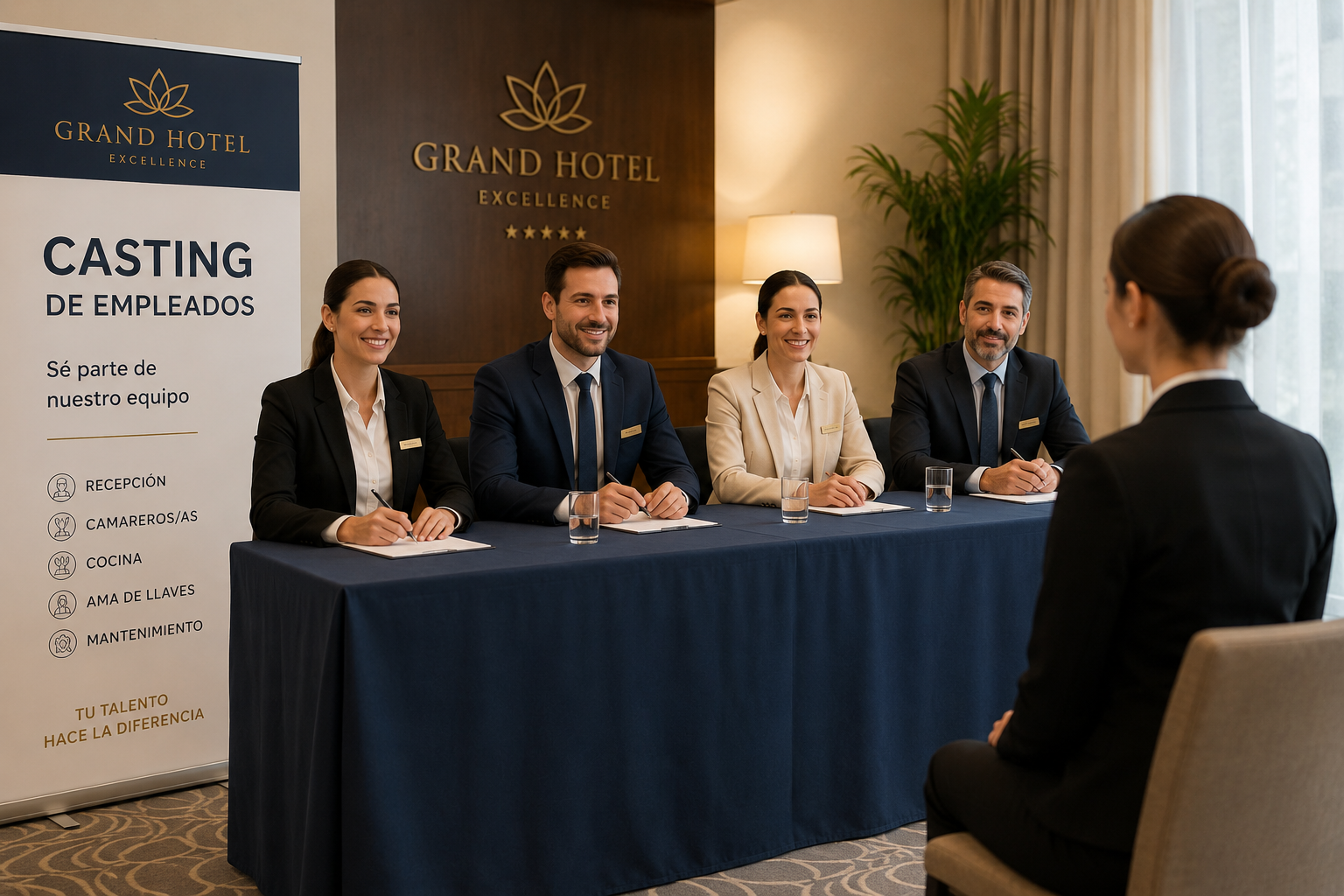
CVs are a secondary consideration when hiring in the hotel industry. You need to find people whose personality shines through during interviews. Interviews are especially important in the hospitality industry, so use these tips when meeting candidates:
- Conversation matters: beyond their answers to typical interview questions, look for the candidate’s ability to hold a friendly conversation. Do they make eye contact, smile and have a pleasant personality?
- Consider the candidate’s appearance: if your business has certain dress standards for staff, this will give you an idea of the candidate’s ability to follow them. If they cannot arrive at the interview well groomed and wearing an ironed shirt, there is no way they will be able to show up to work every day with the right appearance.
- Ask situational questions: if you want to learn how a potential employee will handle specific challenges, ask concrete questions. You can present them with a difficult situation they may encounter at work and ask them to explain how they would resolve it.
Good hospitality professionals are difficult to train, which is why hiring the right people is especially important, rather than expecting them to learn on the job.
Retaining good employees
This is one of the main challenges within the hotel industry. Once you have the right talent in place, a major question mark arises over how to retain it.
Employees often leave quickly if they are unhappy. Highly skilled employees in particular find it very easy to change roles, as they are in high demand in the market.
So, the best way to keep them with you is to foster a sense of loyalty and allow them flexibility. This will enable them to perform at their best in a relaxed environment.
The key is to find professionals who want to build a career, who want to make a difference and remain at your hotel for the long term.
This article ends here. The archive does not.
Lead Hospitality brings together 986 English articles published since 2008: years of experiences, decisions and lessons you can keep exploring.
The Ethics of Employee Motivation in Hotels
Employee motivation in the hotel industry raises important ethical questions. Fear-based management is often ineffective, while intrinsic and ethical approaches can foster deeper engagement.