
Leading by Example: The Key to Motivating and Transforming Hotel Teams



There is one idea that is frequently repeated in hospitality: the guest experience is at the heart of everything. Curiously, despite repeating it so often, we continue to look for shortcuts to achieve it. Processes, standards, inspiring speeches, culture manuals… and yet we forget the most decisive factor of all: how those who lead behave when no one is watching.
Over time, I have found that hotels are not transformed by what is declared in a meeting, but by what is tolerated day to day. Culture is not implemented; it is observed, copied and replicated. This is where leadership ceases to be an organisational function and becomes a constant mirror.
Hospitality is an intensely human business. We do not sell rooms; we sell moods, sensations and memories. And that is only possible when the people on the team feel consistency between what is asked of them and what they see those making decisions do.
In environments of pressure, turnover and constant demands—which in hospitality are not the exception but the norm—leading by example ceases to be a desirable virtue and becomes a strategic tool. It is what keeps everyone on course when workloads peak, the unexpected arises or circumstances change.
That is why it is worth pausing to reflect on something uncomfortable yet essential: there can be no outstanding guest experience without a credible internal experience. And that credibility always begins with the behaviour of those who lead.
The importance of exemplary leadership in motivating teams
Exemplary leadership in hospitality is essential because it sets a standard of behaviour that employees aspire to emulate. When a leader demonstrates integrity, commitment and a passion for service, they create a multiplier effect that motivates the team to follow their example. Motivation among hotel teams does not arise solely from financial incentives or recognition, but also from the perception that their leadership is authentic and aligned with the property’s values.
Furthermore, a leader who leads by example creates an environment of trust and credibility. When employees see consistency between leadership’s words and actions, they feel more secure and motivated to take on responsibilities and challenges. In this context, motivation ceases to be an external task and becomes an internal attitude that spreads and strengthens throughout the organisation. Trust in leadership translates into greater commitment, lower turnover and a positive workplace climate that directly affects the guest experience.
On the other hand, in hospitality, where human interaction is at the heart of the business, exemplary leadership also influences the service culture. Leaders who demonstrate empathy, respect and dedication through their actions inspire their teams to do the same with guests. Motivation, then, becomes an act of consistency and authenticity that goes beyond words and is reflected in every interaction. The key is to understand that motivating is not simply about giving orders, but about being a living example of commitment to excellence.
To achieve this, leaders need to engage in continuous self-assessment and be willing to learn and adapt. Genuine motivation arises from the conviction that it is possible to influence others positively through example, and that this impact is reflected in guest satisfaction and the success of the hotel business. Sustained motivation requires a conscious attitude that inspires trust and enthusiasm in every corner of the hotel.
How leading by example drives organisational transformation
Transformation in hospitality requires profound changes in culture, processes and the way teams interact and connect with guests. Leading by example acts as a catalyst for this transformation, as its influence goes beyond words and is expressed through concrete actions. When leaders embrace innovative, sustainable and guest experience-centred behaviours, they inspire their teams to follow that path and adopt new practices enthusiastically.
Exemplary leadership drives the adoption of change throughout the organisation, helping to overcome the natural resistance that often accompanies transformation. Consistency in a leader’s actions creates an environment in which the team sees change not merely as a directive, but as a natural evolution in pursuit of excellence. Organisational transformation in hospitality therefore becomes a collaborative process in which leadership by example is the compass guiding every step.
Furthermore, when leaders act as role models, they foster a mindset of innovation and continuous improvement. In a sector as competitive and dynamic as hospitality, adapting quickly to market trends and needs is crucial. The inspiration that stems from exemplary leadership motivates teams to seek creative solutions, challenge the status quo and commit to ongoing improvement. In this sense, transformation ceases to be an imposition and becomes a natural evolution driven by inspiration and consistency.
Books to run a hotel with judgement
Written from the general manager’s chair: technology, guest experience, leadership and management.
 Directing HotelsWhat Nobody Tells You Before You Sit in the General Manager’s Chair
 The Intelligent HotelData, Artificial Intelligence and a New Way to Run Hotels
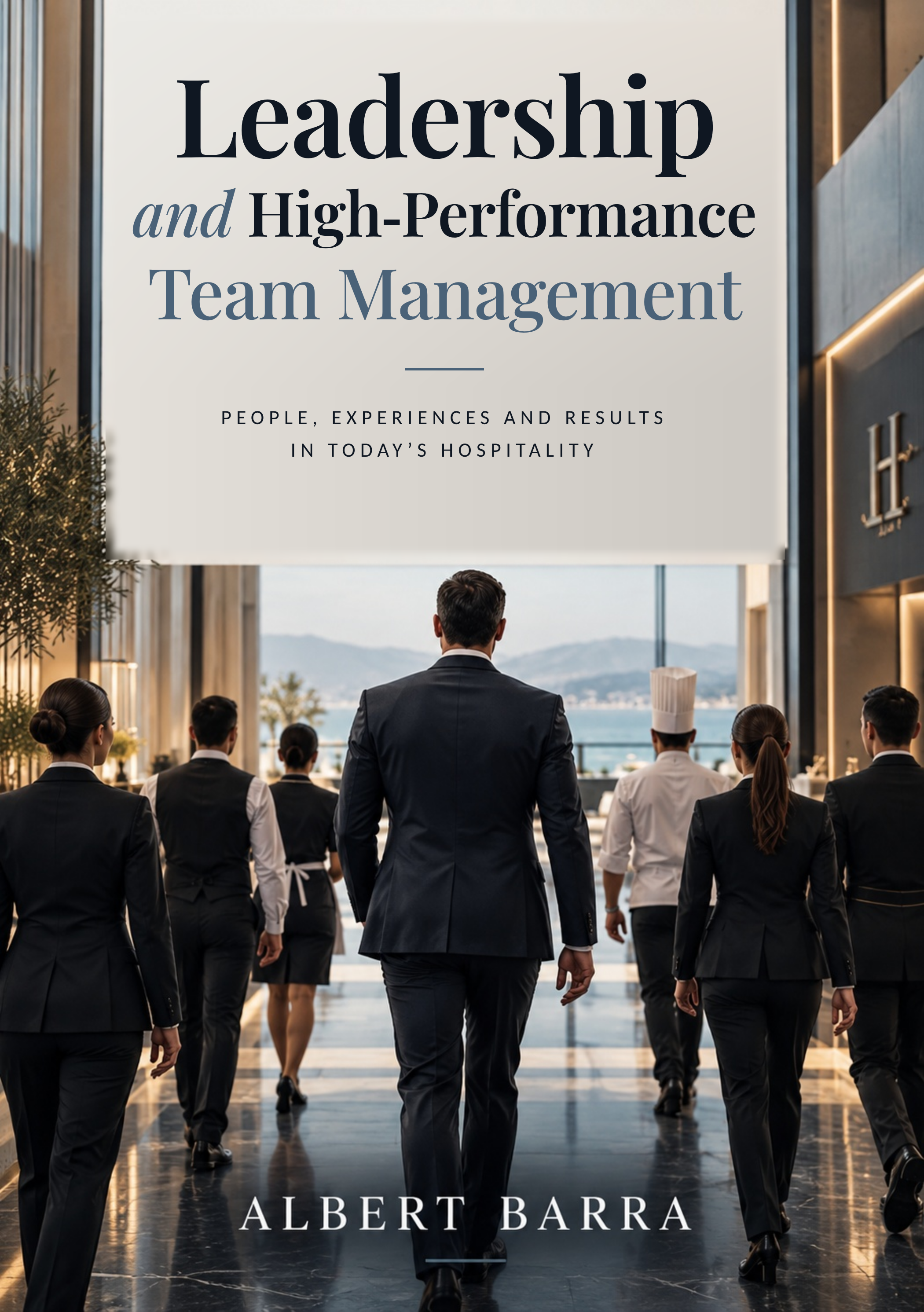 Leadership and High-Performance Team ManagementPeople, Experiences and Results in Today\\\'s Hospitality
 The Guest JourneyDesigning Customer Experience Across the Entire Hotel Journey
Finally, a leader’s influence on organisational transformation is also reflected in team resilience. In times of crisis or uncertainty, a leader who demonstrates commitment and leads by example helps maintain high morale and keeps everyone focused on shared objectives. The ability to lead by example in difficult moments strengthens cohesion and trust, essential ingredients for navigating change successfully and sustainably.
The leader’s influence on team culture and values
Hospitality leaders play a crucial role in the development and transmission of organisational culture. A hotel’s culture, which defines how things are done and which values are prioritised, is largely shaped by the example set by those in leadership positions. When a leader demonstrates consistency between their actions and the values they promote, they establish a standard that permeates the entire organisation.
Leadership’s influence on team values is direct and powerful. Employees learn by observing, and if they see their leader act with honesty, respect, dedication and passion, these values become part of the team’s DNA. The culture built on these actions is reflected in the way guests are treated, in attention to detail and in how daily challenges are addressed. A leader’s consistency in their behaviour helps consolidate an authentic, committed service culture.
Leading by example also has an impact on the management of diversity and inclusion. When a leader demonstrates openness, respect and appreciation for different perspectives, they foster an environment in which every team member feels valued and motivated to contribute. A hotel’s culture, therefore, is based not only on service quality, but also on how internal relationships are built and how a climate of respect and collaboration is promoted.
A leader’s example also influences the adoption of sustainable and responsible practices, which are now essential in hospitality. When leaders demonstrate commitment to sustainability, social responsibility and environmental stewardship, these values become integrated into the hotel’s culture. Consistency in action encourages teams to follow that path, creating a positive impact on the community and on guest perception.
Strategies for leaders to become effective role models
For leadership by example to be truly effective, specific strategies must be implemented to help leaders act as role models. First and foremost, authenticity must be the foundation: leaders must be consistent in their values and actions. Authenticity builds trust and credibility, essential elements for motivating and transforming teams in hospitality.
Another key strategy is public recognition and constructive feedback. When a leader highlights exemplary behaviours and acknowledges the team’s achievements, they reinforce the desired conduct and motivate others to follow that example. Effective feedback, grounded in empathy and honesty, helps consolidate a culture of continuous improvement and genuine commitment.
Likewise, leaders must share their vision and purpose clearly and passionately. Effective communication and the articulation of an inspiring purpose mobilise teams and align their efforts with the hotel’s strategic objectives. When employees understand and feel that they are part of something bigger, their motivation and commitment increase exponentially.
Finally, the ongoing training and development of leadership and emotional management skills are fundamental. A leader who invests in their personal growth and that of their team sets an example of lifelong learning. In addition, fostering empathy, active listening and emotional intelligence helps strengthen relationships with employees and create an environment where everyone feels valued and motivated to give their best.
This article ends here. The archive does not.
Lead Hospitality brings together 1200 English articles published since 2018: years of experiences, decisions and lessons you can keep exploring.
What would you like to explore next?
Choose a direction and keep reading around what you want to solve, learn or challenge.