
Mobile Marketing for Hotels: Why It Matters

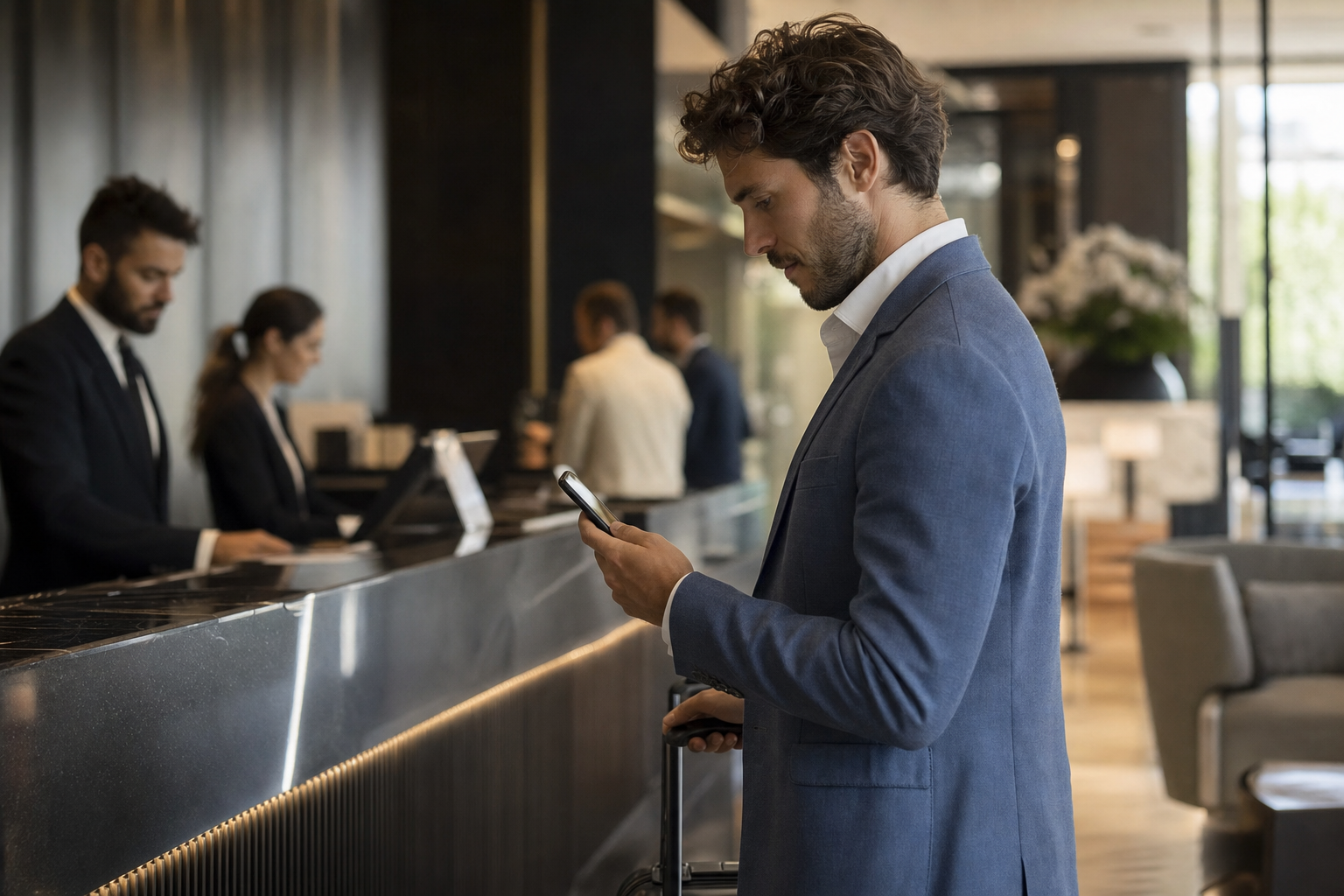

Before giving mobile marketing the importance it deserves, I think it is worth remembering that we are not talking about anything new. Mobile marketing has been used, with varying degrees of success, since the early days of mobile technology. Think of the Bluetooth transmitters found years ago in airports, exhibition venues and so on, where an attractive hostess would invite us to turn on our device's Bluetooth so we could download an application containing a guide or other content they wished to distribute. So, we are not talking about the be-all and end-all, nor some geeky novelty, although I know that some people have only just discovered it and seem to think they invented it.
In fact, I know of few success stories involving this technology, but some visionaries had already glimpsed the opportunity to get into users' mobile phones to spread their message and, in a way, put it in their pocket.
What was missing? I believe it was what we have today: users' willingness to discover applications and content through their mobile phones, which, together with advances in 3G, 4G and Wi-Fi technology, as well as socially participatory environments, allows messages to spread virally at the users' own discretion.
We only need to look around us. People check in wherever they go through Facebook. They share photos of what they do and eat on Instagram, Facebook and Twitter, tagging those accompanying them at any given time.
The social change itself has been remarkable, all made possible by the ease of doing so through a small device that fits in a pocket. There may be many reasons why people now behave this way, and everyone acts according to their own judgement, but what is undeniable is that this habit is here to stay.
From a marketing perspective, we have gained something we did not have before. While in the early days of mobile marketing there was already a certain degree of willingness to act, even if prompted by the captivating smile of a hostess, nowadays willingness is undeniable, to the point that connecting, discovering and sharing have become a human need.
Indeed, willingness, need and portability 24 hours a day, 7 days a week. How could marketing professionals fail to seize the opportunity before us?


My published books
Confusing mobile marketing with simply having a mobile-optimised version of our website is a mistake, although it is an essential first step for those wishing to begin that journey. Let us not be mistaken. Browsing the internet on a mobile phone, however sophisticated it may be, is not as comfortable as doing so on a computer. Therefore, those who do it really want to, and are looking for something at that very moment that cannot wait until they can do it under better conditions. We must therefore bear in mind that sales opportunities generated through mobile devices require almost immediate response times, since the search coincides with a need at a very particular moment in the user's life.
Running proximity marketing campaigns using the GPS function now available on all mobile phones, and launching instant-offer campaigns through Foursquare, is no longer a secret to those who take these possibilities seriously.
Encouraging users to share their photographs, or to view others' photos of our business, allows our message to flow through the channels where it should flow.
Using coupons and QR codes provides great value for users who, in their search for opportunities, may end up finding either exactly what they needed or something that caught their attention and offers equal value.
Ultimately, it is not all about having a mobile website or an application. Sometimes it is as simple as putting ourselves in the customer's shoes, with a phone in hand, thinking about what that customer might need and how the phone could help them. In the worst-case scenario, what would happen if we had a customer at the door of our business and our competitor, 50 metres further down the road, had read this article and was trying to capture that customer's attention?
I think it is worth reflecting on.
This article ends here. The archive does not.
Lead Hospitality brings together 1200 English articles published since 2018: years of experiences, decisions and lessons you can keep exploring.
What would you like to explore next?
Choose a direction and keep reading around what you want to solve, learn or challenge.