
The Samurai Strategy in Hospitality: Discipline, Integrity and Adaptability in Hotel Management

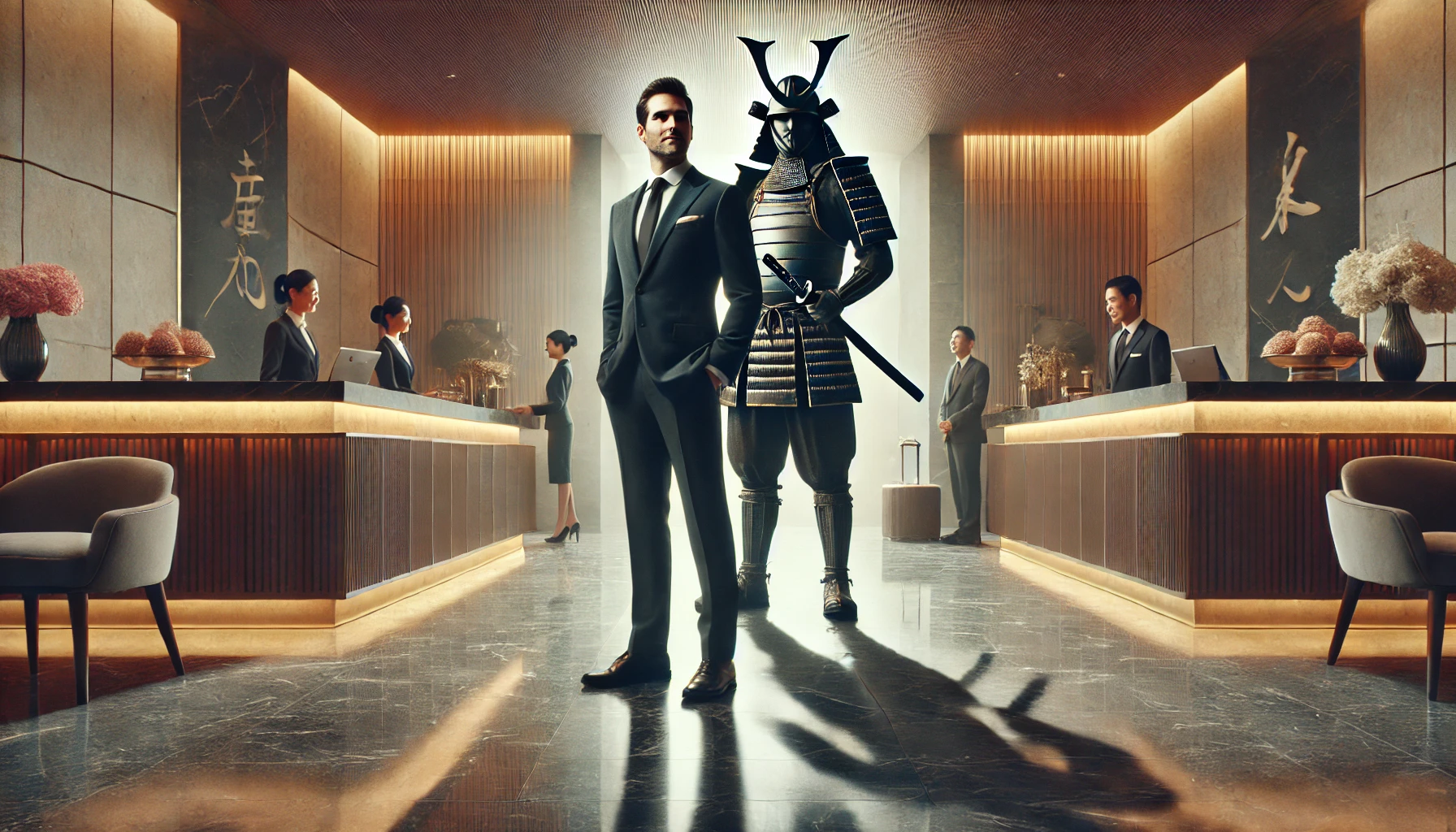

In recent years, I have discovered a renewed fascination with ancestral wisdom. And of all the philosophical and military legacies I have studied, few compare in depth and relevance to modern hospitality as closely as the Bushidō code, the ancient samurai ethic. In this era of rapid change, rising expectations and tight margins, I have found that reclaiming the Japanese warrior’s core values can offer us a moral and strategic compass for leading teams, creating memorable experiences and sustaining profitability.
Hospitality, like the samurai battlefield, demands mental agility, sound decision-making and unwavering loyalty to principles. We no longer fight with swords, but every day we face uncertainty, operational pressure, fierce competition and guest expectations that evolve at lightning speed. How do we endure without losing our way? How do we move forward without disrupting our internal balance? My answer rests on three pillars: discipline, honour and adaptability. This is the essence of the Samurai Strategy applied to hotel management.
 Contrary to what some may imagine, this is not merely a metaphor. The values of Bushidō —such as rectitude (gi), courage (yū), compassion (jin), respect (rei), honesty (makoto) and self-control (jisei)— have a remarkable relevance to our daily work as hoteliers. These values are not ornaments. They are practices. They are decisions. And in my experience, those who integrate them into their leadership style build more engaged teams, more loyal guests and more resilient operations.
But for this philosophy to be more than aesthetic inspiration, we must understand how to translate it into concrete actions. In this article, I want to share some reflections on how I apply these principles in the hotel, and why I believe this leadership approach can make the difference between an average hotel and an extraordinary one.
The Three Pillars of the Samurai Strategy
1. Discipline: Operational Excellence Without Shortcuts
Samurai discipline is not rigidity: it is consistency. In hospitality, this translates into robust systems, clear procedures and precise execution. Excellence is not accidental; it is a habit.
-
-
Operational standards as rituals: Every check-in, every room preparation, every breakfast service must be carried out like a kata (form) in martial arts: with full attention, without improvisation or compromise.
-
Continuous training as daily practice: It is not enough to train staff at the outset. A samurai trained every day. We, too, must train, motivate and keep our teams up to date.
-
Time and priority management: In samurai philosophy, it was said that “whoever arrives late to battle has already lost.” Good weekly planning, brief meetings and daily focus allow us to stay ahead of problems.
-
2. Honour: A Culture of Integrity and Genuine Service
Honour was the heart of Bushidō. For a samurai, one’s word was law. In a hotel, honour is expressed in the consistency between what we promise and what we deliver, in how we treat our team, our suppliers and, of course, our guests.
-
-
A strong organisational culture: A team that acts with integrity and pride can only be built from the top down, through consistent example. Promise what can be delivered; deliver what is promised.
-
Recognition and a sense of purpose: Rather than managing through intimidation, a hotel with honour cultivates a sense of belonging that connects every team member to a shared purpose: making others feel welcome, cared for and valued.
-
Authentic hospitality: It is not merely about protocol. A greeting, a smile and personalised attention carry weight because they reflect respect—not out of obligation, but conviction.
-
3. Adaptability: Strategic Flexibility with Firm Roots
A samurai was a strategist. He studied the enemy, understood the environment and changed tactics without losing his essence. In hospitality, this ability is more necessary than ever.
-
-
Adapting to changing demand: Today’s guest seeks hyper-personalisation, unique experiences, healthy options, sustainability and seamless connectivity. We cannot respond with menus from 10 years ago or arguments such as “we have always done it this way.”
-
Operational resilience: The sector’s challenges—health crises, rising costs and shifts in distribution—require us to think like strategists. Which processes can be streamlined? Which partnerships can be strengthened?
Lead Hospitality LibraryMy published books
The Intelligent HotelData, Artificial Intelligence and a New Way to Run Hotels→Directing HotelsWhat Nobody Tells You Before You Sit in the General Manager’s Chair→Leadership and High-Performance Team ManagementPeople, Experiences and Results in Today\\\'s Hospitality→See all booksDigital edition · Personal licence · Free or discounted for subscribers -
Using data to read the terrain: Just as the samurai observed the wind, the terrain and the sun, we must interpret occupancy, satisfaction and profitability metrics in order to make sound decisions.
-



Final Tips for Applying the Samurai Strategy in Your Hotel
-
Review your “code of honour” as a leader: Ask yourself which values you are unwilling to compromise on. Your team must know them and see them reflected in you.
-
Train with discipline, but lead with empathy: Excellence is not imposed; it is inspired. Correct with firmness, but without breaking people down.
-
Be water, not rock: Adapt your strategy to change without losing your essence. In Miyamoto Musashi’s own words: "There is nothing outside yourself that can give you strength. Strength lies within you."
Adopting the Samurai Strategy in hospitality does not mean looking nostalgically to the past, but rather bringing a deeply relevant philosophy into the present. In an increasingly automated and competitive business environment, the values of Bushidō return us to what is essential: a commitment to excellence, respect for people and integrity as the compass for every decision. It is not about incorporating exotic rituals, but about cultivating a strong, coherent internal culture that inspires trust and purpose.
I have seen how these principles can transform the way a team works and relates to guests. When team members feel there is a purpose behind every task, and that they are part of a greater mission, their level of engagement multiplies. Honour and discipline are not just words; they are practices that foster cohesion, reduce internal conflict and elevate the service experience to a level that is difficult to match. Best of all, they are contagious.
Moreover, in times of constant change, adaptability becomes essential. The hotel that clings to old formulas, however successful they may have been, risks being left behind. By contrast, those who develop their ability to observe, anticipate and respond with agility maintain their relevance and leadership. Strategic flexibility does not mean compromising on values, but being creative in how they are applied. The samurai was not rigid: he was dynamic, attentive and strategic.
As hoteliers, we have a responsibility to create working environments where people grow, feel valued and give their best. We also have a responsibility to offer our guests more than a room: an experience they remember, recommend and return for. That can only be achieved when there is a strong culture behind it, and that culture is built with conviction, day by day. In this respect, the samurai spirit is a great ally.
Ultimately, leading a hotel today demands more than operational skills: it requires vision, character and a clear ethical framework. For me, the Samurai Strategy is a powerful way to anchor our management approach in enduring principles that transcend trends and technologies. And although we wear neither armour nor katana, we can choose to act with the same determination, respect and courage that guided those warriors. Because true hospitality, in the end, is an act of courage and generosity.
This article ends here. The archive does not.
Lead Hospitality brings together 1200 English articles published since 2018: years of experiences, decisions and lessons you can keep exploring.
What would you like to explore next?
Choose a direction and keep reading around what you want to solve, learn or challenge.