
Selective Memory: Remembering Only When It Suits

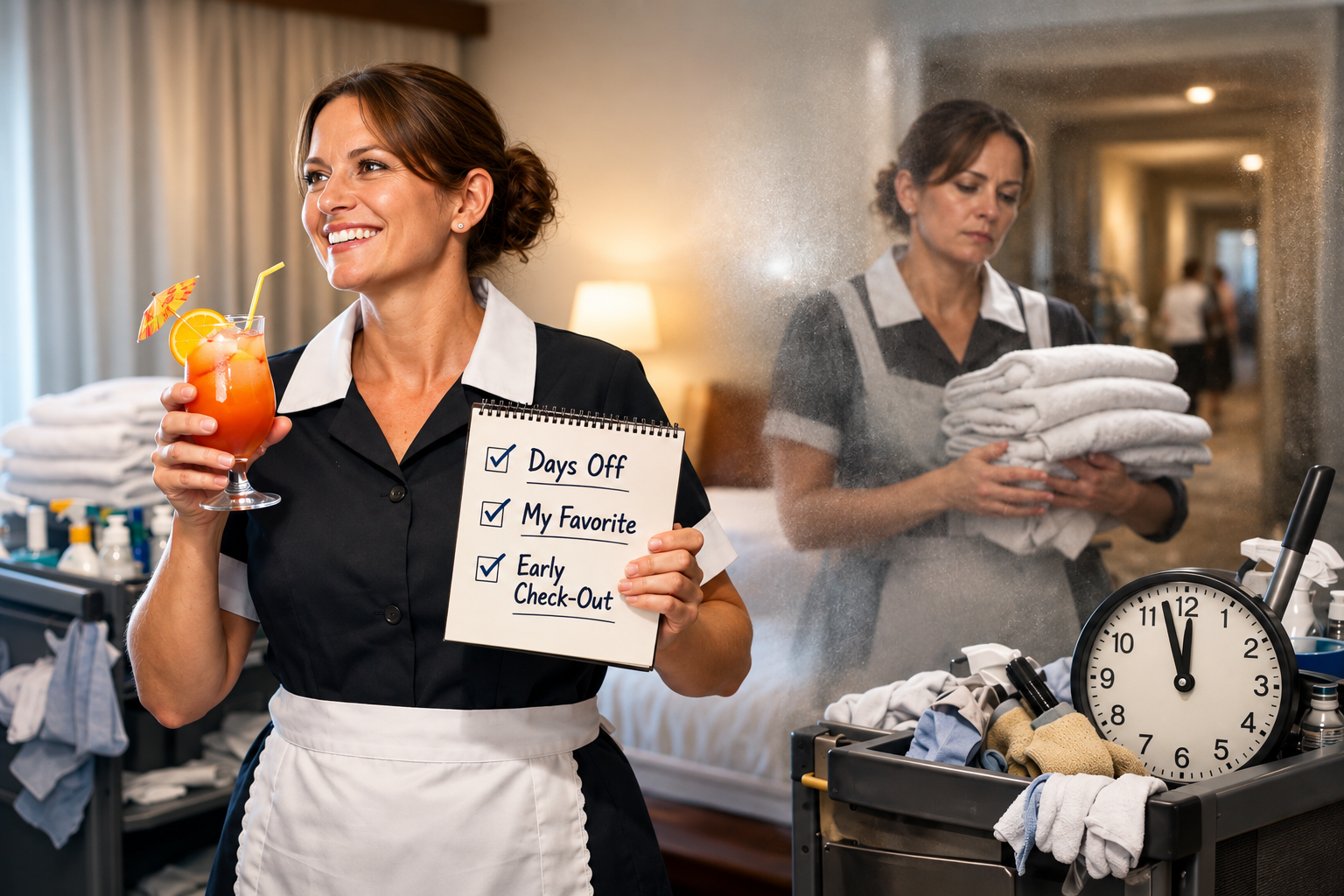

In hospitality, there is a skill that appears in no handbook, yet some people master it with almost surgical precision: selective memory.
The kind that works wonderfully when it comes to remembering days off, one-off favours or flexibility granted, yet curiously switches to airplane mode when it is time to pitch in, cover a shift or step up when the hotel is under pressure.
We have all seen it.
And, if we are honest, we have all been on the receiving end of it.
Because hospitality is not a Monday-to-Friday office job with predictable schedules and realities. It is an industry of peaks, unforeseen events, unbalanced seasons and days when the plan goes out the window at ten in the morning. And in that context, selective memory is not merely an amusing anecdote: it is a symptom.
A symptom of something deeper.
Remembering only what benefits the “I” and forgetting what sustains the “we” does not merely disrupt a rota or a plan. It breaks operational trust. That quiet trust that enables a team to function even when everything is going wrong. The kind that is not written into any contract, but is felt every day.
The problem is not asking for flexibility.
It never has been.

Stop managing isolated systems. Start managing the whole hotel.
HotelGEX connects guests, operations, Revenue, F&B, Groups & Events and Management into one intelligent hotel context — so every decision starts with a clearer picture.
The problem is always asking for it in one direction only.
When someone remembers with absolute clarity that “you let me leave early last time”, but fails to remember that on that same day another colleague extended their shift, another changed their day off, or another took on a mess that was not theirs to handle, we are not dealing with an innocent oversight. We are looking at a partial—and deeply self-serving—view of the collective effort.
In hospitality, memory is also culture.
And culture is not defined in meetings or on motivational posters. It shows in small, everyday, and far-from-heroic details:
In who steps up when an uncomfortable problem needs solving.
In who only shows up when it is time to cash in a favour.
Lead Hospitality LibraryMy published books
Directing HotelsWhat Nobody Tells You Before You Sit in the General Manager’s Chair→The Intelligent HotelData, Artificial Intelligence and a New Way to Run Hotels→The Guest JourneyDesigning Customer Experience Across the Entire Hotel Journey→See all booksDigital edition · Personal licence · Free or discounted for subscribersIn who understands that balance is not built in today’s shift, but over the long term.



Properly understood, flexibility is a tool for building trust, not a permanent bargaining chip. It works when there is reciprocity, when there is that shared—and unwritten—sense that today you give, and tomorrow someone else will. It stops working when it becomes a selective record of grievances, carefully updated only for one’s own benefit.
And here comes the uncomfortable part:
selective memory does not wear down the company. It wears down the team. It breeds cynicism, silent comparisons, and that feeling of “I am always here while others always disappear”, which is lethal to any hotel operation.
Hospitality does not need heroes or martyrs.
Nor does it need emotional accountants keeping score of other people’s efforts.
It needs professional adults, with complete memories.
Because, in the end, in a hotel, everything is remembered.
Even if some people believe otherwise.
We remember who was there,
who was not,
and who only remembers… when it suits them.
This article ends here. The archive does not.
Lead Hospitality brings together 1200 English articles published since 2018: years of experiences, decisions and lessons you can keep exploring.
What would you like to explore next?
Choose a direction and keep reading around what you want to solve, learn or challenge.