
The Difference Between a Well-Managed Hotel and One Held Together by Heroics

Albert BarraOctober 4, 2026 · 20 min read
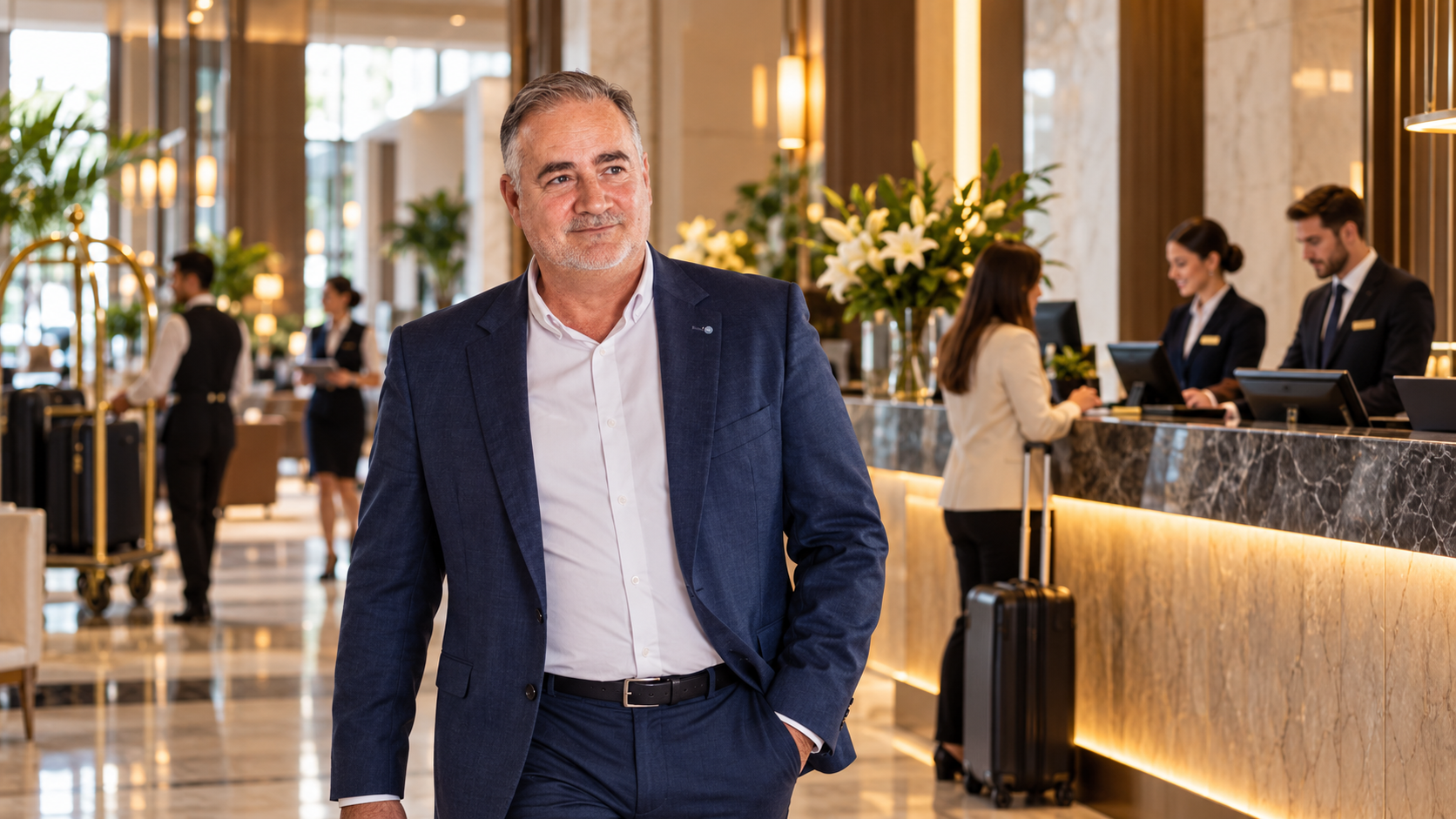

When excellent people begin to conceal a mediocre organisation
There is a phrase I hear frequently in hospitality: “Good thing María was there.” It could be María, Antonio, Carlos or Laura. We all know someone like that. The person who knows how the hotel really works. Not how the procedure says it works. How it works in reality. They know which room has a recurring problem, even if it does not appear in any record. They know which supplier responds in an emergency. They know which employee can change shifts. They know how to fix a particular system error. They know that a certain group needs something different prepared for them. They know where the thing nobody can find is kept. They know whom to ask. They know what happened last time. And, above all, they know how to solve problems. These people are extraordinarily valuable. The mistake is to think that their existence necessarily proves that we have a good organisation. Sometimes it proves exactly the opposite. The more a company needs indispensable people, the less robust its systems are likely to be. An exceptional person can conceal a weak process for years. An outstanding housekeeper can make a mediocre workload allocation work. A brilliant front office manager can compensate for confusing procedures. A highly experienced food and beverage manager can sustain inadequate planning. A maintenance technician can keep problematic facilities running thanks to informal knowledge. The operation gets through it. And because it does, nobody changes anything. That is precisely the danger. Operational success can conceal structural problems. As long as the right people remain in the right place, it seems there is no problem. Until someone leaves. Then familiar phrases emerge: “Only he knew that.” “We had never documented it.” “We thought someone was doing it.” “We do not know where it is.” “She always handled it.” “Since she left, this has not worked the same.” We have not merely lost a person. We have discovered that part of our organisation was living inside their head. And it had probably been there for years. This happens because in hospitality we tend to place enormous value on the ability to react. That is logical. Our product is consumed in real time. A room that is not ready needs a solution now. An unhappy guest is standing in front of us now. A breakdown is affecting the service now. A table is waiting now. We cannot convene a committee for three weeks. We need resourceful people. But there is an enormous difference between the ability to react and reliance on reacting. A mature organisation retains the former and reduces the latter. The best operations professional is not merely the person who resolves an incident very well. They are also the person who helps ensure that the organisation needs to resolve it less and less often. This completely changes the conversation. When a problem occurs, we usually ask: “Is it resolved?” It is a necessary question. But we should add another: “Could it happen again?” If the answer is yes, we have closed the incident, but we have probably not solved the problem. And there is still a third question: “What have we learned?” This is where the difference between solving and managing begins. A hotel that is good at finding solutions accumulates solutions. A well-managed hotel accumulates learning. The distinction seems small. In reality, it completely changes the organisation. Imagine that every week we have difficulties with certain rooms being released late to the front desk. We can resolve it daily. Calls. Priorities. Changes. Pressure. Perhaps a gesture for the guest. We may even do it superbly. But if, three months later, we are still doing exactly the same thing, we do not have a problem of problem-solving capability. We have a management problem. Something similar happens with recurring delays, billing errors, room moves, repeated complaints, stockouts, maintenance issues, coordination problems, duplication, reservation errors, shift conflicts or any situation that is a regular part of our operational conversations. There comes a point when we must stop admiring how quickly we solve it. We need to start asking ourselves why we still need to solve it. This is where I find the philosophy of continuous improvement especially useful. Not because I believe a hotel should become a factory, nor because every process can be completely standardised. Hospitality requires adaptation, sensitivity and human judgement. But many tasks should be performed predictably. A clean room should meet certain standards. An incident should be recorded. A request should reach the appropriate department. An invoice should be issued correctly. A shift handover should convey certain information. A reservation should contain the necessary details. A guest with a previously identified need should not have to explain it five times. Standardising what can be standardised frees up capacity to personalise what truly deserves to be personalised. That distinction is fundamental. Sometimes we reject standards because we fear turning service into something mechanical. I see it the other way around. The better the hotel’s invisible infrastructure works, the more time the team can devote to being genuinely hospitable. If the front desk does not need to constantly resolve administrative errors, it has more time to welcome guests. If housekeeping does not waste time looking for information, it can focus more effectively on quality. If food and beverage has properly planned mise en place, it can pay more attention to the guest. If maintenance works proactively, it spends less time on emergencies. Efficiency, properly understood, does not eliminate hospitality. It protects it. There is another important difference between a well-managed hotel and one that is good at finding solutions: the former distributes knowledge. The latter concentrates it. This particularly affects middle management. Gallup has spent years showing just how much the quality of the direct manager matters. Its latest data indicate that managers can account for around 70% of the variation in engagement between teams, while overall employee engagement stood at just 20% in 2025 and around 12% in Europe. It is not hospitality-specific data, but it seems highly relevant to our business. Because the department head is precisely the person who should turn the hotel’s overall decisions into everyday behaviour. They should not merely pass on instructions. They must develop judgement. Train. Observe. Correct. Explain. Measure. Anticipate. Create autonomy. When a department head personally solves every problem in their team, they may appear extraordinarily effective. But they may be building dependency. Every time someone asks a question and we answer directly, we resolve a doubt. Every time we explain how they should think in order to decide next time, we are building capability. They are two different things. This requires changing some questions. Instead of replying immediately: “Do this.” We can ask: “What options do you see?” “What would you do?” “What risk does it involve?” “What criterion would you use?” “What do you need in order to decide?” It may seem slower. At first, it is. But there is an essential difference between doing the work and building the capability to do the work. The second requires investment. The first creates dependency. Here, a paradox appears that I have seen many times. Some professionals are so good at solving problems that they unintentionally become bottlenecks. Everything goes through them because everyone knows they will solve it. The better they respond, the more questions they receive. The more questions they receive, the less time they have to develop others. And the less they develop others, the more indispensable they become. The circle closes. We can represent it like this: individual competence → dependency → more questions → less team development → greater dependency. Breaking this cycle requires a conscious decision. It does not mean withdrawing support. It means changing it. The question ceases to be: “How can I solve more things?” and becomes: “How can I ensure that more things can be solved properly without needing me?” That is one of the deepest differences between supervising and leading. There is also a psychological dimension. Being indispensable feels good. It makes us feel needed. When everyone asks for our opinion, we feel that we add value. When we are called during our holidays because “only you know how to do it”, it can even bring a certain professional satisfaction. But we should interpret it cautiously. The fact that an organisation constantly needs us may demonstrate our capability. It may also demonstrate our failure to develop autonomy around us. I have had to learn this personally. It is not always easy. Sometimes solving something directly seems much faster. And it probably is. Today. But if the same question will come tomorrow, the day after tomorrow and the following month, perhaps today’s quick answer is a poor investment. A well-managed hotel seeks to find the balance between both needs. There are times to intervene. There are times to teach. There are times to delegate. There are times to establish a rule. There are times to change the process. And there are also times to accept that a person needs to make mistakes within reasonable limits in order to learn. That last point is especially difficult. We want autonomy, but we want people to decide exactly as we would decide. That is not autonomy. It is performative delegation. If we want to develop judgement, we must allow some room for different decisions. Naturally, with limits. With defined financial impact. With clear policies. With escalation procedures. With subsequent review. But real room. The organisation learns when it can decide. Prosci has studied organisational change implementation for decades and consistently identifies active and visible sponsorship as the leading success factor. Its current data show substantially greater likelihood of achieving objectives when effective, visible sponsorship is in place. This seems perfectly applicable to hotels. It is not enough to draft a procedure. Someone must demonstrate that it matters. It is not enough to say that we want autonomy. We must allow it to happen. It is not enough to call for continuous improvement. We need to ask about the causes after incidents. It is not enough to talk about standards. We must correct matters when they are no longer met. The organisation observes what we do far more than what we say. That is why the path from a hotel that is “good at finding solutions” to a well-managed hotel requires reviewing some very specific signs:- There are people whom everyone calls for any problem. They are extremely valuable, but it is worth examining why they receive so many queries and what knowledge could be transferred to the rest of the team.
- Problems disappear when a particular person is present and reappear when they are not. This usually indicates individual dependency, not a structural solution.
- The same incidents come up in successive meetings. If we repeatedly discuss the same issue without changing its cause, we are managing symptoms.
- There are procedures nobody consults because “Juan knows it”. Any critical knowledge that exists solely informally represents an operational risk.
- Managers work continuously within the operation and very little on the operation. Providing cover from time to time is necessary. Doing so permanently prevents training, planning and improvement.
- Certain people’s holidays create anxiety. This is an especially clear sign of concentrated knowledge or authority.
- Every shift operates differently. Personalities may vary; essential standards should not.
- The team asks questions it should be able to decide itself. This may indicate insufficient training, fear of making mistakes or poorly defined authority boundaries.
- Errors are corrected but not recorded. The organisation then relies on people’s memory in order to learn.
- More recognition is given to the person who solves the problem than to the person who ensures it no longer exists. Culture ultimately produces exactly what it rewards.
Recommended reading309 pages · PDF
The Intelligent Hotel
Data, Artificial Intelligence and a New Way to Run Hotels
Go deeper into how AI, data and automation are transforming hotel management, commercial performance and the guest journey.
Digital edition · Personal licence · Amazon soon
Building a hotel that learns and operates even when we are not there
For me, one of the best tests of an organisation’s quality is observing what happens when someone important is absent. I do not expect everything to work exactly the same way. People bring talent, experience and personality. Their absence should be noticeable. The question is to what extent. If the hotel virtually loses its ability to make decisions when one person is absent, there is dependency. If it loses critical information, there is dependency. If certain processes stop being carried out, there is dependency. If teams simply work somewhat differently but retain standards, priorities and responsiveness, there is probably an organisation. The objective should not be to build hotels that do not need excellent people. That would be absurd. The objective is to build hotels where excellent people improve the system as well as operating within it. That begins by turning tacit knowledge into shared knowledge. Not everything needs to be documented. That would be impossible and probably counterproductive. But the things that are frequent, critical, difficult to replace, financially relevant or important to the guest experience do. We can start by asking each manager: What do you know that your team would struggle to do if you did not come in for a month starting tomorrow? The resulting list is practically an operational risk map. Some answers will require a procedure. Others, training. Others, a second person in charge. Others, simply sharing information. In some cases, we may even discover that certain processes depend on one person because nobody had ever questioned whether they were necessary. We also need to distinguish between standards and judgement. Not everything can be resolved through manuals. A standard should define what we want to happen under normal circumstances. Judgement allows us to respond when reality falls outside the standard. We need both. A hotel made up solely of procedures would be unable to adapt. One made up solely of individual judgement would be inconsistent. Excellence lies in the combination. Standards clear enough to ensure consistency. People sufficiently prepared to know when to adapt them. Here, I consider it especially important to build decision rules, not merely instructions. For example: It is not enough to say: “Compensation above X requires authorisation.” It is far more powerful to explain when we compensate, why, what we want to recover, what value the guest represents, what alternatives exist, what financial limits apply and when we should escalate. The first option controls. The second develops judgement. Something similar applies to Revenue, purchasing, people management, maintenance or guest experience. The strongest organisations do not merely provide answers. They provide frameworks for making good decisions. Another essential element is systematically reviewing incidents. I am not suggesting turning every small error into an investigation. That would be unbearable. But we should differentiate between: an isolated incident, a recurring incident, and a structural failure. The first is resolved. The second is analysed. The third requires changing the system. It seems simple. Yet many hotels devote enormous amounts of energy to treating structural failures as though they were independent incidents. Every day, we start from zero. That makes learning impossible. I recommend creating a very simple discipline. When a significant incident happens several times, ask ourselves:- What exactly happened? Without initial interpretation or looking for someone to blame.
- Where did it originate? Not where it was detected. Those are different things.
- Why did our system allow it to reach the guest or the operation?
- Had it happened before?
- What control should have prevented or detected it?
- Do we need to change a process, train, delegate or simply communicate better?
- Who will verify that the solution works?
This article ends here. The archive does not.
Lead Hospitality brings together 1200 English articles published since 2018: years of experiences, decisions and lessons you can keep exploring.
CONTINUE FROM HERE
What would you like to explore next?
Choose a direction and keep reading around what you want to solve, learn or challenge.
01MAKE MOREProfitability, revenue and decisions that reach the bottom line.
02LEAD BETTERTeams, culture, talent and the conversations that matter.
03SELL BETTERPositioning, marketing, distribution and customers.
04CREATE EXPERIENCESService, loyalty and details guests remember.
05UNDERSTAND WHAT'S NEXTInnovation, AI and new ways of thinking about Hospitality.
✦SURPRISE MEShow me something worth five minutes of my time.