
The Well-Managed Hotel Trap: When Efficiency Kills the Guest Experience



There is a scene that repeats itself far too often in our industry. I walk into a hotel and everything appears to be in place: the immaculate lobby, clearly defined processes, the team following protocols with almost surgical precision. There are no visible errors. No friction. No improvisation. And yet, there is nothing that makes me want to stay even a second longer than necessary.
For years, we have confused order with value, efficiency with excellence and control with experience. We have worked hard—very hard—to professionalise Hospitality, to turn it into a measurable, predictable and scalable discipline. The problem is that, along the way, many hotels have become exceptionally correct… and deeply forgettable.
The paradox is that these hotels tend to meet every traditional indicator of good Hospitality. Costs are under control, the ratios add up, audits go well, and the manuals are up to date. When we look at the business from the inside, everything appears to work. When we look at it through the guest’s eyes, the story is very different.
Because guests do not assess processes. They assess how they feel. They do not remember whether check-in took three or five minutes. They remember how they were made to feel. They do not return because of operational efficiency. They return—or do not—because of the connection created during their stay.
And that is the trap: a hotel can be perfectly managed and still create no lasting memory, no connection and no return visits.
When we optimise so much that we dehumanise
The obsession with efficiency has little-discussed side effects. The first is the homogenisation of the experience. Overly rigid protocols leave little room for personality, empathy or adaptation to context. Everything is done “as it should be”, but nothing is done “as it should be” for the specific person standing in front of us.
I have seen brilliant teams turned into mere process executors. Professionals with sound judgement reduced to checklists. People with a vocation for service trapped in a framework where thinking for themselves seems like a risk rather than a virtue. And it shows. Guests sense it within seconds.
The data confirms it. According to customer experience studies, more than 60% of customers remember a brand for how it handled an unexpected moment, rather than for how it delivered the standard service. Efficiency reduces errors, yes. But it also reduces opportunities for connection.
Another clear symptom is the disappearance of the story. Hotels that operate like well-oiled machines, but have no story to tell. No recognisable purpose. No soul. In a market where the offering is increasingly broad and similar, the absence of a story is fatal.
Then there is the direct impact on the business. A lack of connection has clear consequences:
-
Lower repeat business: the average repeat-guest rate at independent urban hotels rarely exceeds 20% when the experience is neutral.
-
Lower willingness to pay: when there is no emotional memory, price once again becomes the main decision criterion.
-
Lower likelihood of recommendation: Net Promoter Score suffers when the experience is correct but flat.
Efficiency, when misunderstood, turns a stay into a transaction. And a transaction is always replaceable.
Books to run a hotel with judgement
Written from the general manager’s chair: technology, guest experience, leadership and management.
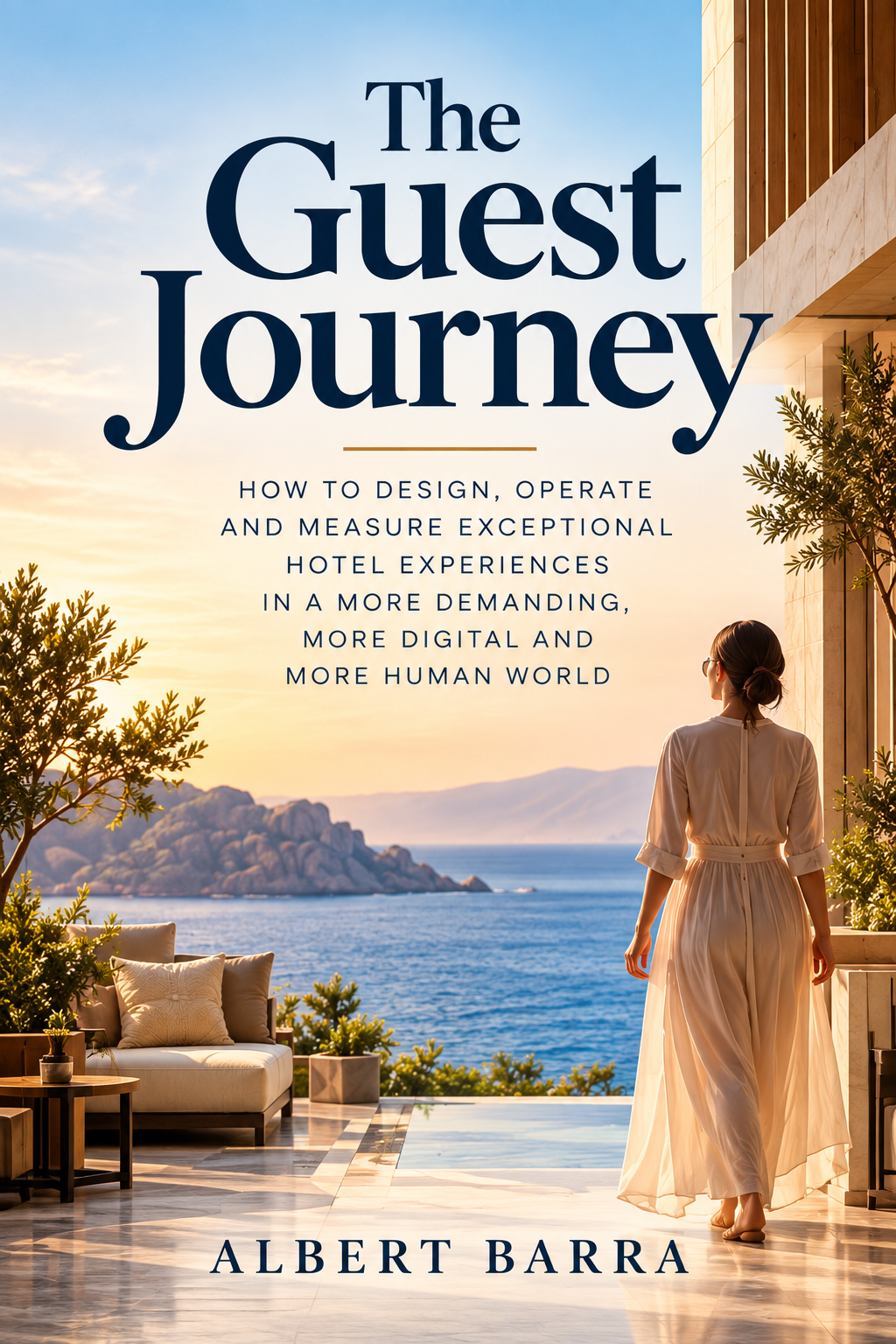 The Guest JourneyDesigning Customer Experience Across the Entire Hotel Journey
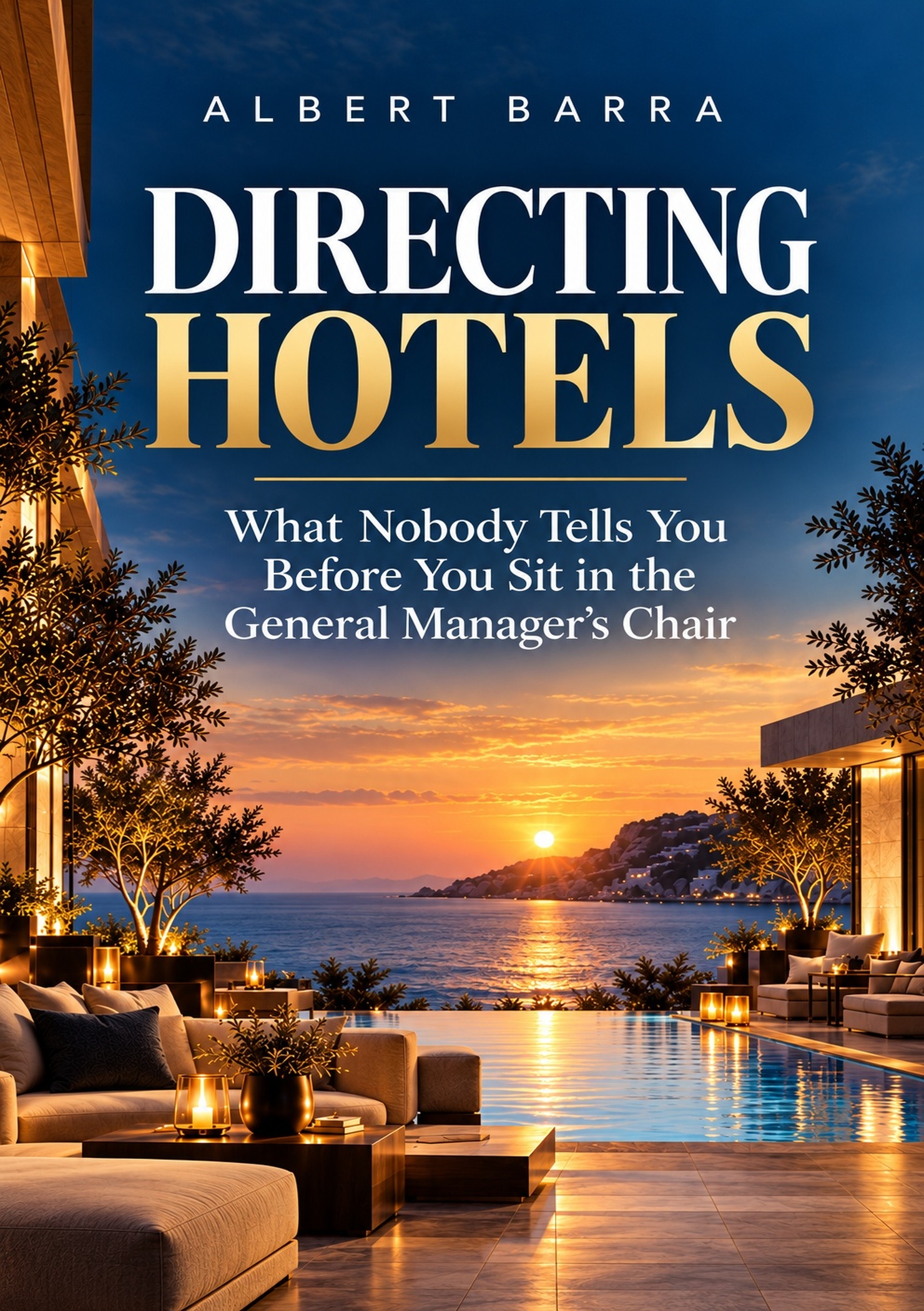 Directing HotelsWhat Nobody Tells You Before You Sit in the General Manager’s Chair
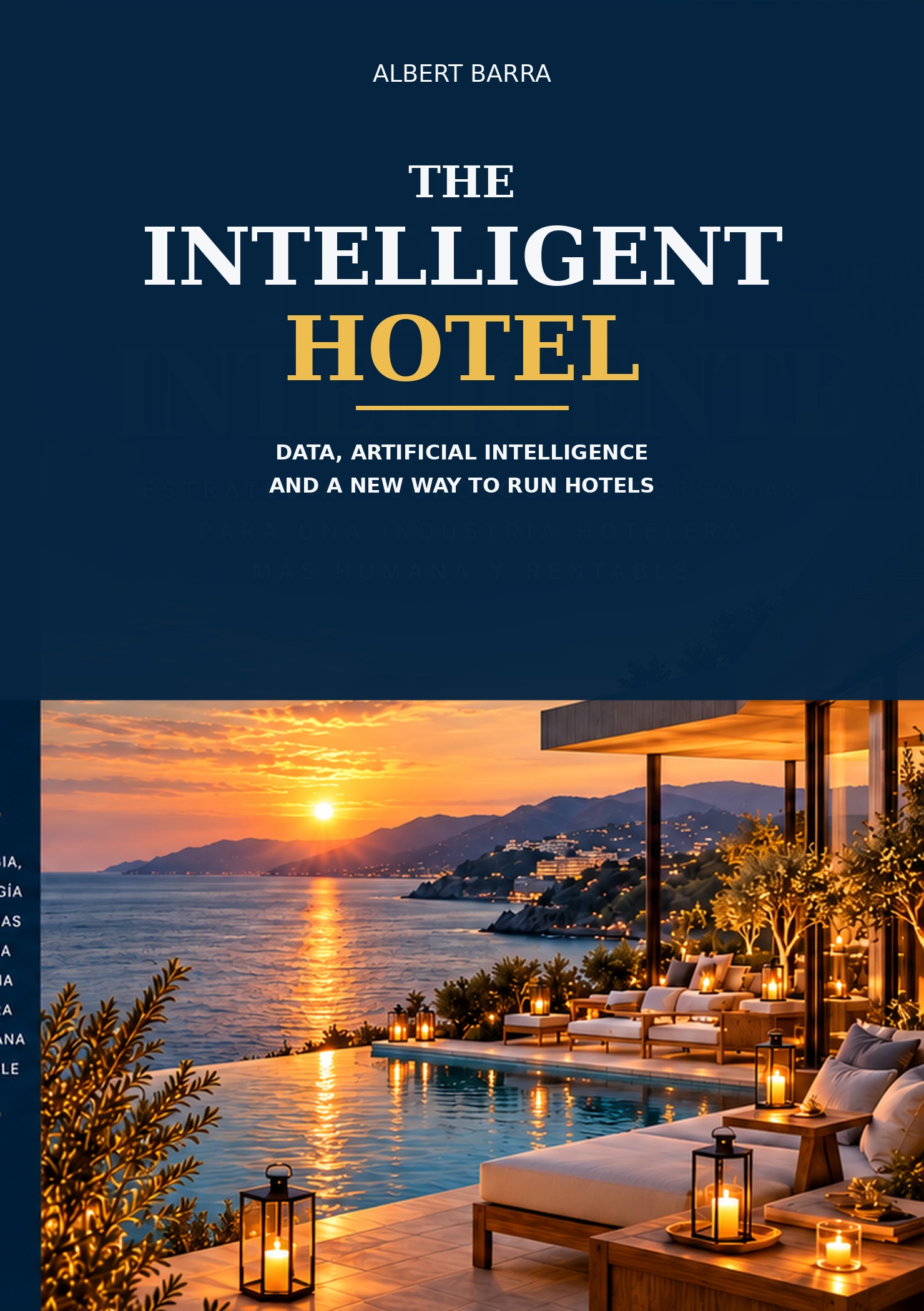 The Intelligent HotelData, Artificial Intelligence and a New Way to Run Hotels
 Leadership and High-Performance Team ManagementPeople, Experiences and Results in Today\\\'s Hospitality
Preventing good management from suffocating the experience
This is not about giving up efficiency. That would be absurd. Hospitality needs order, discipline and rigour. But it needs human judgement to the same degree. The key lies in balance.
There are a few ideas that, over time, have helped me avoid falling into this trap:
-
Design processes that leave room for human judgement
A good procedure should not dictate exactly what to do in every case; rather, it should set clear boundaries and leave room for professional judgement. Guests do not want to speak to a system; they want to feel that someone is thinking about them. -
Measure what truly matters
Beyond traditional KPIs, it is worth tracking indicators such as spontaneous recall, reported emotions or the real reasons for repeat stays. Forrester studies indicate that companies prioritising emotional metrics grow up to 1.5 times faster than their competitors. -
Train people to interpret, not merely execute
Hospitality training cannot be limited to teaching procedures. It must teach people to read situations, anticipate needs and make common-sense decisions. An empowered team creates more memorable experiences than any manual ever could. -
Accept a degree of worthwhile “inefficiency”
Sometimes, taking an extra minute, personalising a response or departing slightly from the script delivers enormous returns in terms of lasting memories and loyalty. Not everything that is inefficient is a cost; very often, it is an investment. -
Remember that silence also communicates
An excessively perfect hotel tends to be quiet. Too quiet. It lacks conversation, rapport and spontaneity. And Hospitality, at its core, is about relationships.
I do not believe in chaotic Hospitality or constant improvisation. But neither do I believe in hotels that operate like soulless Swiss watches. Excellence does not lie in choosing between efficiency and experience, but in knowing when to prioritise one and when to make room for the other.
If there is one thing I have learned, it is that the hotels that leave a lasting impression are not those that do everything perfectly, but those that allow themselves to be human. Those that understand that experience cannot be optimised; it must be cultivated. And that, sometimes, true luxury is not that everything works… but feeling that someone was genuinely there for you.
The next time you review a process, ask yourself not only whether it is efficient, but whether it leaves room for a lasting memory. Because hotels that simply function well fill up once. Those that move people fill up again.
This article ends here. The archive does not.
Lead Hospitality brings together 1200 English articles published since 2018: years of experiences, decisions and lessons you can keep exploring.
What would you like to explore next?
Choose a direction and keep reading around what you want to solve, learn or challenge.