
5 min read•Albert Barra
AI in Hospitality: Ally or Threat to Hotel Teams?

Albert BarraNovember 2, 2024 · 5 min read
Artificial intelligence in hospitality often creates uncertainty among hotel employees, particularly around the future of their roles. But rather than competing with people, AI can help teams build new skills, create career opportunities and spend more time on what matters most: delivering authentic, memorable guest experiences. By automating repetitive tasks, AI can act as a catalyst rather than a replacement. With clear communication, ongoing training and a collaborative culture, hotel leaders can position technology as a powerful ally for teams who want to grow their careers in hospitality.
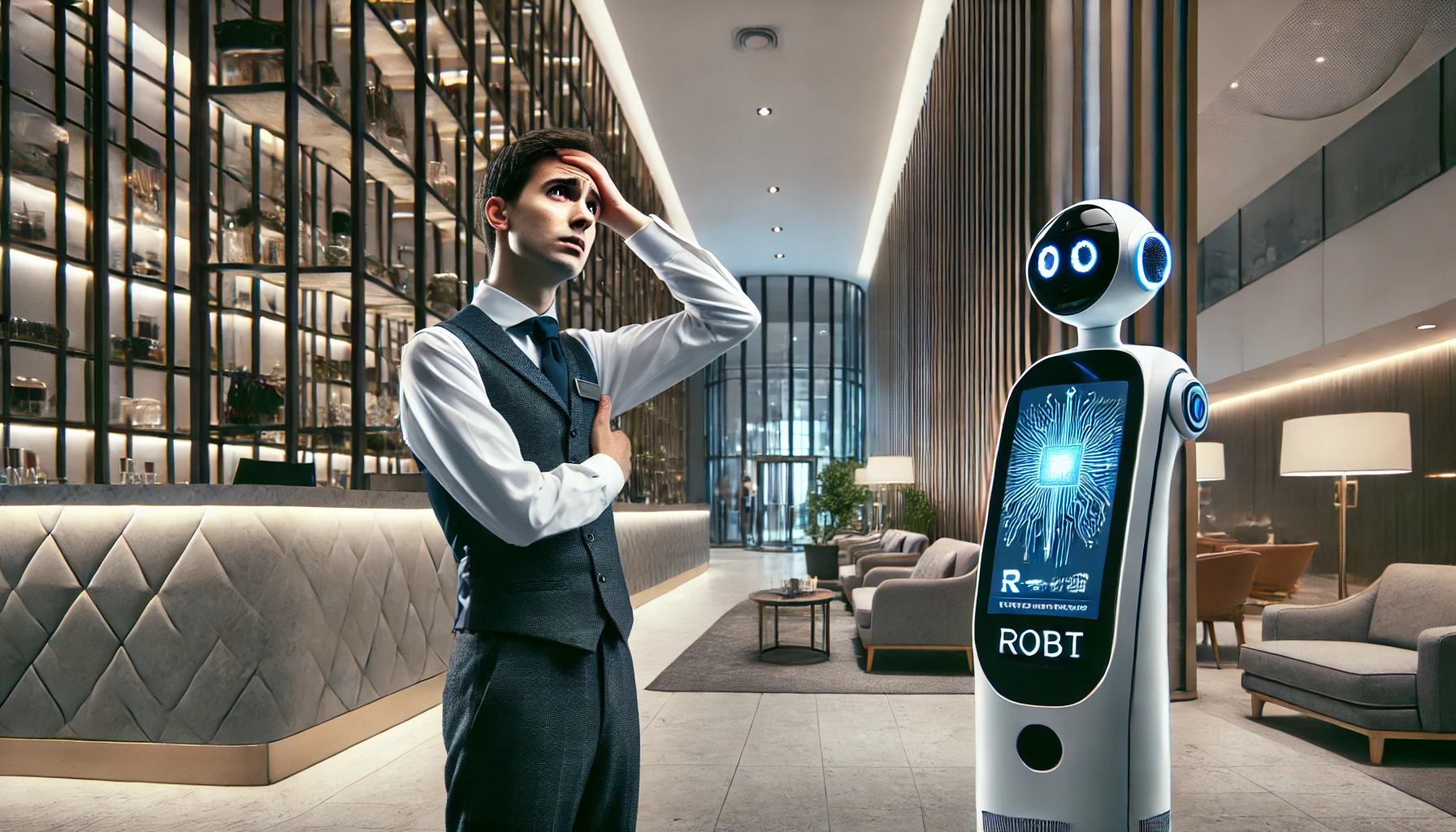

When we begin talking about Artificial Intelligence (AI) in the hotel industry, the initial reaction from many employees is scepticism, if not concern. What will happen to their jobs? Will AI take over their responsibilities? These concerns are not new to the industry, but today, given the rapid pace of technological change, the questions are more pressing and demand clear, responsible answers from us as managers.
AI promises to automate repetitive tasks, streamline guest service and improve operational management. However, it also entails a shift in workplace dynamics and, above all, raises ethical and practical challenges in people management. As managers, we must address this issue not merely as a technical matter, but as a human and strategic one. Employee uncertainty has a direct impact on morale, productivity and, ultimately, the quality of service we provide. For this reason, AI adoption cannot be limited to simply implementing technology; it must be supported by a comprehensive plan that addresses the team’s concerns and safeguards their wellbeing.
Technology is only valuable if it benefits both those who implement it and those who experience it.
Enhancing skills and professional development through AI
One of AI’s most positive aspects is its ability to complement and enhance the individual strengths of every team member, allowing us to take professional development to a level that was previously unimaginable. Rather than viewing AI as a replacement for human responsibilities, I see it as a catalyst for each employee’s professional growth. Here are some effective approaches to making the most of this synergy:- Identify individual strengths and align them with AI tools
AI can play a crucial role by enabling employees to focus on the areas in which they already excel, while automating time-consuming tasks that add no human value.
- Carry out a team strengths assessment to identify the unique skills of each member.
- Use AI to delegate routine tasks, allowing the team to focus on responsibilities that require creativity and interpersonal skills.
- Facilitate the development of new technical skills
Integrating AI requires additional skills, and this represents an opportunity for the team to acquire capabilities that will be valuable to them in the future.
- Provide ongoing training in AI tools, adapting the content to each employee’s pace and level of knowledge.
- Encourage the team to stay current with technology trends by providing access to learning resources and targeted training.
- Create AI-driven professional development opportunities
With AI, the team can take on roles with greater responsibility and complexity. This not only strengthens their professional profiles, but also contributes to their engagement at work.
- Design professional growth programmes that include specialisation in AI technologies, enabling employees to progress in their careers within the organisation.
- Create spaces where employees can experiment with AI in their day-to-day responsibilities, allowing them to develop project management and technology leadership skills.
- Foster a culture of collaboration between AI and human talent
AI should not be viewed as a competitor, but as a source of support. When employees understand that their role can be enriched by collaborating with advanced technology, it creates an environment of innovation and continuous improvement.
- Encourage the team to explore how AI can improve their current responsibilities and discover new ways to add value to guest service.
- Promote the creation of cross-departmental working groups to explore and develop AI-driven solutions, strengthening creativity and interaction between teams.
- Employees value honesty and transparency more than perfect answers. It is better to acknowledge that we are still exploring how AI will benefit each area than to try to persuade people with vague arguments.
- Leaders must be the first to adapt. The attitude of those of us managing change will determine whether employees accept or resist it. If we show enthusiasm for learning and evolving, the team will follow.
- Training is an investment, not an expense. Although it may appear to be an initial burden, training teams ensures that technology becomes a tool for improvement rather than an obstacle.
- Thoroughly assess AI’s impact on each specific area before applying it.
- Actively listen to your team: organising regular feedback sessions allows them to express their concerns and provides a channel for open dialogue.
- Clearly define the role of AI in guest service, ensuring that the essence of human interaction is retained.
- Communicate the added value of AI, emphasising that it is support for optimising tasks, not a threat to the human role.
PREMIUM ARTICLE
Continue reading this Premium analysis
Unlock this article individually or choose a subscription that includes Premium access.
Already have access?Sign in
