
3 Hotel Employee Management Mistakes Managers and Owners Make



In other industries, such as logistics or manufacturing, supply chain management (SCM) is the method used to control the various elements that come together to form a particular product. First coined in the 1980s, SCM represented a more efficient way to manage every aspect of manufacturing, ensuring consistency and aligned outcomes across all components. Can this be applied to hotels? Of course it can!
However, a hotel product is more than a simple collection of physical materials. It also contains a strong service element, is part of a community, and occupies a conceptual or “brand” position within the hospitality landscape.
Therefore, supply chain modelling for a hotel product must include careful consideration of the human element—that is, hotel employees, whose work directly affects guest satisfaction and whose turnover rates are notoriously high compared with many other industries.
Recruitment is a key link in the supply chain and, as a manager, there is much to be said—indeed, everything—to revisit your recruitment strategy and find ways to strengthen it. Many hotels recruit employees only when a specific need arises, for example, but this is a narrow approach that can result in missed opportunities.
By engaging in ongoing recruitment efforts throughout the year, you will develop a clearer picture of the talent pool, hiring trends and employment incentives. An international group I worked with had a very clear strategy: in good times, they would hire and fire, and in bad times, they would hire and fire—always seeking to improve the group’s DNA by bringing in new people. Even if there was no role available, they would bring in good people and wait for the opportunity to place them. (They also made sure that the bottom 5% of the group’s DNA had the opportunity to grow elsewhere, but that is another story.)
Of course, an employer must be able to offer real, lasting value to employees in order to attract them. Today, hotel management is more affected than ever by the dynamics of employee morale, and good managers are attuned to how this affects the health of the organisation. As preferences and technologies change, exploring these dynamics is a learning process that never ends.

Stop managing isolated systems. Start managing the whole hotel.
HotelGEX connects guests, operations, Revenue, F&B, Groups & Events and Management into one intelligent hotel context — so every decision starts with a clearer picture.
There are, however, some major pitfalls to consider. By making the following mistakes with your employees, you could be making your own job more difficult.
1. Micromanaging
It is ironic that some people who micromanage their employees are actually trying to motivate them. In reality, the effect is demoralising and anxiety-inducing. A 2015 study found that employees who felt their supervisor could identify their strengths felt “engaged and energised” at work. By contrast, when employees felt that their supervisor was focused on their weaknesses, performance suffered.
If tasks are not completed to standard, it usually means one of three things: the wrong person was hired; there is poor communication; or there are gaps in training. The positive outcome of good recruitment, communication and training practices is that they allow the manager to delegate tasks with confidence. When employees feel that their every action is being scrutinised, they cannot take ownership of their role. I admit I have done this myself in the past, but I later learned that when the team is performing very well, it is best to let them get on with it! The importance of an empowered and motivated team cannot be overstated.
2. Panic
As someone who has enjoyed a long career in hotel management, I know what it can be like when things become frantic or there is added pressure from the boss or owner.
Books to run a hotel with judgement
Written from the general manager’s chair: technology, guest experience, leadership and management.
 Directing HotelsWhat Nobody Tells You Before You Sit in the General Manager’s Chair
 The Intelligent HotelData, Artificial Intelligence and a New Way to Run Hotels
 The Guest JourneyDesigning Customer Experience Across the Entire Hotel Journey
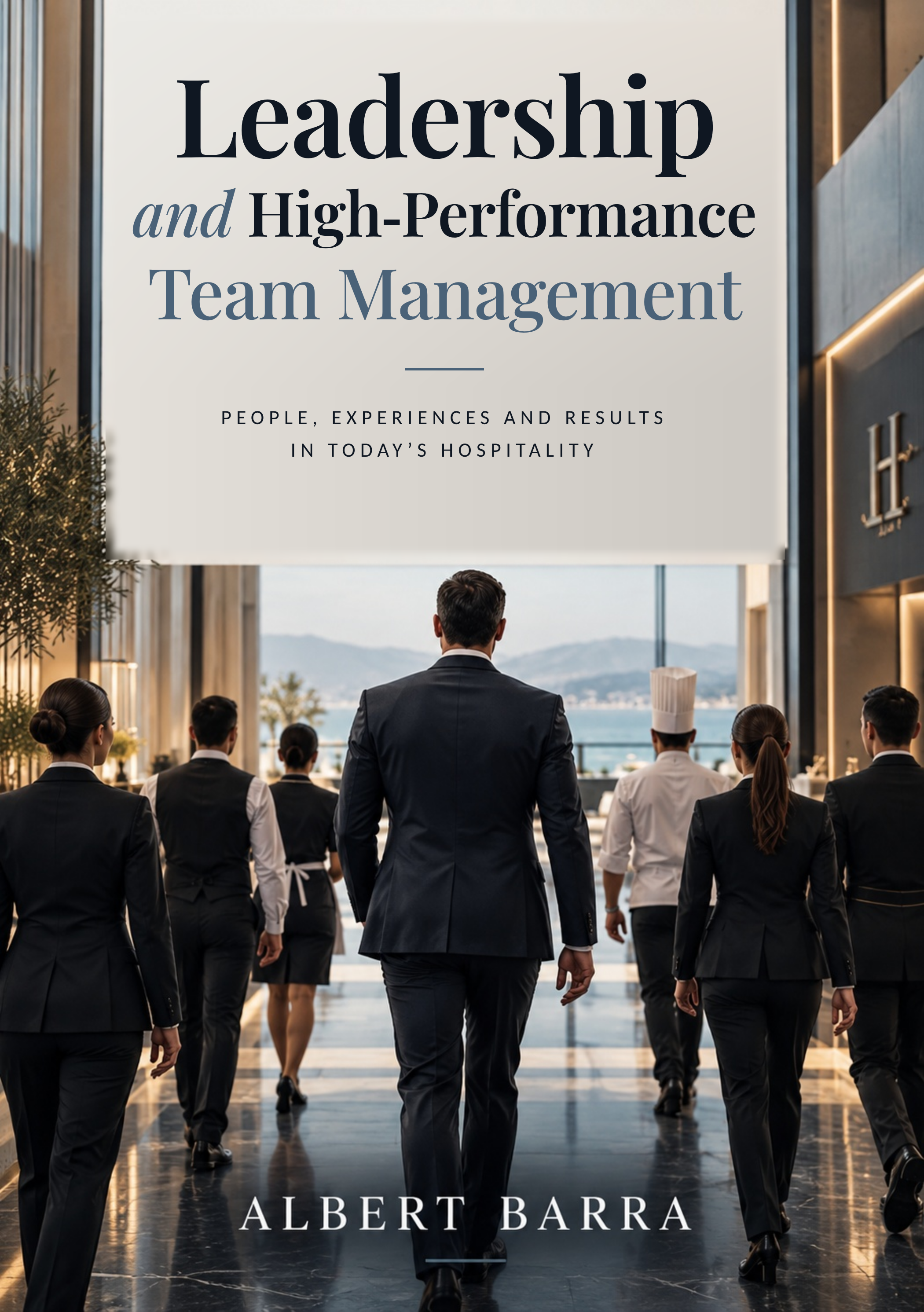 Leadership and High-Performance Team ManagementPeople, Experiences and Results in Today\\\'s Hospitality
Has GOP fallen? Have review scores changed dramatically? Has occupancy been rising or declining over the past year? Any change in performance can lead to pressure and, at times, panic. Some managers thrive and can adapt quickly to the situation, but others panic and then ignore the structures and systems that are there to help during these times.
A good manager knows they are not alone and, in fact, has some wonderful resources to draw on, including their employees. The examples above are matters that can and should be discussed with employees so that they feel their voices are valued and that they have a genuine stake in the operation. Employees often have a better idea of what is wrong than senior management, so when in doubt, stay calm and ask them.
3. Failing to recognise good work.
We all want to feel that we are providing value through our work, and that our value is appreciated. And while some people meet or exceed targets when they have incentives to do so, it is also true that some people simply like to do a good job and appreciate being recognised for it. The conversation about how to motivate, inspire, engage and incentivise hotel employees will never end because we are all different, but at a fundamental level, the importance of a “culture of recognition” cannot be emphasised enough.
Recognition does not have to be expensive; handwritten thank-you cards are a good example. Providing learning opportunities is another. Using internal technology to recognise great work is another way to show people what an excellent job someone has done.
Focusing on how to provide every employee with a sense of growth and upward mobility is a major part of being a successful manager. Employees who know that their manager—and the organisation as a whole—appreciates the value they bring and cares about their growth are more likely to be engaged.
As the old saying goes, a chain is only as strong as its weakest link. On that basis, what are the links that make up your hotel’s “chain”? Good hotel managers consider this question regularly; great hotel managers not only consider it, but take action to assess and address it. If we could see our own supply chain with perfect clarity, what changes would we make?
The dynamics between managers and employees are a critical link in the supply chain, and when research on job satisfaction among hotel employees is published, we see these issues come up time and again. A hotel may be beautifully designed and built, and may have excellent amenities and furnishings, but if one of the key links—that is, the staff—is not strengthened by positive dynamics, it will never be the best possible product.
This article ends here. The archive does not.
Lead Hospitality brings together 1200 English articles published since 2018: years of experiences, decisions and lessons you can keep exploring.
What would you like to explore next?
Choose a direction and keep reading around what you want to solve, learn or challenge.