
The Strategic Question Every Hotel Should Ask Each Year

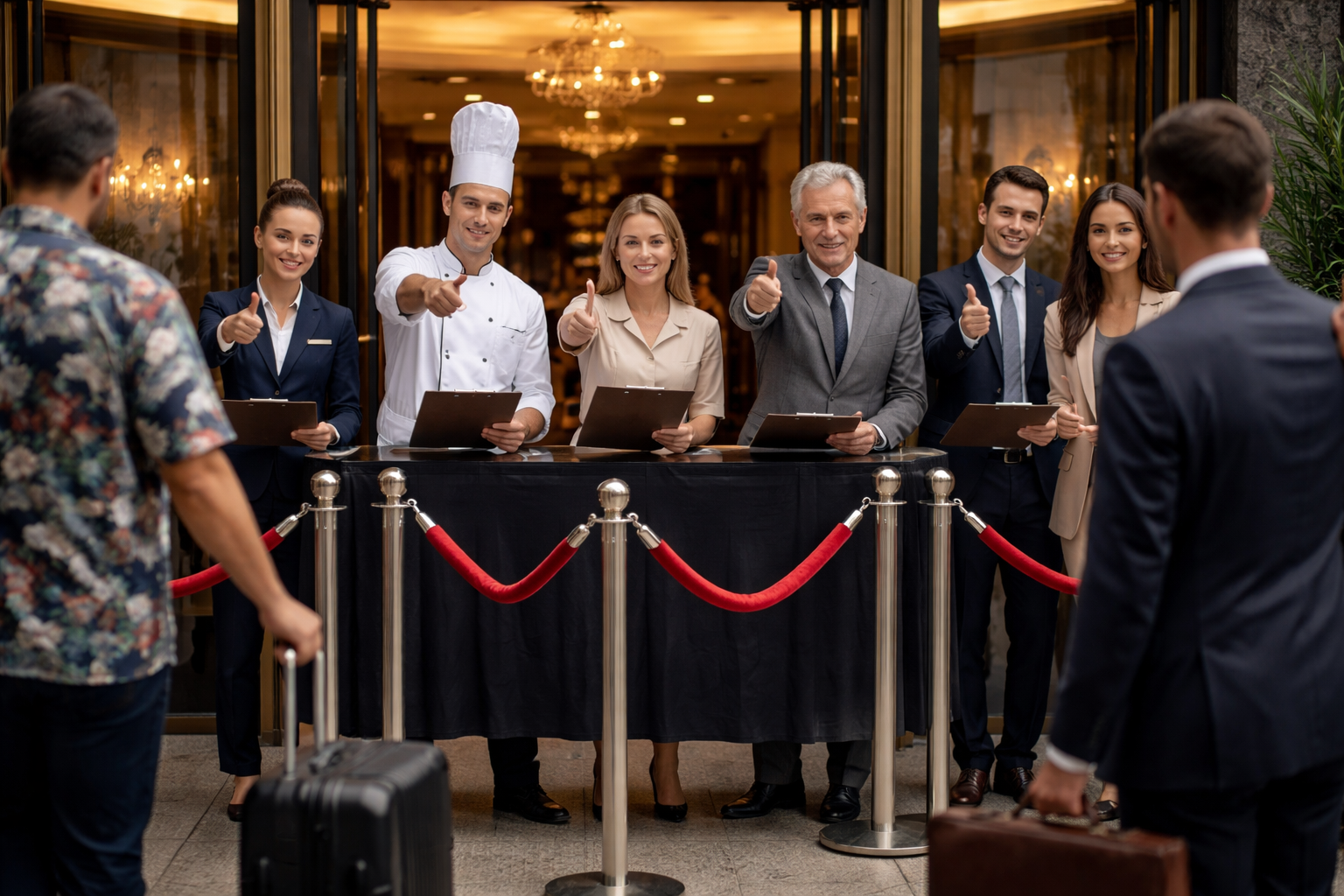

In the early years of my career, I had a boss whom I still deeply admire. He was not the most high-profile, nor the one delivering the most speeches at conventions, but he had a phrase that stayed with me forever: “The only secret is knowing which guests I do not have and would like to have.”
For years, I thought it was a clever remark. In time, I understood it was a strategic statement. He was not talking about occupancy. He was not talking about ADR. He was not even talking about hotel marketing. He was talking about vision.
In Hospitality, we are obsessed with the guests we already have: we analyse where they come from, their average spend, their booking behaviour, and their price sensitivity. And that is right. But we rarely pause to reflect honestly on the segments that do not choose us.
True strategic planning in hotels does not begin by asking, “How do I attract more of the same?” but rather, “What type of guest would be a perfect fit for our proposition... and is not here yet?” When properly explored, that question changes a hotel’s culture.
Because when you know which guests you do not have and would like to have, you stop reacting to the market and start shaping it.
THE INVISIBLE STRATEGY: IDENTIFYING THE GUEST WHO IS NOT ARRIVING
In practice, this reflection goes far beyond a theoretical segmentation exercise. It involves reviewing your business model, your positioning, and your operational consistency.
On more than one occasion, I have brought the leadership team together and posed this uncomfortable question:
“If we could choose 30% of next year’s occupancy today, whom would we choose?”
The initial silence is always revealing.
In Hospitality, many strategic decisions are made by inertia:
– we continue to depend on certain channels because “that is how we have always done it”
– we retain low-margin segments because they bring volume
– we adjust rates to avoid losing market share, even when this erodes our positioning
However, the data is clear: according to international industry reports, more than 60% of independent hotels rely excessively on two or three core segments, limiting their ability to reposition and diversify. This concentration increases risk when economic conditions or demand shift.
When we work through this strategic reflection properly, I tend to structure it around five areas that I recommend applying to any hotel management project:
- True profitability by segment It is not enough to analyse ADR or occupancy. You need to measure GOP contribution by segment, including acquisition costs, commissions, and operational pressure. Many hotels discover that their “star” segment is not their most profitable.
- Cultural fit with the hotel Every hotel has a soul, an energy. Not every profile is a fit. Forcing misaligned segments creates friction within the team and compromises the guest experience.
- Impact on reputation and positioning The guests you choose today define how the market perceives you tomorrow. Quiet repositioning begins by attracting profiles aligned with your value proposition.
- Strategic seasonality Some segments can balance demand during low periods without diluting the average rate. Identifying them is a clear competitive advantage.
- Real operational capability It is not simply about wanting to attract a particular profile; it is about being ready to serve it with excellence. Strategy without execution is merely an elegant intention.
In my experience, hotels that grow sustainably are not those that attract the most guests, but those that attract the right guests.
And that means turning some away.
FROM INTENT TO ACTION: HOW TO ATTRACT THE GUEST YOU WANT
Knowing which guest you do not have is only the first step. The second, far more complex step is turning that strategic intention into an operational reality.


My published books
This is where strategic management, team leadership, and a sound understanding of hotel marketing come together.
Once we clearly define the target profile, we must honestly review:
- Value proposition Does our narrative resonate with that segment? Does our sales message reflect what we truly offer?
- Product and experience Is the guest experience designed with that profile in mind? From the booking process through to check-out.
- Distribution channels Not all segments buy in the same way. Adapting the hotel distribution strategy is key to positioning ourselves correctly.
- A coherent pricing policy Hotel revenue management must not undermine positioning. Adjusting rates without strategic judgement can drive away precisely the guest you want to attract.
- Aligned internal culture The team must understand what type of guest we are seeking and why. Cultural consistency is decisive.
I have seen that when a hotel clearly defines its desired guest profile and acts accordingly, three things happen almost naturally:
- Structural profitability improves
- Brand identity is strengthened
- The team works with greater meaning and purpose
It is not magic. It is strategic focus.
And here I return to that phrase I heard so many years ago. My former boss was not talking about capturing more market share. He was talking about choosing it. About having the courage to say: “This, yes. This, no.”
In Hospitality, where everything seems urgent—the month’s occupancy, the quarterly budget, channel pressure—it is easy to lose perspective. But if you do not decide which guests you want, the market will decide for you.
My practical advice is simple:
Once a year, set aside a strategic day with no phones, no endless reports, and no urgent matters. Bring together your key team and answer this question honestly:
Which guests do we not have and would like to have?
Then review every area of the hotel in light of that answer.
It is not about growing more. It is about growing better.
And if you ever have doubts, remember that in Hospitality, true competitive advantage does not lie in copying rates or promotions. It lies in having enough clarity to know whom you want to open the door to... and whom you do not.
This article ends here. The archive does not.
Lead Hospitality brings together 1200 English articles published since 2018: years of experiences, decisions and lessons you can keep exploring.
What would you like to explore next?
Choose a direction and keep reading around what you want to solve, learn or challenge.