
The Inverted Organizational Chart: Understanding Who Really Leads a Hotel

Albert BarraMay 5, 2023 · 4 min read

One way to represent the organisation within a hotel is through a chart I use in training sessions and leadership talks. It is known as an inverted organisational chart, or organisational pyramid, and, as you can see, the General Manager is at the bottom of the hierarchy.
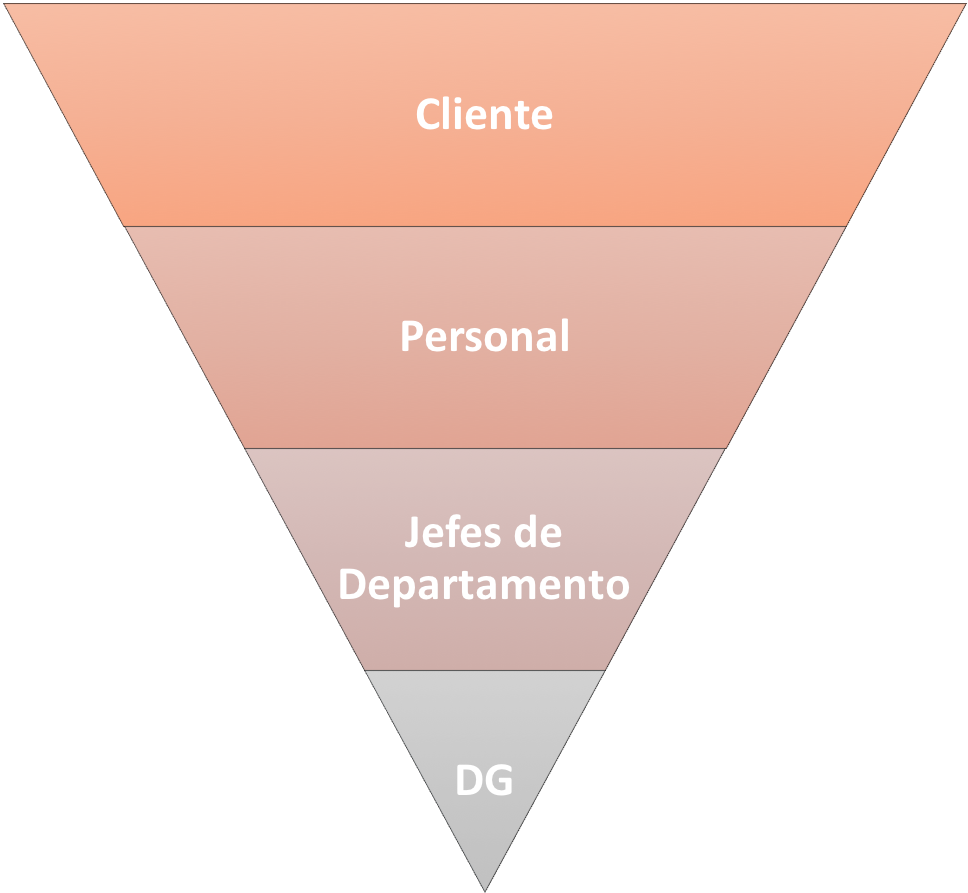 At the top is the guest. Guests are the reason we are here. This guest-focused approach creates alignment throughout the hotel.
Our mission is to ensure that every guest leaves satisfied and wants to return, thereby building guest loyalty. This is where the oft-repeated phrase, attributed to so many people, gains meaning: "If you take good care of your employees, employees will take good care of your customers." This belief is the foundation of who we are and what we believe in as a company. After all, we are a hotel.
I say that we have two types of customers: external customers, our guests, and internal customers, the hotel’s people team.
I do not like the term employee, and whenever I need to refer to staff, I have to pause and think of the right term to give them the importance they deserve.
I believe that frontline staff are the most important people in the hotel because they serve the guest. The role of supervisors, managers and the leadership team, therefore, is:
At the top is the guest. Guests are the reason we are here. This guest-focused approach creates alignment throughout the hotel.
Our mission is to ensure that every guest leaves satisfied and wants to return, thereby building guest loyalty. This is where the oft-repeated phrase, attributed to so many people, gains meaning: "If you take good care of your employees, employees will take good care of your customers." This belief is the foundation of who we are and what we believe in as a company. After all, we are a hotel.
I say that we have two types of customers: external customers, our guests, and internal customers, the hotel’s people team.
I do not like the term employee, and whenever I need to refer to staff, I have to pause and think of the right term to give them the importance they deserve.
I believe that frontline staff are the most important people in the hotel because they serve the guest. The role of supervisors, managers and the leadership team, therefore, is:
- Support the frontline and remove barriers to doing a good job.
- Lead and help people do their jobs better.
- This means that managers support the frontline by:
- Showing concern for their team (and it must be genuine).
- Resolving their problems quickly and fairly.
- Above all, treating people with dignity, kindness and respect.
- This means that managers support the frontline by: