
Hospitality Celebrates Service While Underpaying the People Who Deliver It

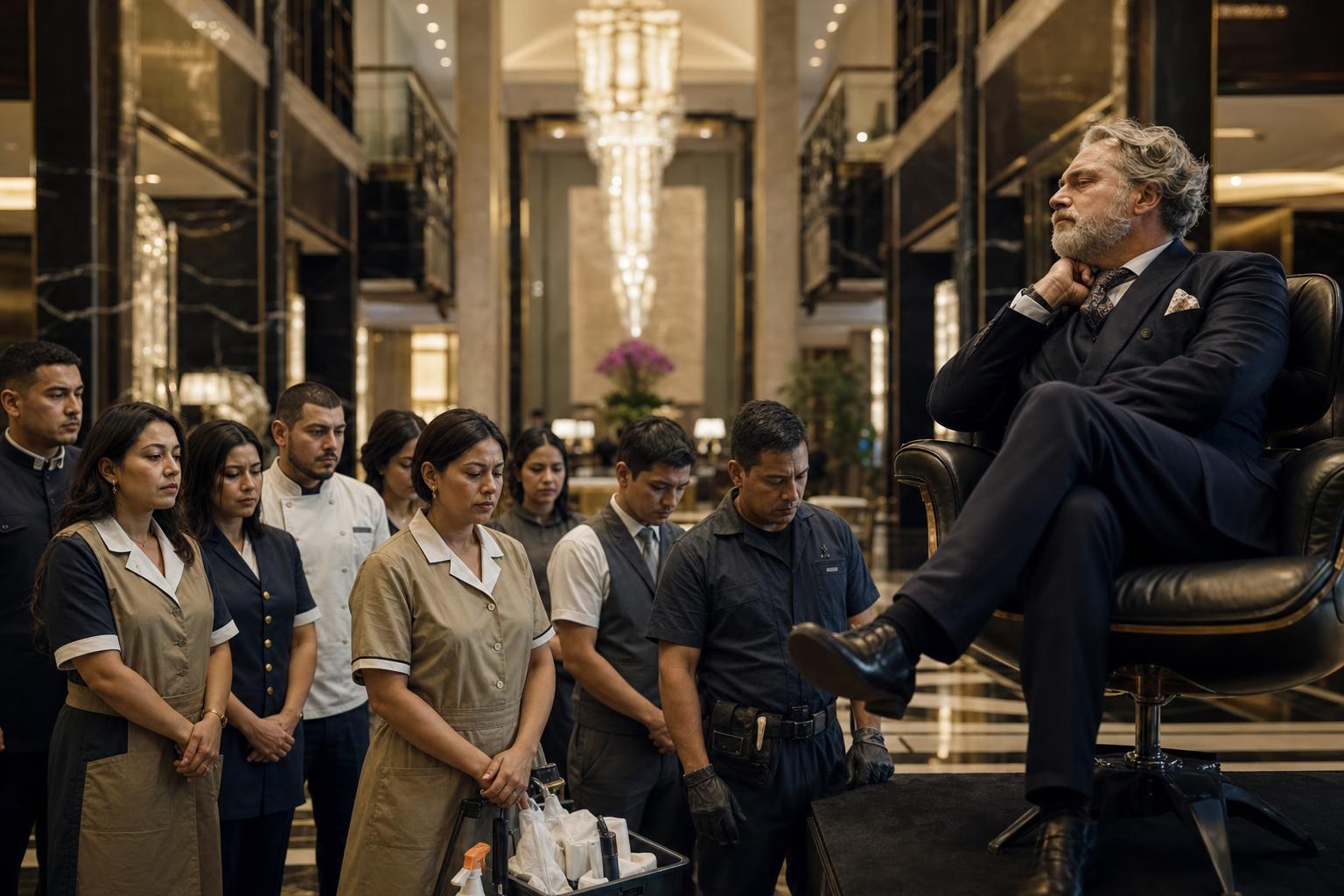

There is a scene that outrages me more and more. A hotel presents its annual strategy and declares that the guest experience is its main competitive advantage. It talks about personalisation, excellence, reputation, loyalty and emotional connection. A few minutes later, when reviewing the budget, the people who clean the rooms, serve breakfast, welcome guests, answer their questions and resolve their issues are summarised in a single line called labour cost. Then begins the search for tenths, hours and shifts that can be cut. Experience is described as an asset when we want to sell it, but treated as an expense when it is time to pay those who make it possible.
I find it difficult to accept that we still regard this contradiction as normal. We raise rates, refine our hotel marketing, invest in refurbishments, commission campaigns and celebrate every improvement in average revenue, while part of the team continues to work for wages that barely acknowledge the responsibility they carry. Then we are surprised by turnover, by the difficulty of recruiting, by the loss of professional craft and by the fact that some professionals stop going beyond what is strictly required. This is not a crisis of vocation. It is the fairly rational response of people from whom we demand extraordinary commitment within an all-too-ordinary economic relationship.
I am not arguing that indiscriminately raising wages will solve every hotel problem. I have known organisations with competitive pay and toxic cultures, incompetent managers, destructive schedules or absurd processes. I have also seen properties with limited margins whose leaders made genuine efforts to protect jobs and treat people with dignity. The issue is more uncomfortable than the simple slogan of paying more. The real problem emerges when pay bears no relationship to a role's influence on satisfaction, revenue, reputation and operational continuity.
A room attendant may be the first to spot a leak, an odour, a fault or a forgotten item. A waiter can turn a congested breakfast service into a pleasant morning. A maintenance professional can recover a room that was about to be taken out of service. The person handling a reservation can prevent an impossible expectation before it turns into a complaint. The person working at Reception can save, in five minutes, a relationship that cost a great deal of money to acquire. These are roles that directly shape perceived value and yet are often paid as though their contribution were mechanical, interchangeable and easy to replace.
I believe it is time to call this inconsistency by its name. We are facing a pay-influence gap: the distance between how much a person can affect the guest outcome and how much the hotel recognises that responsibility in their pay, stability, schedule, development and decision-making authority. This gap harms employees, but it also destroys value for ownership. A hotel that underpays those who most influence its promise is not saving intelligently. It is financing the present through operational, human and commercial debt that will eventually surface somewhere, even if the profit and loss statement takes time to reveal it.
The hotel sells human value and accounts for it as cheap labour
Hospitality has learned to price a room according to demand, segment, booking lead time, channel, reputation, availability and the guest's willingness to pay. hotel revenue management has enabled us to accept something fundamental: two apparently identical bookings can have very different economic value. Yet when we talk about people, we still use a surprisingly rudimentary logic. We look at collective agreements, market pay, hourly cost and the theoretical ease of filling a vacancy. We almost never calculate how much value each role protects, creates or recovers.
The paradox is difficult to defend. To sell a room, we recognise nuances, contexts and elasticities. To value the person who prepares that room, we settle for a job category. We argue that price should reflect the hotel's value proposition, yet we often refuse to accept that payroll should also reflect each role's contribution to that proposition. The result is an organisation that applies commercial sophistication externally and economic simplification internally.
I have often heard that certain roles are poorly paid because the market pays them poorly. That explanation describes the sector's behaviour, but it does not prove that it is an intelligent decision. If we all undervalue a critical function, consensus does not turn the mistake into strategy. People also used to say that turnover was inevitable, that staff would always be scarce in high season, or that certain positions did not require genuine professional development. Repeating a limitation for decades does not turn it into a natural law.
Market pay can serve as a benchmark, but it should not become an alibi. Responsible hotel management needs to ask which roles are critical to its specific product, which skills are scarce in its destination, how long it takes someone to achieve reliable performance, and what it costs to lose that knowledge. A high-turnover city hotel, a leisure resort, an independent property and a luxury product should not value a role in the same way simply because they share the same contractual title.
Moreover, when we say someone is easily replaceable, we usually commit a small intellectual trick. We may be able to replace the body filling the shift, but that does not mean we can immediately replace their operational memory, knowledge of guests, coordination with other departments, judgement when an issue arises or the trust they have built with the team. Filling a vacancy and restoring capability are two very different things. The first can be resolved through recruitment. The second requires time, support and accumulated experience.
In Hospitality, we have overused vocation as an informal compensation mechanism. We assume that people who enjoy serving others will accept difficult shifts, modest wages, unstable rest days and high emotional demands. We turn hospitality into a kind of imaginary salary supplement. We ask employees to smile, anticipate needs, show empathy, manage other people's anger and remain calm, even when the organisation does not offer them the same consideration. Vocation can enrich a profession, but it should never be used to make it cheaper.
Emotional demands deserve particular attention. The guest does not merely buy a task performed correctly. They also expect availability, kindness, composure and adaptability. In other words, the hotel does not only hire physical time; it also hires self-control, listening, judgement and emotional presence. These capacities are depleted. When pressure is constant, staffing is insufficient and employees lack support, the organisation ends up consuming a human resource that does not even appear in its inventories.
The injustice becomes even more evident when the team must tolerate unacceptable behaviour to protect a review. Defending guest satisfaction does not mean abandoning the person serving the guest. I have already explained why pretending that the guest is always right is destroying teams. If, in addition to paying poorly, we undermine employees whenever there is a threat or raised voice, the internal message is devastating: your work sustains our reputation, but your dignity is negotiable.
This inconsistency takes different forms within the hotel, and it is worth identifying them because they are not all corrected in the same way:
- Value asymmetry. The hotel attributes much of its commercial differentiation to service, but remunerates those who provide it according to the minimum cost of entering the role. The more dependent the product is on human interaction, the more dangerous this separation becomes between what we sell and what we recognise.
- Risk asymmetry. The lowest-paid roles often absorb a disproportionate share of operational risk. They receive the guest when the room is not ready, explain decisions they did not make, bear the pressure of demand peaks and manage failures originating at other levels of the organisation.
- Recognition asymmetry. When guests praise the hotel, we celebrate the brand. When they complain, we look for the person who made the mistake. Success is collectivised and failure individualised. This habit allows us to appropriate good service without properly recognising the person who delivered it.
- Development asymmetry. We demand knowledge, languages, versatility and emotional skills, yet many roles still offer narrow career paths. Training increases employees' obligations without always translating into authority, grade or pay.
- Time asymmetry. We demand complete availability when the business needs it, while offering little predictability regarding shifts, rest days or contractual continuity. The hotel gains flexibility and the employee assumes the uncertainty.
These asymmetries affect the guest experience in hotels long before a complaint appears. Deterioration begins with small, rational behaviours. People stop flagging problems no one listens to, avoid taking responsibility that is never recognised, limit their effort to the protocol, stop suggesting improvements or look for another job while continuing to occupy the role. They may still smile, but the relationship is already broken.
We should not confuse this withdrawal with a lack of professionalism. There is a difference between working badly and ceasing to give away invisible work. Many hotel operations depend on contributions that were never formally contracted: staying a few minutes longer, training a newcomer, remembering a preference, anticipating a breakdown, calling another department, taking on a difficult conversation or discreetly correcting a colleague's mistake. When a hotel pays and treats people as replaceable units, it cannot be surprised when they eventually behave as such.
The economic impact emerges through channels we usually analyse separately. Turnover rises, vacancies remain open longer, overtime increases, reliable professionals are overloaded, manager burnout accelerates and consistency is lost. Then come compensation payments, discounts, blocked rooms, missed sales opportunities and reviews highlighting service failures. Each department records part of the cost, so no one sees the full bill for paying too little.
There is also a commercial effect. A hotel cannot raise rates indefinitely if service becomes inconsistent. It can improve positioning, invest in design and refine its campaigns, but guests assess the promise through contact with specific people. If the guest pays more and receives less attention, the price increase magnifies their disappointment. The rate creates an expectation; the team turns that expectation into value or frustration.
That is why I find it particularly serious that we celebrate ADR growth while keeping the compensation architecture frozen. If a commercial strategy enables us to capture more value from the market, we should ask what proportion of that result depends on the team sustaining the experience. I am not proposing that every rate improvement be shared automatically. I am proposing that we avoid commercial success advancing completely separately from operational recognition. Otherwise, we ask the team to produce an increasingly valuable experience without allowing it to participate in any way in the business's evolution.
Tips cannot become a wage policy either. They are voluntary recognition from the guest, unevenly distributed between departments and dependent on cultural, seasonal and personal factors. Using them to justify inadequate pay amounts to transferring to the guest a responsibility that belongs to the employer. It is striking that some hotels want to control every detail of the experience while leaving part of the team's emotional remuneration to the chance of guest generosity.
We must also review how we interpret productivity. Reducing hours per room, cover or stay may improve a ratio while simultaneously damaging the product. If workload increases to the point of eliminating all room to observe, converse, anticipate or recover from a failure, people end up performing tasks but stop producing hospitality. It is the labour version of the same mistake we make when we forget that the guest does not want us to waste their time. To protect the guest's time, we need to give the team enough time to serve them.
Paying with judgement requires measuring what we currently prefer not to see
Outrage without method may provide an outlet, but it does not change payroll. If we want to correct this situation, we need to abandon both complacent rhetoric and simplistic solutions. Not every role has the same influence, not every hotel can apply the same pay structure, and not every improvement should be concentrated in fixed salary. The response requires a compensation strategy linked to the service model, economic capacity and real operational risk.
The tool I propose is a Compensation Influence Map. Its purpose is to compare a role's importance to the hotel's promise with the total recognition it receives. It is not intended to assign a scientific score to people's dignity or turn service into an internal competition. It is used to identify inconsistencies that traditional organisation charts, collective agreements and budgets do not reveal.
The map should assess each role across six dimensions. I recommend using a simple scale and supporting every assessment with operational examples, because a figure without evidence becomes just another opinion disguised as an indicator:
- Frequency of influence on the guest. Analyse how often the role intervenes directly or indirectly at meaningful moments of the stay. We should not limit contact to visible dialogue. Housekeeping, maintenance or breakfast preparation have an influence even if the guest never sees the person doing the work.
- Severity of potential failure. Assess how much harm an error in that function can cause. Some failures are recoverable and others compromise safety, rest, hygiene, trust or reputation. The more irreversible the harm, the greater the recognition that should be given to the responsibility assumed.
- Recovery capability. Consider how much value the person can rescue when something goes wrong. An appropriate response can prevent compensation, retain a guest or stop an issue from becoming a public conflict. That capability depends on experience, judgement and authority, not merely friendliness.
- Influence on revenue and margin. Identify whether the role facilitates sales, protects inventory, reduces waste, prevents rooms from being taken out of service or improves spend on services. Many employees generate revenue without their role being classified as commercial.
- Difficulty of genuine replacement. Measure the time needed to restore reliable performance, not merely to sign a contract. It should include internal knowledge, coordination, technical mastery, guest relationships and the ability to act without constant supervision.
- Physical and emotional workload. Recognise effort, schedules, pressure, exposure to conflict, monotony, responsibility and wear. Two roles with similar pay may impose very different personal costs on those who perform them.
It is then worth comparing this influence with the total recognition the role receives. Here we must look beyond gross salary. Compensation includes stability, schedule quality, rest days, predictability, benefits, useful training, promotion opportunities, authority to resolve issues and everyday treatment. A pay rise cannot indefinitely compensate for a humiliating environment, but a kind culture does not pay the rent either. We need to stop setting these dimensions against each other as though dignity and money were alternatives.
The pay-influence gap appears when a role has high impact and receives low recognition. That area should become a priority in hotel strategic planning. Not because the rest of the team matters less, but because this is where business vulnerability is concentrated. The more dependent the hotel is on an undervalued role, the more likely the experience is to fail precisely when demand increases.
Books to run a hotel with judgement
Written from the general manager’s chair: technology, guest experience, leadership and management.
 Directing HotelsWhat Nobody Tells You Before You Sit in the General Manager’s Chair
 The Intelligent HotelData, Artificial Intelligence and a New Way to Run Hotels
 The Guest JourneyDesigning Customer Experience Across the Entire Hotel Journey
 Leadership and High-Performance Team ManagementPeople, Experiences and Results in Today\\\'s Hospitality
To turn the map into real decisions, I would follow a specific sequence:
- Identify the moments that determine satisfaction and trust. I would begin by observing the full guest journey and identifying where value is gained or lost. The guest journey before, during and after the stay helps demonstrate that the experience crosses departments and that many apparently internal roles shape the final outcome.
- Link each moment to roles and capabilities. It is not enough to assign it to a department. We must identify who observes, who executes, who decides, who can recover the failure and who bears the consequences. This distinction often reveals invisible responsibilities that never made it into the job description.
- Calculate actual total compensation. I would include salary, allowances, stability, schedules, benefits, development and authority. I would also record the costs employees assume in order to work, such as commuting, availability, frequent shift changes or difficulty reconciling work and personal life.
- Locate the most dangerous gaps. I would prioritise roles with high influence, high turnover, slow learning curves and low recognition. Trying to correct everything at once can paralyse decision-making. It is better to intervene first where the risk to service and the business is most evident.
- Design a specific response. Some gaps require fixed salary; others require professional grades, stability, skill supplements, more predictable schedules, better staffing, authority or a development path. The solution must address the cause and not be limited to a one-off bonus intended to silence the problem.
- Review the operational outcome. I would assess the evolution of vacancies, turnover, absenteeism, incidents, learning times, satisfaction, compensation payments, upselling and supervisory workload. The aim is not to prove that every euro produces an immediate improvement, but to determine whether the hotel is recovering capability and consistency.
To fund these decisions, we need to understand the cost of undervaluation. I would calculate it by adding repeated recruitment, selection, uniforms, induction training, overtime, lost productivity during learning, errors, compensation payments, unrealised sales, supervisory time and lost knowledge. Not everything can be measured precisely, but a reasonable estimate will always be more useful than pretending that payroll is the only relevant cost.
This calculation often reveals an uncomfortable truth. Low pay is visible, immediate and easy to control. The cost of its consequences is fragmented, arrives later and is spread across several budgets. That is why organisations cut the former and tolerate the latter. It is not necessarily malice; often it is a weakness in the information system. But maintaining it once it is known is indeed a decision.
Compensation improvements should not depend exclusively on satisfaction indicators either. Linking a significant share of frontline pay to reviews or surveys can be unfair. Employees do not control deferred maintenance, overbooking, pricing policy, purchasing quality, staffing levels or commercial promises. If we reward or punish a person for outcomes that depend on the whole system, we turn an alleged incentive into a transfer of responsibility.
Incentives can make sense when they are based on understandable, achievable and shared outcomes. I prefer to combine team, quality, learning, efficiency and business indicators rather than create an individual smile competition. Hotel collaboration deteriorates when every person protects their metric, tip or sale. Guests need a coordinated organisation, not a collection of employees competing to claim credit.
I would also avoid rewarding availability alone. Paying more to someone who accepts any shift change may relieve an immediate need, but it ends up rewarding organisational insecurity. Flexibility must be reciprocal. If the hotel needs adaptability, it should also offer advance notice, compensation and limits. Otherwise, employees' personal lives become the free buffer for poor planning.
Training deserves a similar review. Offering courses while keeping pay, grades and authority unchanged can increase frustration. People learn to identify problems better, yet remain unable to resolve them. They acquire new skills, but the hotel continues to regard them as equally replaceable. Training only becomes development when it changes responsibilities, opportunities or recognition.
Something similar happens with promotions. Not every good professional wants to supervise people, and we should not force them to become managers in order to improve their pay. Hospitality needs technical and service career paths that enable progression through mastery, reliability, guest knowledge, languages, qualified versatility or recovery capability. If the only financial path consists of leaving the work a person does exceptionally well, we end up losing great specialists and creating reluctant managers.
Internal transparency helps, but it requires maturity. It does not mean publishing every payslip or ignoring confidentiality. It means having understandable salary bands, progression criteria, justifiable differences and consistent reviews. Absolute secrecy favours arbitrariness, hires negotiated under pressure and inequalities that sooner or later come to light. When no one understands why they are paid what they are paid, imagination tends to produce explanations far worse than reality.
Ownership has a decisive role. It is not reasonable to demand a superior experience, an excellent reputation and a stable operation while approving a labour budget incompatible with that promise. If the business model works only by systematically paying below the level of responsibility required, the problem does not lie in Human Resources. It lies in pricing, positioning, the product, productivity, asset debt or return expectations.
At times, we will have to acknowledge that the hotel cannot sustain all its services, hours or standards. I prefer a simpler promise, properly staffed and honestly delivered, to an ambitious experience sustained by exhaustion. Reducing complexity can be a responsible strategy. Maintaining it and passing the bill to the team is something else. hotel profitability should not be measured solely by what remains after paying wages, but also by the ability to preserve the people who make revenue possible.
Middle managers must also review their behaviour. It is not enough to request better pay from ownership if we then distribute workload poorly, tolerate favouritism, improvise schedules or replace organisation with heroics. Part of recognition consists of working within a serious structure. Sometimes a hotel needs more discipline and less motivation, because no inspirational speech can compensate for ambiguous standards, tolerated non-compliance and reliable professionals continually carrying other people's work.
Standards and compensation must grow together. Paying better does not require giving up productivity, evaluation or accountability. On the contrary, a fairer professional relationship makes it possible to ask for greater clarity, more learning and stronger commitment. What I consider unacceptable is demanding premium-level behaviour under low-cost conditions and then blaming people for not sustaining enthusiasm indefinitely.
I recommend incorporating a review of the pay gap into three regular hotel conversations. The first is the budget, to connect staffing with the promise. The second is hotel revenue management, to analyse whether revenue growth relies on capabilities that must also evolve. The third is reputation, to connect recurring failures with staffing, stability, experience and authority. As long as these conversations remain separate, we will continue trying to correct with training what originated in the budget.
I would also introduce a simple question into every cost-saving decision: who will actually absorb this cut? If the answer is the guest through waiting, the team through overload or managers through additional supervision, we have not eliminated the cost. We have merely moved it somewhere less visible. Accounting may accept the move; the experience usually detects it much sooner.
After many years observing hotels, I struggle to find a more offensive contradiction than speaking of the team as the heart of the business while treating it in budgetary terms as a circulatory inconvenience. Words are no longer enough. If a role protects the guest's rest, safety, revenue, reputation or trust, that influence must be reflected in how we select, organise, listen to and compensate the person performing it.
My practical advice is not to begin by promising a pay revolution you may be unable to deliver. Choose five roles, apply the Compensation Influence Map, calculate the full cost of their undervaluation and correct the most dangerous gaps first. Speak to the people doing the work, review schedules and career paths, compare actual responsibilities with formal descriptions and take the findings to the budget. A selective, explained and sustained improvement is worth more than a general bonus forgotten the following month.
Guest satisfaction is not born in brand messaging or strategic presentations. It begins when someone has the time, knowledge, authority and energy to care properly for another person. If we want guests to perceive value, we must stop making those who produce it cheaper. And if a hotel can only defend its margin by underpaying the people on whom its promise depends, perhaps it does not have a pay problem. Perhaps it has a business model that has spent far too long living beyond its humanity.
This article ends here. The archive does not.
Lead Hospitality brings together 1200 English articles published since 2018: years of experiences, decisions and lessons you can keep exploring.
What would you like to explore next?
Choose a direction and keep reading around what you want to solve, learn or challenge.