
Timeless Hotel Leadership Lessons from History’s Great Leaders

Albert BarraFebruary 4, 2025 · 4 min read
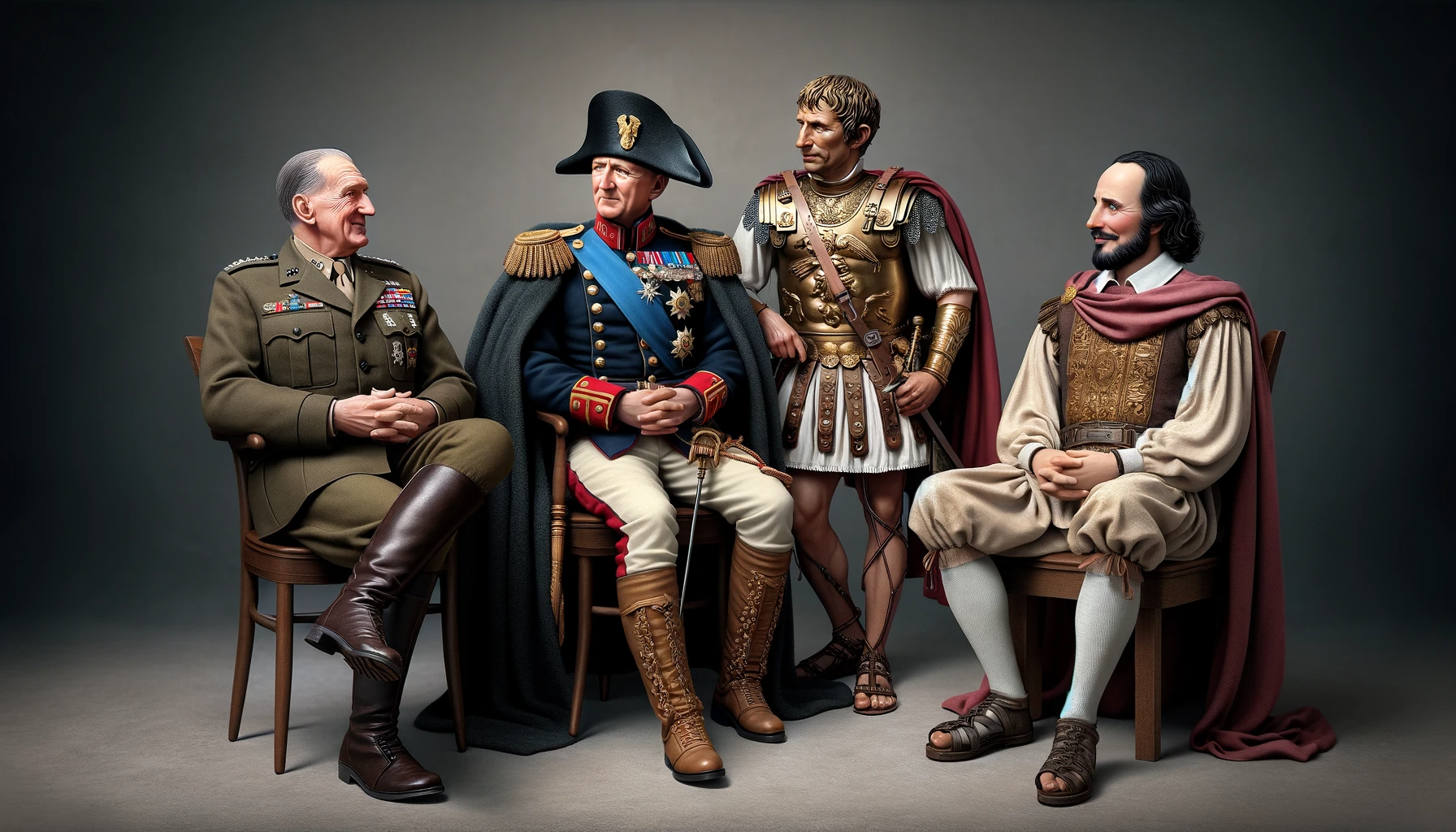
History is filled with figures who have left an indelible mark on the world, not only through their actions but also through their unique and transformative leadership styles.
In a fascinating journey through time and imagination, I set out to explore what it would be like if some of history’s most iconic leaders—General Patton, Napoleon Bonaparte, Julius Caesar and William Shakespeare—found themselves in the modern era, specifically in the context of running a hotel.
What could we learn from them today? How would they apply their skills and tactics to the sphere of contemporary business leadership?
These figures were not chosen at random. Each represents different aspects and approaches to leadership which, although rooted in their own eras, offer timeless lessons that can be applied in the modern world.
General Patton, with his bold, tactical leadership in wartime; Napoleon, with his strategic vision and ambition for growth; Julius Caesar, with his charisma and political acumen; and William Shakespeare, with his creative genius and focus on storytelling.
By bringing these figures into a contemporary setting, we seek to discover how their leadership approaches could be adapted and applied in new and illuminating ways.
By bringing these figures into a contemporary setting, we seek to discover how their leadership approaches could be adapted and applied in new and illuminating ways.
- General Patton: Known for his bold and direct leadership, Patton as a hotel general manager would emphasise efficiency and discipline, prioritising operational excellence and a strong work ethic.
- Napoleon: His ambition and strategic ability would translate into a leadership approach focused on innovation and expansion, constantly seeking to improve and grow.
- Julius Caesar: A charismatic and politically astute leader, Caesar would bring leadership skills focused on diplomacy and people management, always seeking balance and harmony.
- William Shakespeare: He would bring an approach centred on creativity and the guest experience, distinguished by the importance he placed on storytelling and the hotel’s atmosphere.
A Conversation Across Time: Historical Leaders Sharing Wisdom
Let us now imagine a conversation among these leaders in a relaxed setting:- General Patton would share anecdotes about the importance of efficiency in wartime and how he applies these principles to maintain high standards at his hotel. He would speak of his direct approach and his ability to make swift decisions in critical situations.
- Napoleon would focus on his vision for expansion. He would explain how he transformed small establishments into prestigious hotel chains and his passion for innovation, applied to the continuous improvement of the guest experience.
- Julius Caesar would highlight charisma and people management. He would recount how his ability to influence and motivate people created a cohesive hotel team, and how diplomacy is key to hotel management.
- William Shakespeare would speak about the importance of storytelling. He would explain how he transforms every detail of the hotel into part of a story, creating an immersive and unique experience for guests.