
From Big Data to Actionable Intelligence: How AI Is Reshaping Hotel Profitability



For years, in Hospitality, we have repeated one expression with a curious mix of admiration, fear and industry posturing: Big Data. It was mentioned at conferences, in sales presentations, in strategic meetings and in any conversation where someone wanted to sound especially up to date. But, if I am honest, the term was often used more as intellectual decoration than as a genuine business tool.
I have seen it far too many times. Hotels convinced they were working with data simply because they had a PMS, a CRM, a channel manager, reasonable web analytics and several Excel reports circulating by email. In reality, what existed was an accumulation of scattered information, not a true ability to turn data into better decisions. There was data, yes. What was missing was judgement, connectivity and the capacity to execute.
And that, precisely, is the major difference between the old Big Data debate and the current moment. Before, we talked about volume. Today, we need to talk about usefulness. Before, the problem was storing data. Now, the real challenge is to interpret it, prioritise it and activate it with speed, consistency and commercial focus. And this is where artificial intelligence has changed the rules of the game.
Because AI has not arrived to replace hoteliers’ thinking, but to compel us to think better. It enables us to see patterns that previously went unnoticed, anticipate behaviours more accurately, automate analyses that once consumed hours and, above all, connect business areas that have traditionally operated separately: revenue, marketing, operations, guest experience and sales. At last, we are beginning to move closer to something that had been promised for years and rarely materialised: a more complete view of the guest and smarter hotel management.
The question is no longer whether your hotel has data. The relevant question is another: are you turning that data into decisions that improve margin, experience and positioning? If the answer is no, then you do not have a hotel intelligence strategy. You simply have an expensive collection of systems generating noise.
AI does not make data magical: it makes visible what we could not see before
I have always felt that the sector’s biggest mistake was believing that the value lay in the amount of information available. It did not. The value was never in having more data, but in knowing which question to ask, which pattern to seek and which decision to make afterwards. Artificial intelligence does not, by itself, fix a confused business model, repair a poorly designed strategy or make a hotel without a value proposition profitable. But it can do something decisive: drastically reduce the distance between signal and action.
Today, a hotel can integrate and interpret far more intelligently the signals that once remained isolated or underused: booking behaviour, pick-up, cancellations, website browsing, marketing campaigns, point-of-sale spend, guest reviews, pre-arrival requests, digital conversations, use of in-house services, operational incidents, repeat-stay patterns and price sensitivity by micro-segment. What matters is understanding that this is no longer a merely descriptive exercise. We have moved from “what happened” to “what is happening”, and from there to “what is likely to happen” and “what should we do now”.

Stop managing isolated systems. Start managing the whole hotel.
HotelGEX connects guests, operations, Revenue, F&B, Groups & Events and Management into one intelligent hotel context — so every decision starts with a clearer picture.
That leap changes everything. It changes the way we sell, segment, design experiences, allocate resources, upsell, anticipate staffing needs, identify friction in the guest journey and protect profitability without always resorting to the old temptation of discounting.
That is why, when I hear talk of Big Data today, I am less interested in volume and much more interested in the decision architecture behind it. A small hotel with well-connected systems, clear objectives and a sensible layer of applied AI can make far smarter decisions than a large chain trapped in silos, endless dashboards and slow processes. The advantage is no longer simply one of scale. It is increasingly an advantage of strategic clarity.
In my experience, AI begins to become genuinely useful in Hospitality when it stops being treated as a technological accessory and becomes a business discipline. In other words, when the hotel uses it to answer questions such as these:
- Which guest profiles have the greatest total value? Not simply who pays the most for one night, but who delivers the best cumulative margin, returns more often, costs less to acquire and generates more referrals.
- Where is conversion being lost? At precisely which point in the funnel demand drops off, and which signals anticipate that abandonment.
- Which extras are most likely to be accepted according to profile, travel purpose and timing? This is where AI multiplies commercial effectiveness when applied with sound judgement.
- Which patterns signal a future cancellation or a drop in demand? Anticipating is worth more than reacting.
- Which reviews conceal structural problems? Semantic analysis is no longer useful merely for counting positive or negative adjectives; it can identify recurring friction by department, shift, segment or service moment.
- Which commercial decisions are generating revenue but destroying margin? One of the sector’s most important and least-asked questions.
AI also has a major impact on something we have worked on with too much intuition for years: true personalisation. I am not talking about putting the guest’s name in an email. I am talking about adapting the timing, channel, content, proposition and offer with more precise logic. A guest who travels once a year and spends heavily on food and beverage should not receive the same commercial treatment as one who stays five times a year for work and never sets foot in the restaurant. A highly price-sensitive guest should not be engaged in the same way as another whose decision depends more on flexibility, location or check-in speed. A quiet but profitable guest should not go unnoticed in favour of another who is highly visible on social media but of little economic value.
For a long time, the hotel sector has spoken about personalisation while continuing to operate with near-mass communications and overly generic rules. Used well, AI breaks that contradiction. It makes it possible to create dynamic micro-segments, prioritise opportunities and personalise with stronger economic logic. And in a context where costs are rising and margins are tightening, this ceases to be an appealing sophistication and becomes a competitive necessity.
That said, it is also worth bringing some order and common sense to the conversation. Not everything should be done. Not every data point is worth pursuing. Not every automation improves the business. And not every predictive capability justifies the effort it requires. A hotel that wants to work with AI needs a sensible sequence, not an attack of technological anxiety.
I would start here:
- Define the business objective before the tool. If you do not know what you want to improve, AI will only help you get lost faster.
- Audit your data sources. PMS, CRS, CRM, booking engine, channel manager, RMS, POS, spa, events, concierge, switchboard, online reputation, social media, Wi-Fi, housekeeping, maintenance, web analytics. The point is not to have everything perfect from the outset, but to know what exists, what is missing and what is not connected.
- Prioritise specific use cases. Upselling, cancellation prediction, pricing, segmentation, retention, reputation, operational forecasting, sales productivity. One or two well-resolved use cases are worth more than ten brilliant presentations.
- Clean and organise the data. AI does not turn chaos into wisdom. If you feed the system inconsistencies, duplicates and poor-quality records, you will only automate mistakes.
- Connect intelligence and execution. Insight without action is simply a more expensive form of contemplation.
One of the most interesting changes we are seeing is that AI is not only useful for selling better; it is also useful for operating better. And here, I believe there is still considerable ground to cover in Hospitality. A hotel can use predictive models to adjust staffing by time slot, anticipate consumption, optimise purchasing, identify recurring incidents, foresee congestion in certain services, reduce downtime and find inconsistencies between its commercial promise and operational capacity. Put another way: AI does not only help generate demand; it helps the business run with less friction.
I find that nuance fundamental. For far too long, we have treated data as a revenue or marketing matter, when in reality it should be a cross-functional management lever. If AI identifies a segment that books frequently but leaves a trail of incidents, low repeat business and disproportionate operational pressure, the decision cannot remain within the commercial department. If review analysis reveals that breakfast perception declines on certain days and shifts, that is not merely a reputation alert; it is operational and leadership information. If purchasing patterns show that particular upsells work better across certain combinations of length of stay, source market and booking lead time, there is a clear opportunity for commercial design.
The great promise of AI in Hospitality, therefore, is not merely to automate tasks. It is to help build management that is more integrated, faster and less fragmented. And that, in my view, is the true leap in maturity the sector needs.
It is also worth discussing a risk I see increasingly often: using AI to make the wrong decisions more sophisticated. Some hotels want to apply artificial intelligence to models that still do not properly understand their own profitability, value proposition or commercial architecture. This usually ends in a dangerous illusion: polished dashboards, sophisticated reports, striking automations… and very little real improvement. AI should not be used to impress the organisation, but to discipline it.
In practice, the applications with the greatest impact for a hotel tend to be in highly specific and actionable areas:
- More refined forecasting to anticipate demand, cancellations and operational requirements.
- Pricing and revenue with the ability to better interpret elasticity, booking windows, value by channel and sensitivity by profile.
- Upselling and cross-selling at the right time, with a more relevant proposition.
- Predictive marketing to activate campaigns with greater intent and less waste.
- Reputation analysis capable of identifying themes, emotions and root causes.
- Guest recognition based on value logic, not merely on history.
- Operational optimisation to reduce hidden inefficiencies that erode margin.
And yet, I still believe AI’s greatest contribution is not technical, but cultural. It compels the hotel to stop deciding by habit, disorganised intuition or simple reaction. It demands that it formulate hypotheses, measure better, revisit assumptions and accept that many historic decisions were based on a generous mix of tradition, ego and limited evidence.
That may be uncomfortable, but it can also do a great deal of good. Because, ultimately, we do not need hotels full of data. We need hotels that know how to think better with data.
From accumulated data to augmented judgement: how to turn AI into a real advantage
There is a temptation that is very characteristic of the current moment: to believe that incorporating AI automatically means modernising the hotel. It does not. Modernising a hotel does not mean adding a technological layer on top of mediocre processes; it means redesigning how decisions are made, how priorities are set and how execution happens. AI only becomes an advantage when it tangibly improves three things: the quality of the decision, the speed of the response and the profitability of the action.
Books to run a hotel with judgement
Written from the general manager’s chair: technology, guest experience, leadership and management.
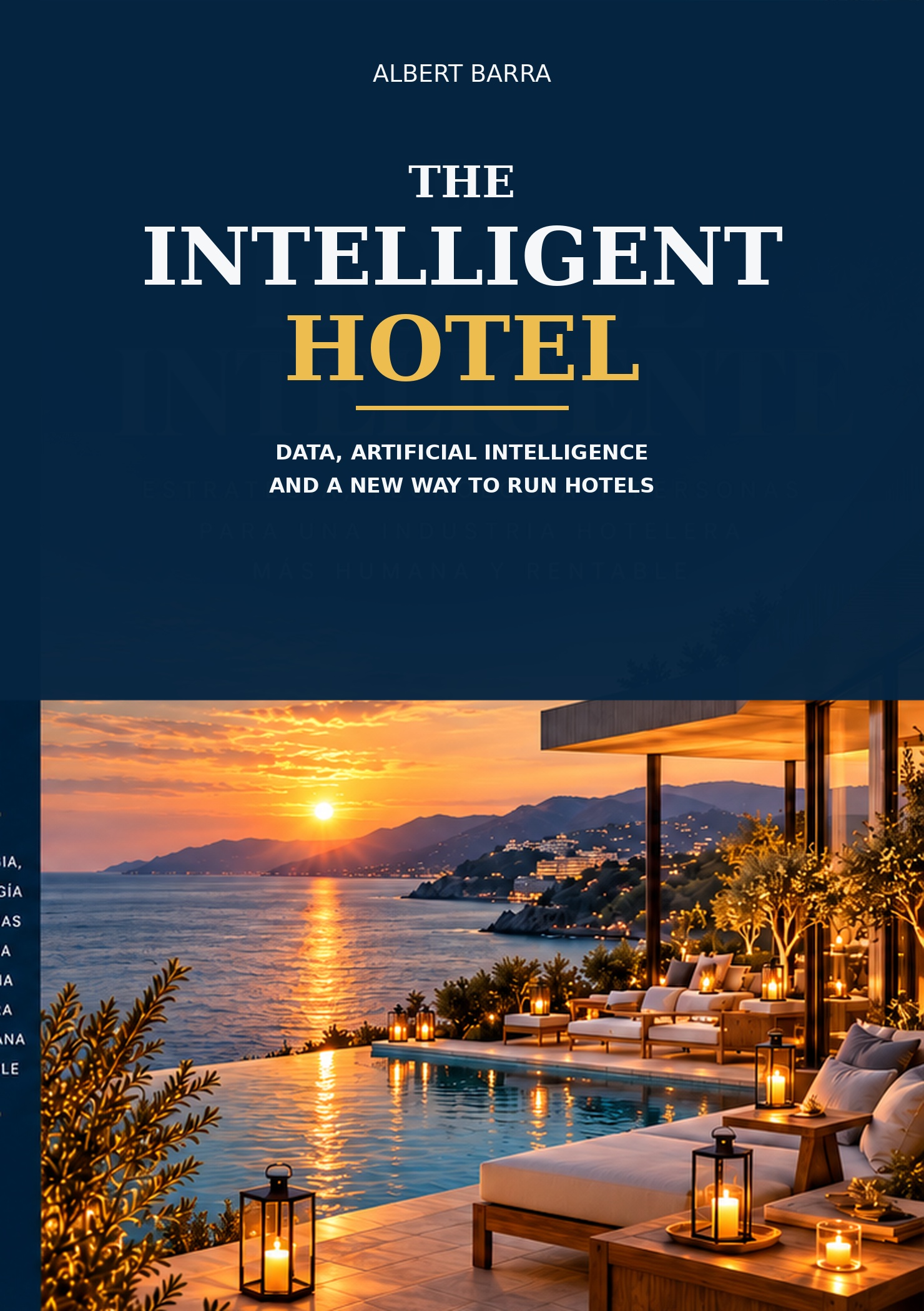 The Intelligent HotelData, Artificial Intelligence and a New Way to Run Hotels
 Directing HotelsWhat Nobody Tells You Before You Sit in the General Manager’s Chair
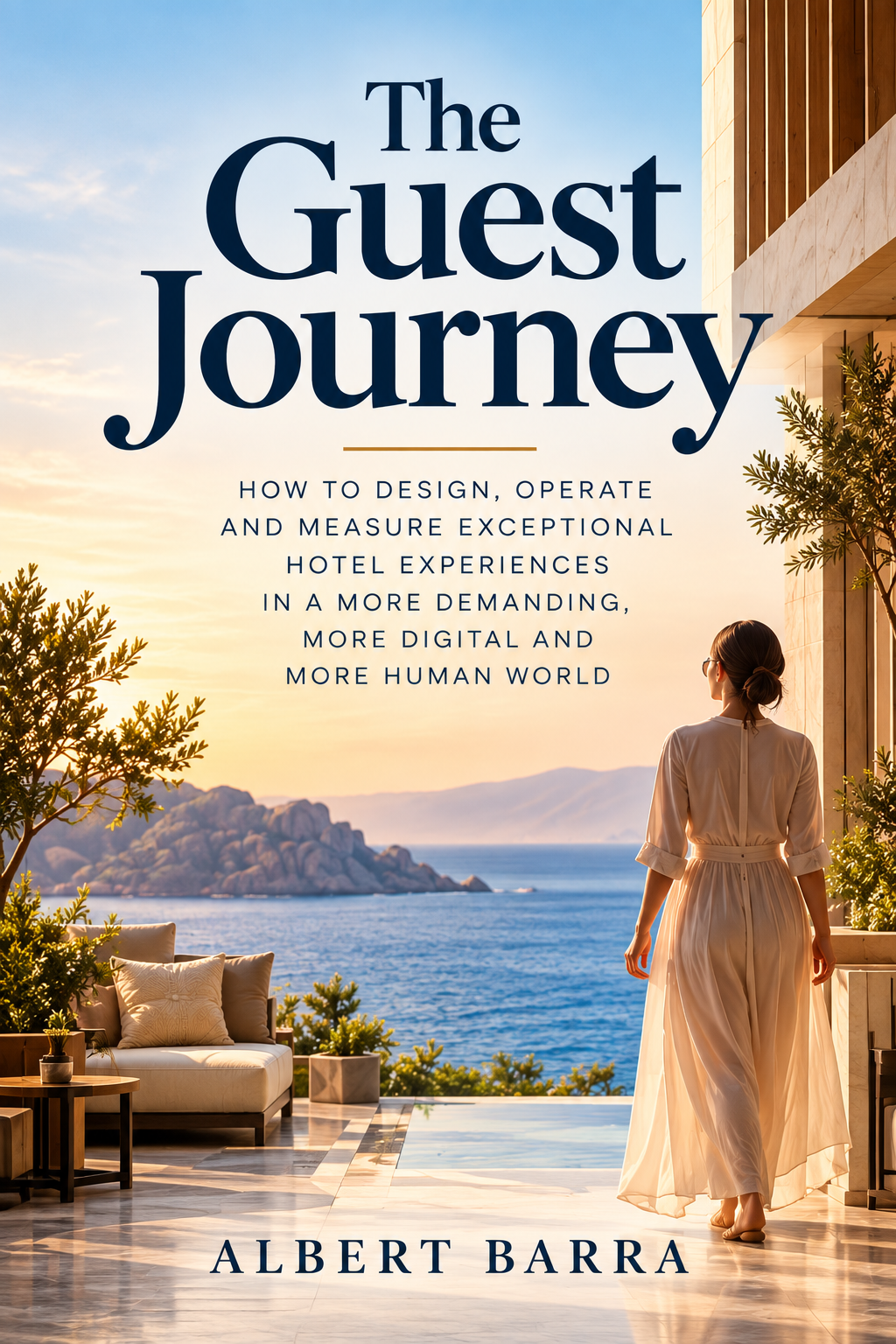 The Guest JourneyDesigning Customer Experience Across the Entire Hotel Journey
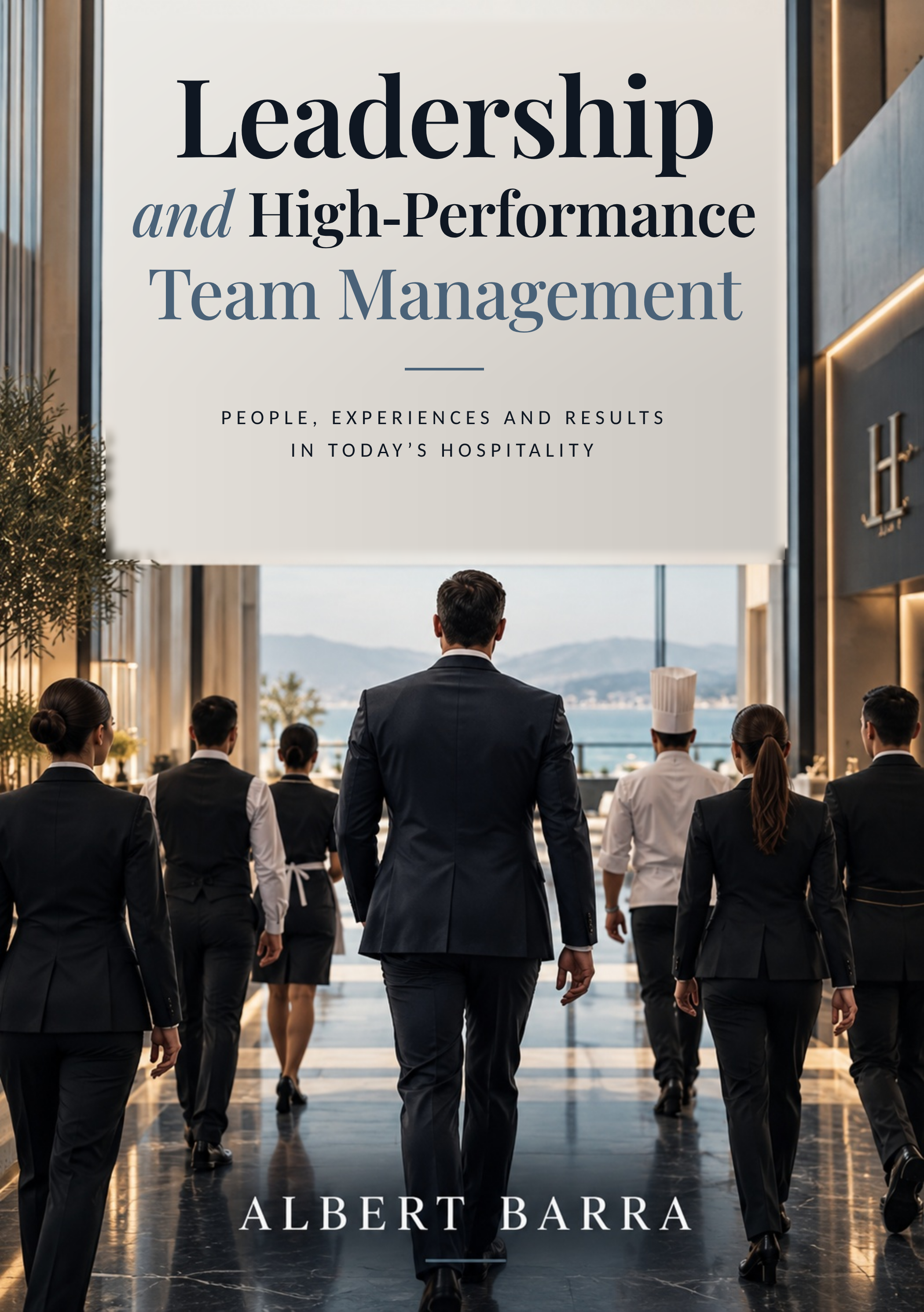 Leadership and High-Performance Team ManagementPeople, Experiences and Results in Today\\\'s Hospitality
In a well-managed hotel, artificial intelligence should serve to expand judgement, not replace it. In fact, the more thoughtful and strategic the leadership, the more value it can draw from it. And the weaker the leadership, the easier it is to turn AI into a sophisticated excuse for avoiding the real problem.
What I find most interesting is that, for the first time in a long while, mid-sized and independent hotels have access to capabilities that once seemed reserved for large groups. You no longer need to be a giant to segment better, model demand, interpret guest feedback in depth or identify commercial opportunities in near real time. The question is not whether you can access these capabilities. The question is whether you are willing to organise your business to make the most of them.
This is where I would offer an important warning. AI applied to Hospitality requires a discipline that the sector has not always had:
- Data governance, to know what is collected, who validates it, how it is cross-referenced and for what purpose.
- Strategic prioritisation, to avoid wasting time on elegant but irrelevant analysis.
- Interpretive capability, because not every pattern deserves to become a decision.
- Ethics and commercial judgement, because not everything that can be done should be done.
- Connection to operations, so that insight does not remain suspended in a pleasant meeting.
In many hotels, the problem will not be a lack of AI. It will be a lack of management architecture to turn it into value. Put another way: if revenue, marketing, front office, sales, food and beverage and management continue to interpret the business as separate compartments, artificial intelligence will only add another layer of complexity. But if the hotel understands that information must flow and decision-making must be integrated, then a very powerful lever emerges.
I also believe we need to dismantle another mistaken idea: that AI is useful only for hyper-personalising the guest experience. Yes, it is useful for that, and increasingly so. But it can also help us make smarter decisions about what not to do. Which campaigns do not warrant investment. Which segments generate volume without value. Which services add complexity and offer little return. Which channels appear convenient but destroy margin. Which promotions fill rooms while eroding positioning. Sometimes, a good layer of intelligence does not push you to sell more. It helps you stop selling badly.
If we think about it objectively, this is one of the sector’s great outstanding challenges: using intelligence not only to capture demand, but to better filter the demand that genuinely suits the hotel’s business model. And here AI can be enormously useful, because it allows variables that were previously viewed separately to be cross-referenced: total spend, frequency, ADR, acquisition cost, in-house spend, incident levels, price sensitivity, repeat business, satisfaction and recommendation potential.
This brings us to an idea that, in my view, should have a far greater presence in today’s hotel conversation: the future is no longer Big Data understood as accumulation, but actionable intelligence understood as competitive advantage. The winning hotel will not necessarily be the one with the most data, but the one that knows best how to translate it into better commercial decisions, better operational decisions and better positioning decisions.
I would summarise the shift like this: before, we accumulated data to understand the past. Now, we must use AI to intervene more effectively in the present and build the future more effectively.
And, as is often the case with genuine change, the decisive factor will not be the tool. It will be the way the hotel organises itself to think with greater rigour. Artificial intelligence can help enormously, yes. But it will only be useful in the hands of hotels that know exactly what they want to protect, what they want to improve and what kind of business they want to build.
That is why, when people ask me where to begin, my answer is no longer technological. It is strategic:
- Decide what you need to know in order to manage better.
- Decide what you need to improve in order to earn more or serve better.
- Decide which data is needed to answer those two questions.
- And only then decide which AI you need.
If the order is reversed, the hotel risks having a great deal of artificial intelligence and very little management intelligence. And in a business as dynamic and demanding as this one, that comes at a cost.
I sincerely believe the opportunity is enormous. We have never had so much potential to connect demand, experience, operations and profitability. We have never been so close to understanding both the guest and the business better at the same time. We have never had such powerful tools to identify patterns, refine propositions and anticipate decisions. But neither has it ever been so easy to confuse modernity with noise.
My advice is simple: start small, but start with intent. Do not pursue AI in order to appear current. Pursue it in order to become more precise, more profitable and more consistent. That is the kind of innovation that is truly worthwhile in Hospitality.
And if there is one thing I have learned over the years, it is that the hotel that knows how to interpret what is already in front of it often discovers a truth that is uncomfortable and liberating in equal measure: the problem was never a lack of data. The problem was not knowing what to do with it.
Today, with AI, we no longer have an excuse to remain seated in front of a mountain of information without turning it into a real advantage. The question is no longer whether the future will be intelligent. The question is whether our hotel will be equal to that intelligence.
This article ends here. The archive does not.
Lead Hospitality brings together 1200 English articles published since 2018: years of experiences, decisions and lessons you can keep exploring.
What would you like to explore next?
Choose a direction and keep reading around what you want to solve, learn or challenge.