
Guest Loyalty Has Changed (and Many Hotels Still Haven’t Noticed)

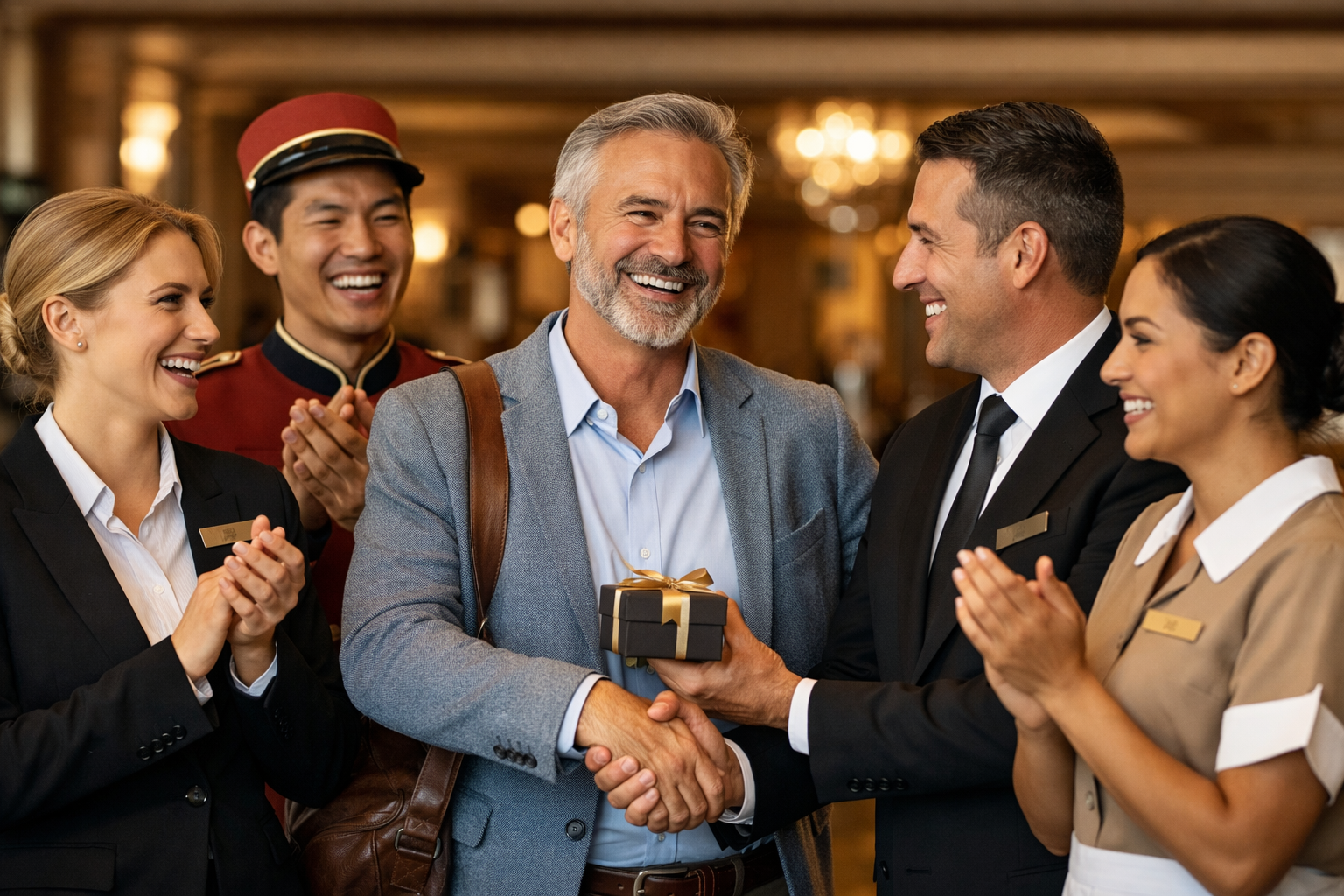

For years, in Hospitality, we spoke of loyalty almost as though it were an implicit contract: if guests returned, recommended us or enrolled in a points programme, the objective had been met. We measured loyalty through convenient, quantifiable and, above all, internal metrics. They reassured us because they told us that “everything was going well”.
Over time, I came to understand that this reassurance was, in many cases, a false sense of control. Many customers were not loyal: they simply did not have a better alternative, or the cost of switching was too high. It was not love for the brand; it was inertia. And inertia breaks without warning as soon as a more appealing option emerges.
Today, the context is different. Changing hotels, destinations or propositions is easy. Information is abundant, comparisons are immediate, and reputations are built—or destroyed—in real time. In this new landscape, loyalty is no longer “demanded”: it must be earned. And that changes absolutely everything.
In 2026, loyalty is defined not only by what customers do, but by how they feel, by whether they perceive consistency between what we promise and what we actually deliver, and by the trust we create in every interaction, even the smallest ones.
The big question is no longer how to make customers loyal to the hotel, but how to be loyal to customers. When that shift in perspective is truly embraced, loyalty ceases to be a one-off campaign and becomes the natural outcome of doing things well.
The new loyalty in Hospitality: trust, consistency and emotion
If I had to summarise what customer loyalty means in Hospitality today, I would do so with a simple yet demanding formula: meet expectations + surprise whenever possible + build trust every day. It is not a slogan; it is a daily discipline.
What has changed since 2015 is not only guest behaviour, but also the balance of power. Before, many hotels expected loyalty almost by default. Today, the relationship is two-way. Customers do not “owe” loyalty; they choose it when they feel the relationship deserves it.
Several factors have redefined this concept:
Immediate expectations and zero friction
Guests expect speed, ease and consistency. When something goes wrong—because it always will—what makes the difference is not the mistake itself, but empathy and responsiveness. According to PwC, 32% of customers abandon a brand after just one bad experience, even when its pricing is competitive.Personalisation built on trust
Personalising without being intrusive is one of today’s greatest challenges. Data can deepen the relationship, but only if customers trust how it is used. A lack of transparency breaks loyalty immediately. The Edelman Trust Barometer shows that 67% of consumers stop buying from brands they do not trust.Genuine omnichannel consistency
For guests, there are no “departments”, only experiences. The website, reservations, front desk, restaurant and post-stay communications must all speak the same language. Inconsistencies are not perceived as technical errors, but as a lack of care.Values, ethics and purpose
More and more customers choose hotels that reflect their values. Sustainability, local impact, respect for people and transparency are no longer “extras”; they are decision-making criteria. According to Booking.com, 76% of travellers want to travel more sustainably.Emotional, not transactional loyalty
Points are forgotten; experiences are not. The memory of a genuine gesture, personalised attention or an honest solution carries more weight than any one-off financial benefit.
From this perspective, loyalty ceases to be a marketing strategy and becomes a way of operating. The key question is not “how do we get them to return?”, but “how will they feel when they remember us?”
What modern loyalty is not (and why it still confuses us)
To move forward, it is also worth challenging some ideas that remain deeply ingrained in Hospitality and which, in 2026, are dangerously outdated.
It is not staying because switching is difficult
If customers stay because changing is inconvenient, that is not loyalty; it is fragility. As soon as a better alternative appears, they will leave. In some models, these are known as “hostage” customers, with seemingly positive indicators but an extremely high risk of churn.It is not giving things away
Reward programmes still have their place, but they no longer differentiate. Guests are saturated with incentives. True loyalty is intrinsic, not bought.It is not longevity
Having stayed at a hotel for years does not imply an emotional connection. Sometimes, it simply means habit. Genuine loyalty is evident when customers choose to stay even when something does not go perfectly.Lead Hospitality LibraryMy published books
The Intelligent HotelData, Artificial Intelligence and a New Way to Run Hotels→Directing HotelsWhat Nobody Tells You Before You Sit in the General Manager’s Chair→The Guest JourneyDesigning Customer Experience Across the Entire Hotel Journey→See all booksDigital edition · Personal licence · Free or discounted for subscribersIt cannot exist without the employee experience
The customer experience is inseparable from the team experience. According to Gallup, companies with engaged employees generate 23% greater profitability. A disconnected team inevitably passes that disconnection on to guests.
In day-to-day practice, modern loyalty is built through very specific actions:
Measure trust, not just satisfaction
Beyond NPS, it is worth asking whether customers feel we act in their best interests, whether they trust our decisions, and whether they would return even in the face of a minor inconvenience.Design loyalty journeys, not programmes
Onboarding, issue resolution, departure, post-stay communication… each stage is an opportunity to strengthen the relationship.Care for the micro-moments
A clear confirmation message, a well-handled call, honest follow-up after an issue. Small gestures, great emotional impact.Empower people
Loyalty cannot be improvised from a manual; it is conveyed through the team’s responsible freedom to act with sound judgement and humanity.Listen continuously
Periodic surveys are not enough. Listening is an ongoing process, not a one-off event.
Ultimately, every hotel must answer uncomfortable yet necessary questions:
what does our customer truly expect from us? At which moments is their trust at stake? How do we demonstrate our loyalty to them before asking for theirs?
Loyalty in 2026 is not a programme, nor is it an isolated KPI. It is a cultural mindset, a way of being present even when no one is watching. And that, although it may not always show up on a dashboard, is clearly—and significantly—reflected in results.
Nurturing loyalty begins by accepting that we will not always be right, but that we always have the opportunity to do the right thing. And that, in Hospitality, remains the greatest differentiator.
Investing in trust does not deliver immediate results, but it builds something far more solid: customers who return because they want to, not because they have to.
And when that happens, the best loyalty programme is simply continuing to live up to the memory we leave behind.
This article ends here. The archive does not.
Lead Hospitality brings together 1200 English articles published since 2018: years of experiences, decisions and lessons you can keep exploring.
What would you like to explore next?
Choose a direction and keep reading around what you want to solve, learn or challenge.