
Hotels Need Less Firefighting and Stronger Management Models

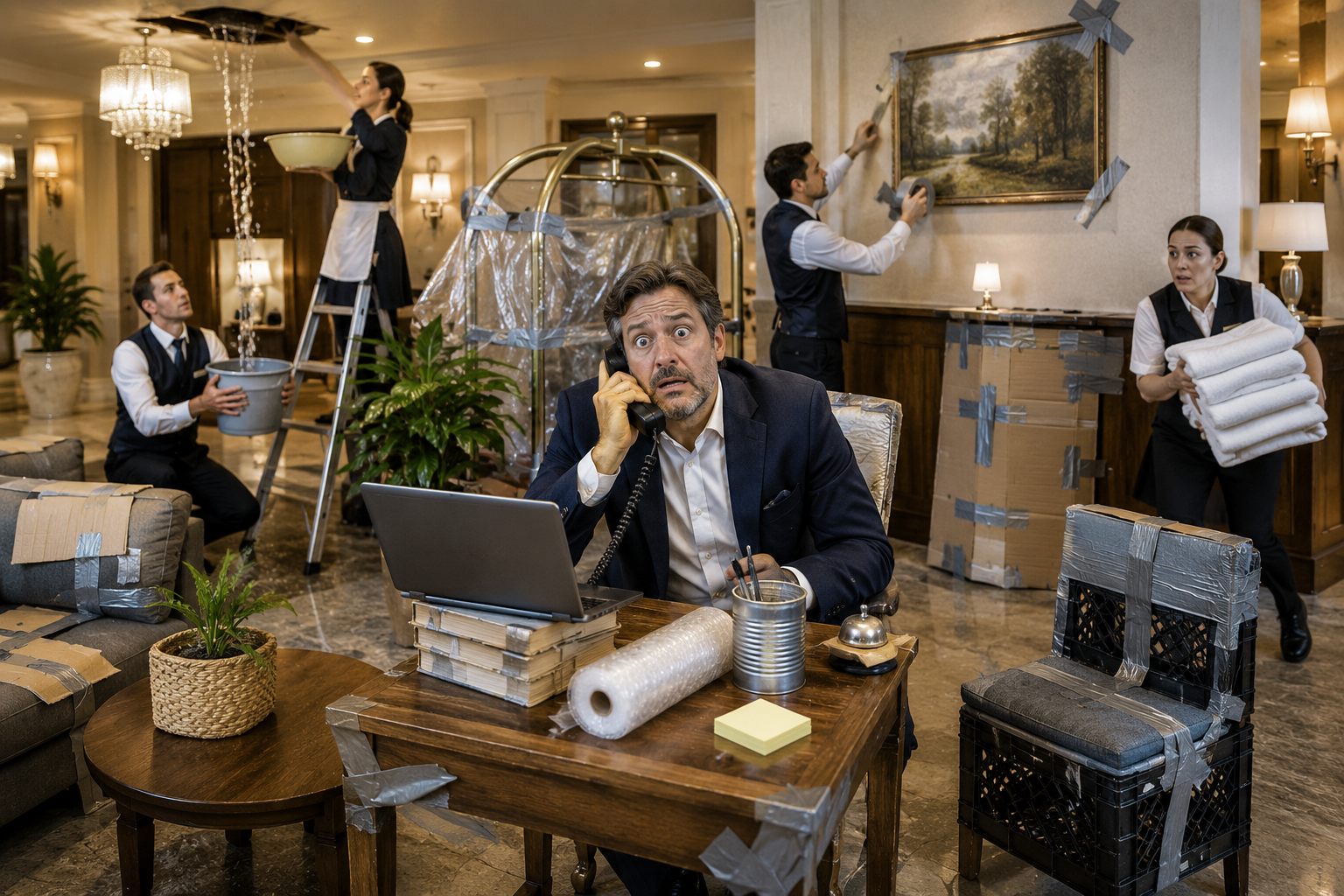

For years, the hotel industry has been caught between two equally dangerous extremes. On the one hand, there is the obsession with immediate operations: putting out fires, covering incidents, resolving check-ins, balancing schedules, chasing costs and surviving until the next day. On the other, there is the fascination with fashionable trends, miracle methodologies and grand narratives about transformation, innovation and leadership.
Between these two extremes, many hotels have lost something essential: a genuine management model. And when I speak of a management model, I do not mean attractive organisational charts or corporate manuals full of empty words. I mean a real structure that enables a hotel to make consistent decisions, execute with discipline and evolve without constantly relying on the operational heroics of a few exhausted individuals.
I have seen hotels with spectacular facilities, prime locations and teams with enormous potential, completely paralysed by the absence of a clear operating system. I have also seen modest hotels, with far more limited resources, compete extraordinarily well because they had an aligned operational culture, a clear strategy and a consistent way of doing things.
Modern hospitality can no longer rely solely on intuition or accumulated experience. Today’s environment is too complex: distribution, online reputation, energy costs, wage pressure, talent shortages, sustainability, guest segmentation, revenue management, digital reputation, intermediaries and the guest experience. Everything happens at once, and everything has a direct impact on profitability.
The problem is that many hotels try to resolve this complexity by adding more tools, more meetings and more technology, when what they really need is something far more uncomfortable: to think structurally about how the hotel operates as an organisation.
The biggest problem facing many hotels: operating without a management architecture
One of the things that concerns me most about today’s hospitality industry is seeing how many properties operate with virtually no coherent organisational model. They function through inertia, tradition or, worse still, constant reaction.[cre_gate]
And that has enormous consequences.
When a hotel lacks a clear management architecture, highly recognisable symptoms begin to emerge:
- Management consumed by constant micro-issues: everything ends up being escalated upwards because there are no clear criteria, accountable autonomy or well-defined processes.
- Misaligned departments: revenue pursues occupancy, operations seeks stability, sales pursues volume, and food and beverage tries to survive as best it can.
- Exhausted teams: continuous improvisation turns any normal working day into an obstacle course.
- Inconsistent processes: the outcome depends too heavily on who is on shift rather than on a shared operating system.
- Emotional decision-making: decisions are made under pressure, urgency or fear, rather than through strategic analysis.
- A lack of real accountability: everyone has an opinion, many offer justifications, few take ownership.
- An inability to sustain change: initiatives are launched, only to be abandoned when operational pressure arrives.
The result is devastating: hotels that work incredibly hard yet make very little progress.
For years, hospitality has underestimated a fundamental idea: excellent organisations do not depend solely on financial results, but on the ability to align purpose, leadership, culture, execution and results coherently.
We still believe that hotel success depends primarily on location, product, brand or investment. And yes, all of that matters. It would be absurd to deny it. But I am increasingly convinced that the true sustainable competitive advantage lies elsewhere: the quality of the management system.
Many hotels have strategy. Many hotels have talent. Many hotels have investment. But very few have alignment.
And without alignment, strategy becomes a document. Talent becomes depleted. Investment is diluted. And operations end up running on sheer pushes, urgencies and meetings where everyone explains how busy they are—something that, in hospitality, should almost be considered an official unit of measurement by now.
Hospitality does not need more heroes. It needs better systems
For far too long, the industry has romanticised the all-round professional capable of personally resolving everything: handling a complaint, negotiating with suppliers, closing group business, solving technical issues, controlling costs, supporting the front desk, managing internal conflicts and, on top of all that, trying to think strategically.
The problem is that this model does not scale. And it also creates an extremely dangerous dependency for any hotel.
Hospitality needs to abandon the culture of the operational saviour and begin building organisations where processes, culture and structure support operations even under pressure.
This does not mean dehumanising management or turning the hotel into a cold factory of procedures. It means exactly the opposite: freeing people from unnecessary chaos so they can bring judgement, hospitality, care and real value.
A well-managed hotel is not one where nothing ever happens. Such a hotel does not exist. In hospitality, something always happens. A room is not ready, a supplier arrives late, a forecast falls short, a guest changes their mind, a machine decides to retire on a Saturday night. The difference lies in whether the hotel has the capacity to respond, or whether every incident becomes an institutional crisis.
That is where real management comes in.
- Clear processes: not to bureaucratise the hotel, but to prevent every individual from having to reinvent the wheel every day.
- Defined responsibilities: because when everything belongs to everyone, it often belongs to no one.
- Useful indicators: not decorative metrics, but data that enables better decision-making.
- A regular review rhythm: brief, focused, action-oriented meetings, not endless ceremonies of explanation and complaint.
- A culture of improvement: where mistakes are analysed rather than hidden, and where problems are escalated before they explode.
- Operational discipline: because excellence does not emerge from grand speeches, but from small behaviours repeated rigorously.
True hospitality maturity lies in building a system where operations do not depend solely on the willingness, talent or physical resilience of a few individuals. Because even the best people get tired. And when an organisation relies too heavily on the exhaustion of its best professionals, the problem is not attitude: it is design.
Revenue management, for example, should not be understood merely as a technique for adjusting prices. It is a management culture. It involves forecasting, segmentation, discipline, market insight and the ability to say no to certain business when it compromises profitability or positioning.
Yet I still see hotels where pricing decisions change because of anxiety, strategies are abandoned as soon as commercial pressure appears, standards fluctuate according to team fatigue, and operations depend too heavily on the emotional state of the day.
My published books
That is not management. It is organised survival.
And guests perceive it far more clearly than we think.
Although guests do not see internal organisational charts, they do perceive coordination, consistency, flow, culture and operational reliability. The guest does not know whether a problem lies with the front desk, housekeeping, the kitchen, maintenance, reservations or management. Nor should they have to know. To them, it is all the hotel.
That is why I like to say that many hotels believe they sell rooms, when in reality they sell invisible coordination.
And that invisible coordination is evident in everything: in the way guests are welcomed, in how an issue is resolved, in the flow of breakfast service, in how the team responds to a request, in how the commercial promise is protected and in how calm is maintained when occupancy pressure intensifies.
Today’s guest demands far more mature organisations. They tolerate less friction, expect greater personalisation, identify inconsistencies quickly and compare experiences constantly. Technology can help, of course. But it is worth repeating without hesitation: technology does not compensate for a poor organisational model.
A disorganised hotel with automation remains a disorganised hotel. A hotel with a poor internal culture will continue to transmit tension to the guest even if it offers digital check-in. And a hotel without clear leadership will continue to face problems even if it invests in the most sophisticated software on the market.
The question is not whether to choose technology or people. The question is understanding what should be automated and what must remain deeply human. We need to automate friction, but humanise the experience.
The difference between excellent and mediocre hotels no longer lies solely in the product. It lies in their ability to execute, cultural consistency, organisational maturity and operational discipline.
We must also understand that true sustainability begins with management. It is not limited to eliminating plastics, reducing consumption or obtaining certifications. Real sustainability begins with organisational stability, talent management, reducing operational strain, strategic clarity and the ability to generate sustainable profitability.
There is no sustainability without good management.
Because burned-out teams do not sustain excellence. Improvisation does not sustain quality. Permanent pressure destroys organisational cultures. And a hotel that always operates at the limit may appear efficient for a time, but sooner or later it pays the price: through turnover, mistakes, reputation, internal climate and lost profitability.
I have learned that the strongest hotels are not necessarily the most modern or the most expensive. They are those where priorities are clear, processes are understandable, responsibilities are transparent and people know exactly what is expected of them.
It sounds simple. But in hospitality, it is extraordinarily difficult.
My advice to any hotelier seeking to improve their property is to begin with an uncomfortable question: are we solving real problems, or simply masking symptoms? Because if the same issues appear every season under different names, we are probably not dealing with an isolated problem, but with a structural weakness.
It is also worth looking less at the latest fashionable software and more at the hotel’s internal architecture. Before adding complexity, we need to ask whether the team understands the priorities, whether departments work in alignment, whether middle managers have judgement and authority, whether meetings produce decisions and whether current processes help or hinder.
And, above all, we must remember something that daily operations sometimes make us forget: a hotel is not transformed through rhetoric, but through the disciplined repetition of good decisions. Excellence does not appear one day through inspiration. It is built shift by shift, service by service, conversation by conversation and decision by decision. It is in that quiet consistency that we usually find the difference between a hotel that simply operates and one that deserves to be remembered.
This article ends here. The archive does not.
Lead Hospitality brings together 1200 English articles published since 2018: years of experiences, decisions and lessons you can keep exploring.
What would you like to explore next?
Choose a direction and keep reading around what you want to solve, learn or challenge.