
Tourism Quality, Sustainability and Capacity: What Role Should Hotels Play?

In hospitality, as in any complex industry, simple solutions are often dangerously appealing. Limiting tourism supply may sound sensible: fewer beds, less pressure on the destination, greater quality. But I wonder: what do we mean by quality? And who truly benefits from such a measure?
When the Minister states that "setting limits on supply is an excellent way of influencing demand", he is applying a basic economic principle. But the tourism industry—and hospitality in particular—cannot be managed as though it were an Excel spreadsheet. We are talking about destinations with soul, with vibrant communities that depend on tourism, and hotels that are far more than businesses: they are employers, drivers of social development and stewards of the territory.
Reducing accommodation capacity without a comprehensive plan can become an elitist formula that pushes out middle-class visitors and hospitality workers. Because let us not forget: limiting supply does not automatically mean raising quality; more often, it simply makes it more expensive.
In my experience, quality in hospitality is not imposed by decree; it is cultivated through strategy:
-
Continuous staff training: A professional, motivated and empowered team is any hotel’s greatest asset. No structural refurbishment can compensate for a forced smile or mechanical service.
-
Investment in genuine sustainability: Hotels that consume fewer resources, integrate clean energy, eliminate plastics and create quality employment in their immediate surroundings. According to the Sustainability in the Hospitality Industry (2025) report, 70% of European guests already consider sustainability a factor in their booking decisions.
 360° Hotel Intelligence
Stop managing isolated systems. Start managing the whole hotel.
HotelGEX connects guests, operations, Revenue, F&B, Groups & Events and Management into one intelligent hotel context — so every decision starts with a clearer picture.
One hotel. One context.Start free trial → -
Diversification of the tourism product: Rather than demolishing hotels, we should be rethinking how we use our spaces, how we address seasonality and how we restore the guest’s capacity for surprise.
Why are we talking about demolitions rather than conversions?
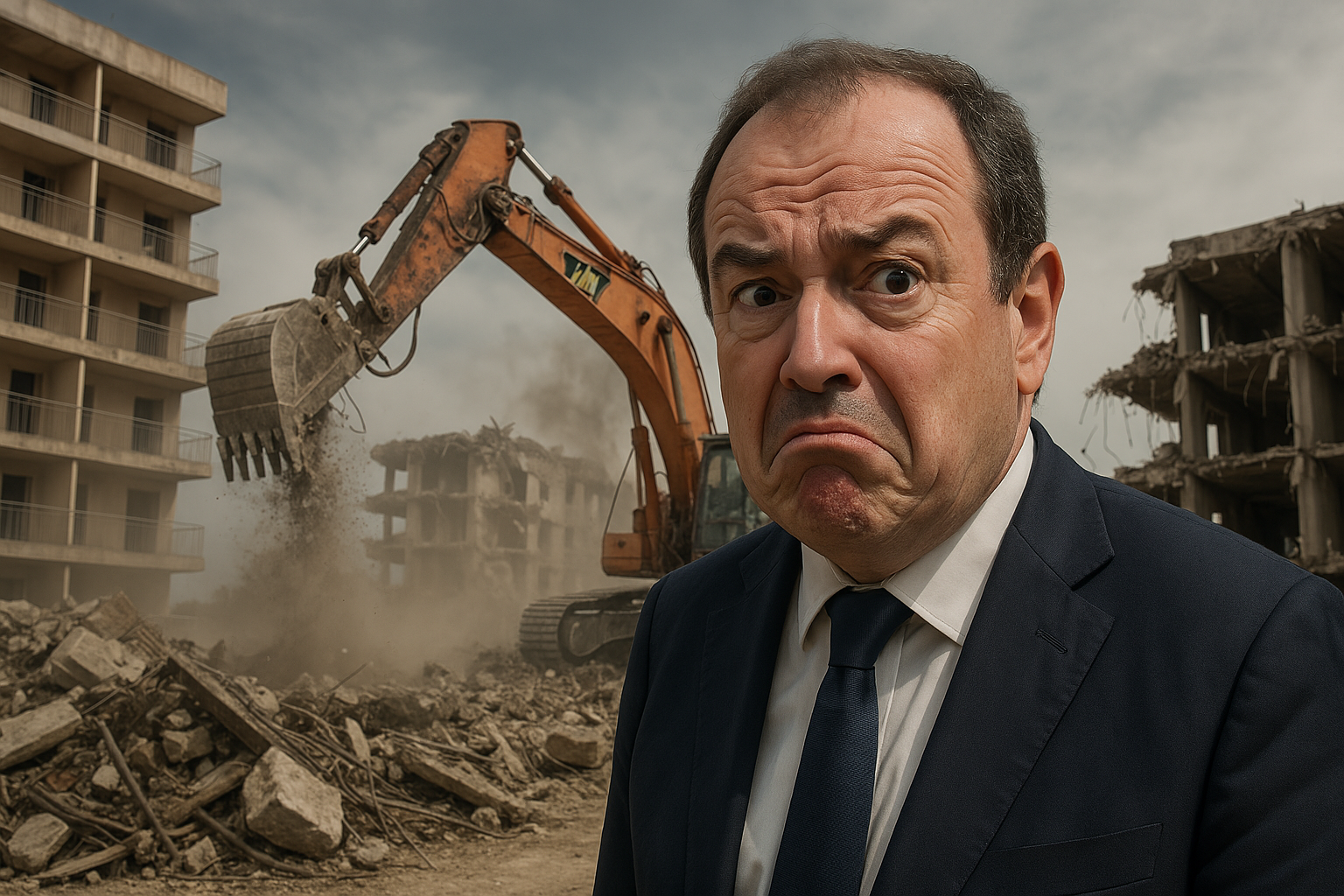
What unsettles me most about this news is the enthusiasm with which the demolition of two hotels in Calvià has been announced, as though they were trophies in the war against overtourism. And I wonder: what do we learn from tearing down rather than transforming? Would it not be more sensible to use those €6 million—from the European Next Generation plan—to drive conversion projects into sustainable, accessible, technology-enabled and exemplary accommodation?
There are European cities converting former hotels into student residences, cultural spaces or tourism-focused coworking hubs. Here, by contrast, we celebrate demolitions. To me, that is not a sign of innovation, but of resignation.
What model do we want to move towards? I do not want to fall into the trap of opposing everything as a matter of principle. It is true that the Balearic Islands need to review their tourism model. But that cannot mean penalising the hotel sector or leaving behind the hundreds of microbusinesses and self-employed professionals who depend on it.
It is time for government, the private sector and citizens to work together to design a tourism model that is strategic, scalable and adapted to the 21st century, and that considers:
-
Real tourism carrying capacity, based on data rather than political intuition.
-
Objective quality indicators, such as average visitor spend, length of stay or satisfaction index.
-
Coordinated urban and tourism planning instruments, enabling hotels, housing and public space to coexist in balance.
-
A coherent tax framework, one that incentivises good practice and penalises speculative uses.
Practical advice for hoteliers approaching this debate
-
Take an active part in institutional dialogue forums. If we do not speak for ourselves, others will decide for us.
-
Measure your hotel’s impact. Emissions, water consumption, employee satisfaction... it all counts.
-
Redefine your value proposition. If the market becomes more expensive, guests will demand memorable experiences, not just comfort.
Let this debate not serve to pit politicians, hoteliers and citizens against one another. Let it serve to rethink the tourism of the future with honesty and rigour. Because what is at stake is not beds or licences, but the soul of our destinations.
This article ends here. The archive does not.
Lead Hospitality brings together 986 English articles published since 2008: years of experiences, decisions and lessons you can keep exploring.