
Are We Stuck with the Wrong Hotel Technology?



There are days when I feel that we are managing hotels with the wrong tools. That every click on a screen that takes too long to load, every PMS error, every integration failure between systems is not an isolated incident, but a symptom. A symptom that something is structurally wrong.
I am not talking only about technology; I am talking about a deeper paralysis. We find ourselves trapped, held back by an operational infrastructure that, instead of moving us forward, slows us down. And most worrying of all, this is not a technical error, but a design flaw in the hotel business model.
The question I find myself asking more and more often is: why are we not moving forward with what we know we need? We all talk about efficiency, excellence and guest experience, yet we continue to rely on systems that do not communicate with one another, that do not evolve, that demand more from the team while delivering less for the guest. We have normalised operational frustration as part of everyday work, when in reality it should be a constant alarm bell.
I believe the root of the problem lies in the way our industry is structured. Brands, franchisors and owners form a complex ecosystem in which no one has sufficient power—or incentives—to lead an end-to-end technology transformation. Brands manage but do not own, franchisors distribute but do not operate, and owners, diverse and dispersed, view any investment whose return is not immediate with suspicion.
This creates a very dangerous inertia: everyone waits for someone else to take the first step. Meanwhile, we continue operating with outdated systems that weigh on productivity, exhaust staff and disappoint guests.
The operational stack dead end
I often find myself considering what I could do if we truly had a robust, integrated and coherent technology platform. But day-to-day reality is different: having to reconcile data manually, move from one system to another, deal with a lack of interoperability and the constant feeling of working twice as hard to achieve half as much.

Stop managing isolated systems. Start managing the whole hotel.
HotelGEX connects guests, operations, Revenue, F&B, Groups & Events and Management into one intelligent hotel context — so every decision starts with a clearer picture.
Why is there no unified solution? Because no one wants to pay for it. Because every stakeholder in the system has its own interests, and the costs of innovation are unevenly distributed. Because no one wants to be the first to take on the risk. But also, I believe, because we have not yet understood that this is not an “extra”, but a structural necessity.
The current system leaves us with a contradiction: we demand results from our teams, but give them tools that make them lose time, energy and focus. And in an industry where human contact and agility make the difference, this is an inconsistency we can no longer accept.
So what do we do now?
I know there are no magic solutions, but I also know that standing still is no longer an option. There are things we can do, even within our own hotels, while structural change has yet to arrive.
Review our digital ecosystem with a critical eye. Not from a place of resignation, but through a strategic lens. Ask ourselves what delivers real value and what does not. What can be improved with minimal effort and what needs a fundamental rethink.
Lead Hospitality LibrarySee the booksBooks to run a hotel with judgement
Written from the general manager’s chair: technology, guest experience, leadership and management.
 The Intelligent HotelData, Artificial Intelligence and a New Way to Run Hotels
 Directing HotelsWhat Nobody Tells You Before You Sit in the General Manager’s Chair
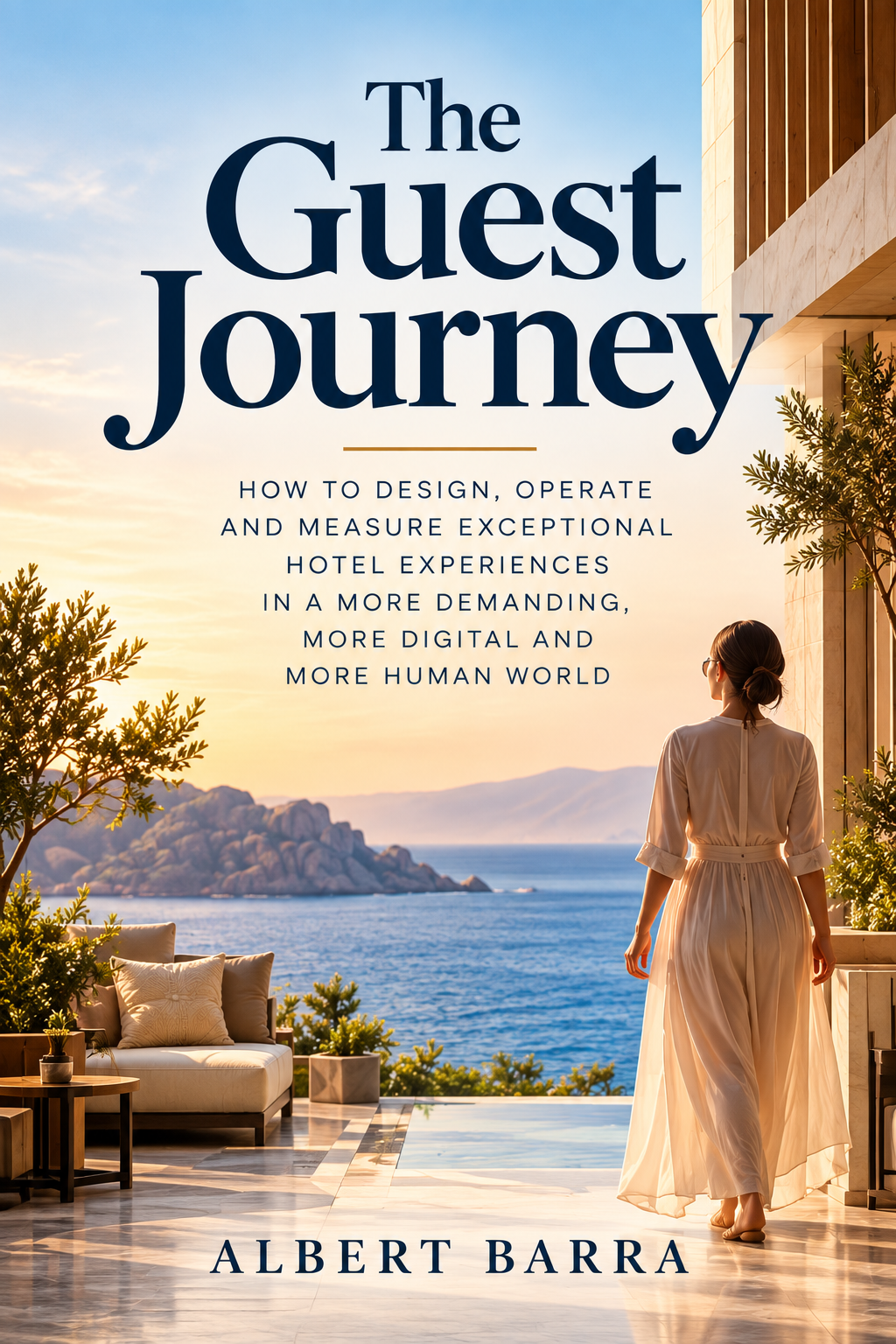 The Guest JourneyDesigning Customer Experience Across the Entire Hotel Journey
 Leadership and High-Performance Team ManagementPeople, Experiences and Results in Today\\\'s HospitalityDigital edition · Personal licence · Free or discounted for subscribersSee all books →
Build peer-to-peer partnerships. Talk to other hoteliers, share experiences and join forces. Major changes often begin in small circles of professionals who decide they will no longer wait.
Propose rather than ask. If you are part of a franchise network or manage a property within a chain, put forward concrete solutions. Not as demands, but as viable pathways. Sometimes, change needs someone willing to put it in writing.
Think long term, even if we live in the short term. It may not be possible today to build the operational platform we dream of, but every decision we make must bring us closer to that future. Investing in technology is no longer a question of “if”, but of “how” and “when”.
Break away from “the way we have always done things”. Many of our tools are inherited from other eras. There is nothing more strategic than daring to rethink what we take for granted.
I want to believe that a time will come when, as a sector, we stop being constrained by technology and start being propelled by it. That we will work with systems that empower the team rather than frustrate it. That every hotel, regardless of its size, will be able to operate intelligently, nimbly and coherently.
But that future will not come on its own. We will have to build it. And perhaps the first step will not be technical, but cultural: understanding that operations are also strategic. That without a solid foundation of processes and technology, every promise of excellence is left on shaky ground.
Hopefully, we will soon be able to stop talking about “system problems” and start talking about “systems that solve problems”. Because the hospitality of the future will not be defined by the number of digital tools we have, but by how we use them to do better what we have always done: care, surprise and serve.
This article ends here. The archive does not.
Lead Hospitality brings together 1200 English articles published since 2018: years of experiences, decisions and lessons you can keep exploring.
What would you like to explore next?
Choose a direction and keep reading around what you want to solve, learn or challenge.