
Who Took Our Voice? The Trap of AI-Generated Content



I listened to a podcast. One of those episodes delivered in a grave tone, as though it were revealing something important. The subject: the mediocrity of content generated by artificial intelligence. The threat of the artificial to the authentic. The loss of the human voice in an ocean of cloned texts. But when the episode ended, I read the accompanying post. AI-generated.
There we were: a machine saying that texts written by machines were bad. The irony ran through impeccably written paragraphs, without a single mistake, without a single real emotion. Like rooms perfectly made up by a robot: crisp sheets, amenities in their place, not a speck of dust... and yet, something is missing. The breath is missing. The soul is missing.
And I found myself thinking. Not about AI. About us.
Because what is truly alarming is not that there is mediocre content created by artificial intelligence. What is alarming is that we are accepting it. That we are even celebrating it. That we publish it without reading it. That we mistake it for professionalism simply because it has structure. Because it sounds good. Because it saves us time. Because, after all, no one reads anymore.
And yet, in hospitality, we all know that is not true. Guests do notice. Subtlety matters. What goes unsaid is felt, too. You cannot tell the story of a guest experience if you have never carried luggage in the rain, if you have not heard their voice break as they ask for a room away from the lift because they need to sleep properly, this time, please.
Good hospitality is not written. It is lived. Then, if at all, it is written.

Stop managing isolated systems. Start managing the whole hotel.
HotelGEX connects guests, operations, Revenue, F&B, Groups & Events and Management into one intelligent hotel context — so every decision starts with a clearer picture.
But we have replaced reflection with output. Ideas with production. Words with format. And hospitality content has become a catalogue of platitudes disguised as strategy. The guest at the centre. Data as a compass. Sustainability as narrative. Technology as destination. And now, AI as author.
But author of what?
Of experiences it never lived? Of emotions it cannot feel? Of decisions it never had to make with a human team on the brink of exhaustion during high season? Of successes that cost no sleepless nights, or mistakes that bled reputation?
When I read those texts, I feel they are not written for us hoteliers. They are written for Google's algorithm. For the click. For traffic. But not for understanding. Not for conversation. Still less for learning.
And the most tragic thing is that, often, they are not written by us either. We have handed over our voice. We have outsourced our perspective. As though our experience had no value. As though we had nothing to say.
Have we given up?
In a world crying out for authenticity, why do we allow the story of our industry to be left in the hands of a machine? Why do we not defend the imperfection of a sentence born of fatigue, but also of knowledge? Why do we prefer what is correct to what is true?
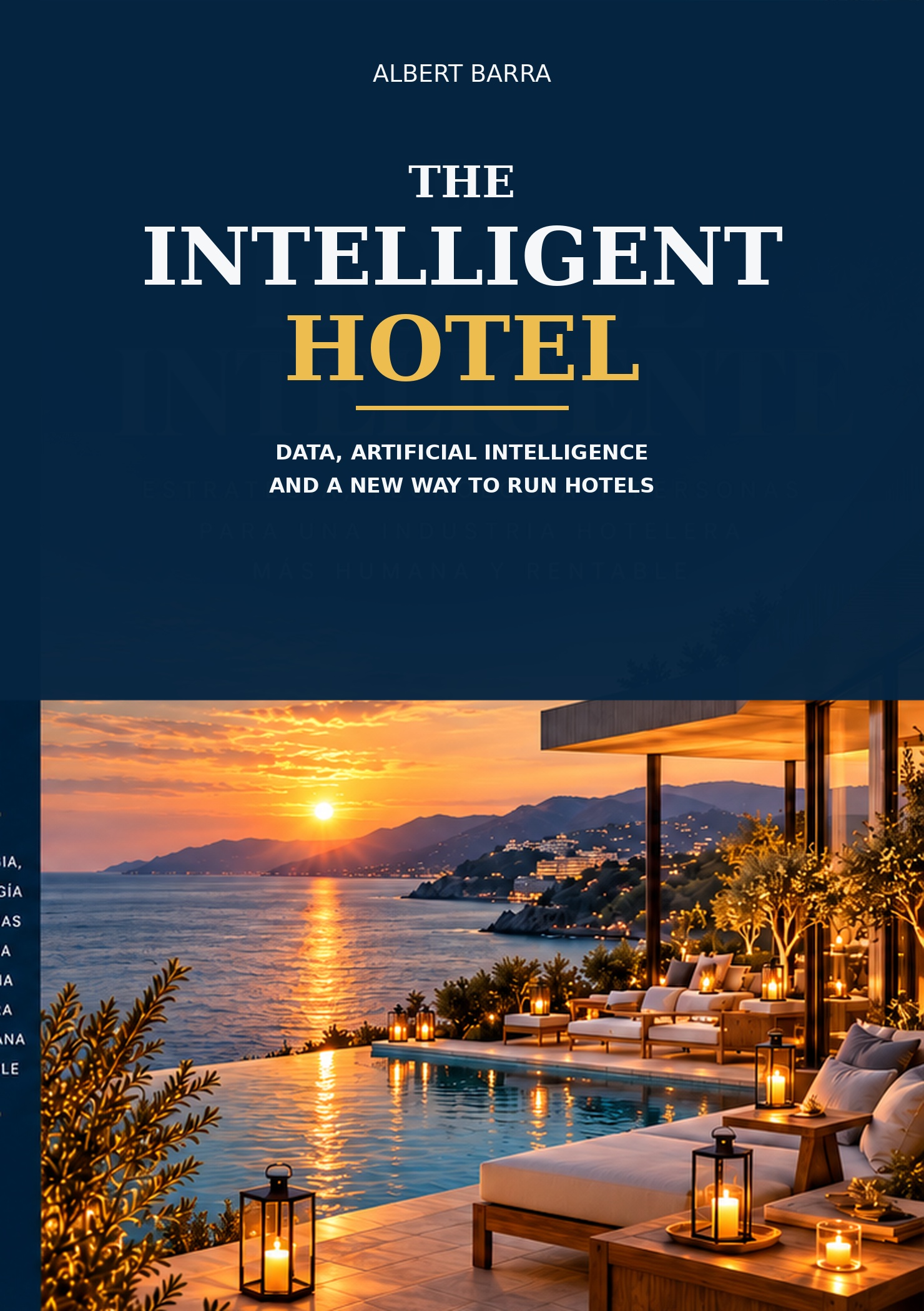


My published books
There is a dangerous moment in every profession when its discourse empties out. When terms become mirrors. When repetition is mistaken for consensus. And there is hospitality, caught between the pressure to appear innovative and the fear of sounding outdated. So we repeat. We automate. We rewrite what others have said. What AI can say better.
And the worst part is that we begin to believe it.
But hospitality, the real kind, cannot be automated. It can be assisted, of course. It can be enhanced. But not replaced. Nor can the way we speak about it.
AI is not the problem. The problem is using it as a substitute for something we do not know, cannot, or do not want to say. Because that only deepens the void. And that void shows. It shows when every post from every hotel begins to sound the same. When every brand manifesto seems identical. When there are no longer stories, only slogans. When there is no narrative, only templates.
Sometimes I wonder whether we are writing epitaphs for a hospitality we no longer feel. Whether we are decorating the grave with pretty adjectives. Whether we are selling a narrative that no one believes anymore, but that still seems to work.
And if that is the case, what is the point of any of this?
What is the point of AI writing about empathy? About experience? About organisational culture? About leadership? About intuition? It is like asking a mirror to tell us something we do not already know. It only gives back what we project. It only reflects us. It does not transform us.
Hospitality content should be something else. A way of thinking out loud. A way of being wrong in public. A way of opening cracks so that some air can get in. And perhaps, some truth.
But for that, we need to write with hands stained by the front desk, the kitchen, real management. Not with gloves of linguistic silk or SEO-friendly writing formulas. We need to write from within. From doubt. From contradiction. From the peculiar joy of handling an impossible check-in well, or saving a stay that got off to a bad start.
Those texts—the ones that carry scars and laughter—are ones AI still cannot write. Nor should it.
This article ends here. The archive does not.
Lead Hospitality brings together 1200 English articles published since 2018: years of experiences, decisions and lessons you can keep exploring.
What would you like to explore next?
Choose a direction and keep reading around what you want to solve, learn or challenge.