
Beyond the Red Hammer: How Hotels Can Think Differently to Stand Out



We often think we are more creative than we really are. We face a new challenge, a presentation, a campaign, a refurbishment, and enthusiastically throw out ideas. But if we are honest—truly honest—our first thoughts are often neither brilliant nor new. They are simply the easiest ones. The most familiar. The most obvious.
Like the famous “red hammer”.
If you ask someone, without any context, to think of a colour and a tool, they will most likely say “red” and “hammer”. Not because they have an obsession with toolboxes or hardware stores. It is because it is the most automatic answer, the most common one, etched into the collective imagination. There is nothing wrong with that, unless your goal is to stand out.
And in hospitality, standing out is not optional. It is essential.
For months now, I have watched AI-generated images parade across social media, promising visual revolutions, transformative branding or experiences “inspired by artificial creativity”. Some make me smile; others leave me indifferent. But many of them—too many—prompt the same reaction: I have seen them before. They are attractive “red hammers”. They are what we would all do if we did not stop to think a little further.
The real difference lies not in the tools we use, but in how we think with them.

Stop managing isolated systems. Start managing the whole hotel.
HotelGEX connects guests, operations, Revenue, F&B, Groups & Events and Management into one intelligent hotel context — so every decision starts with a clearer picture.
The art of discarding the first idea (even when it seems good)
In hotels, where the guest experience is the product, we cannot afford to be obvious. If everything we do looks like what everyone else does, why would guests return to us? Why would they pay more? Why would they remember us?
I learned—sometimes the hard way—that first ideas tend to be the safest. But also the least memorable. Because they are built from common building blocks, from references seen a thousand times. They are the equivalent of a “welcome cocktail with cava” or a “complimentary surprise in the room”: well-intentioned gestures, but expected ones.
When an idea excites me too quickly, I now put it in quarantine. I force myself to ask: is this a red hammer? Or is there something here that truly represents who we are and what we want to offer the guest? Only when we pass that first filter—when we discard the comfortable and seek the authentic—does the real work begin.
Three practices that help me escape the red hammer
These are some real—not metaphorical—tools that I use in my creative and strategic process. They are simple, but powerful when applied with discipline:
-
Question the purpose of every action.
Every campaign, every amenity, every design must answer one clear question: How does it improve the guest’s life? If there is no inspiring answer, the idea is not good enough. It may be beautiful, it may be Instagrammable, but it is not meaningful. -
Identify the unique emotion we want to evoke.
It is not enough to “satisfy” or “surprise”. Do we want the guest to feel welcomed as if at home, or transported as if in a dream? Do we want them to feel free, cared for, important, challenged? Emotion guides the experience. And not all emotions sell equally well. -
Make ourselves create three more versions.
When we believe we have a great idea, I ask the team to create three additional versions, with radically different approaches. Often, the third or fourth option contains the real spark. That is where we stop repeating patterns and start innovating.
The danger of falling into automatic experience design
In a world saturated with stimuli, authenticity is the ultimate luxury. But it is not a slogan: it is a strategic responsibility. Copying the format of the hotel next door, replicating a Pinterest design, reproducing the menu of the fashionable hotel… these are shortcuts that make us feel productive, but take us further away from our distinctive value.
When everything looks the same, price is all that remains. And competing on price alone is a battle lost before it begins.
Books to run a hotel with judgement
Written from the general manager’s chair: technology, guest experience, leadership and management.
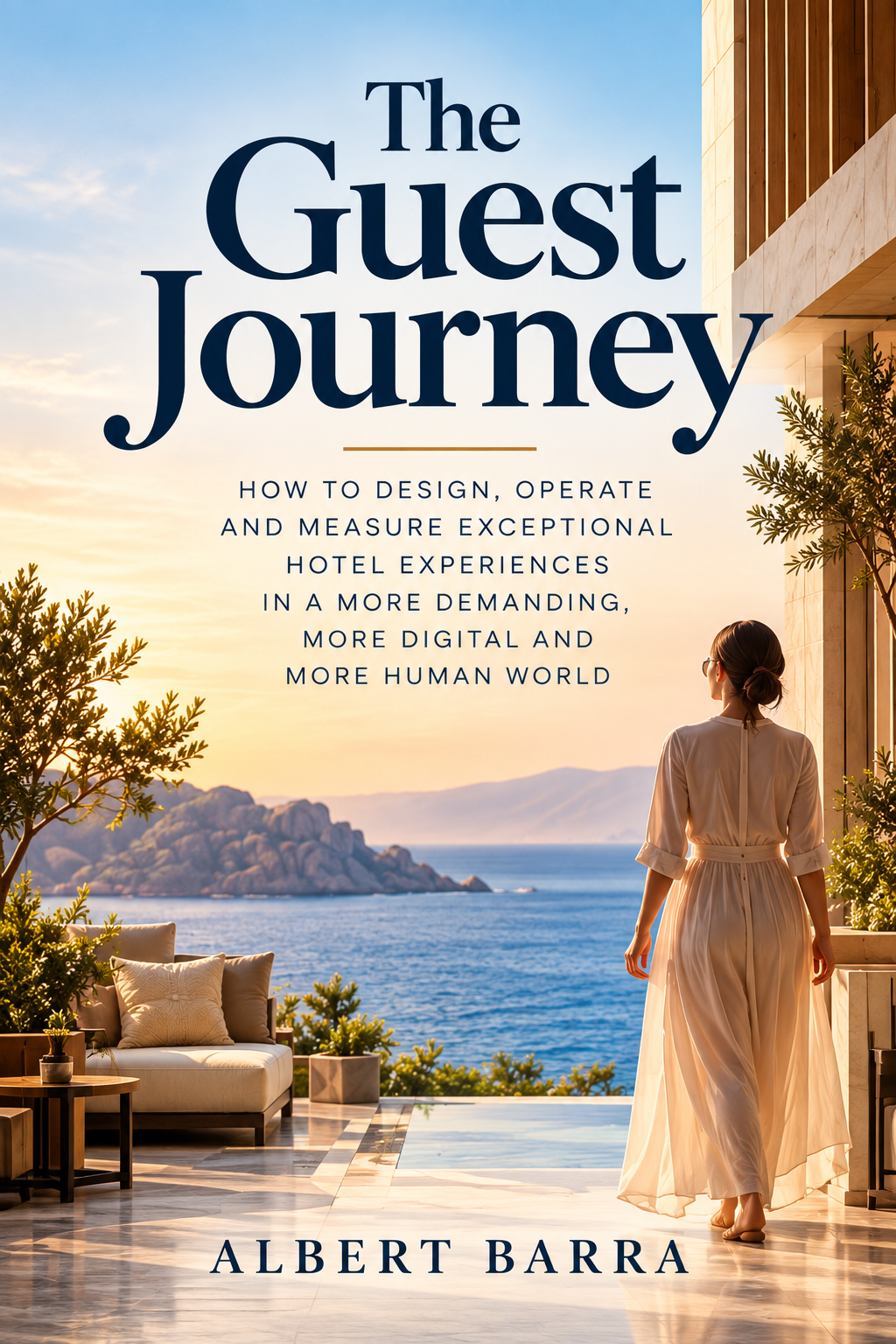 The Guest JourneyDesigning Customer Experience Across the Entire Hotel Journey
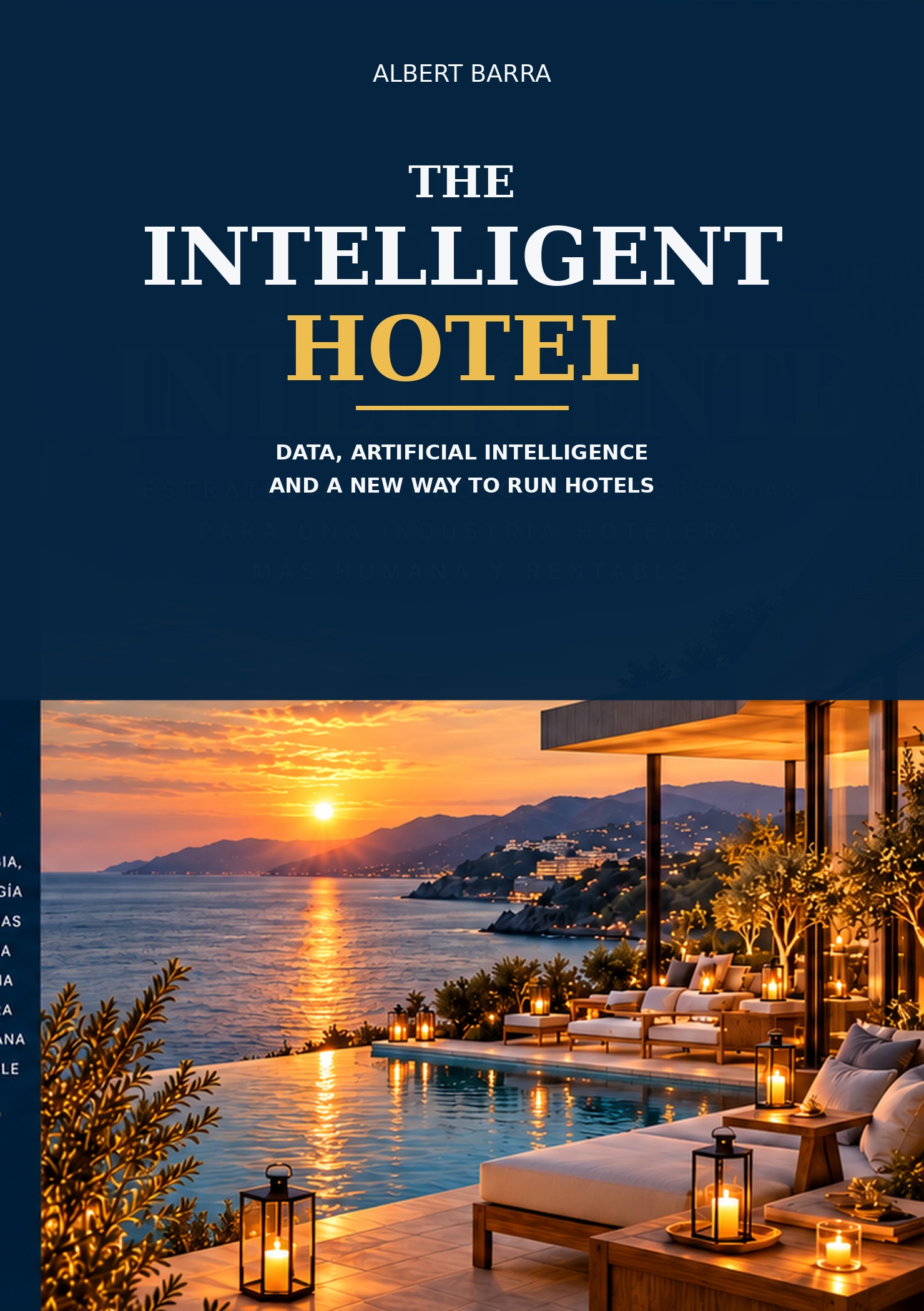 The Intelligent HotelData, Artificial Intelligence and a New Way to Run Hotels
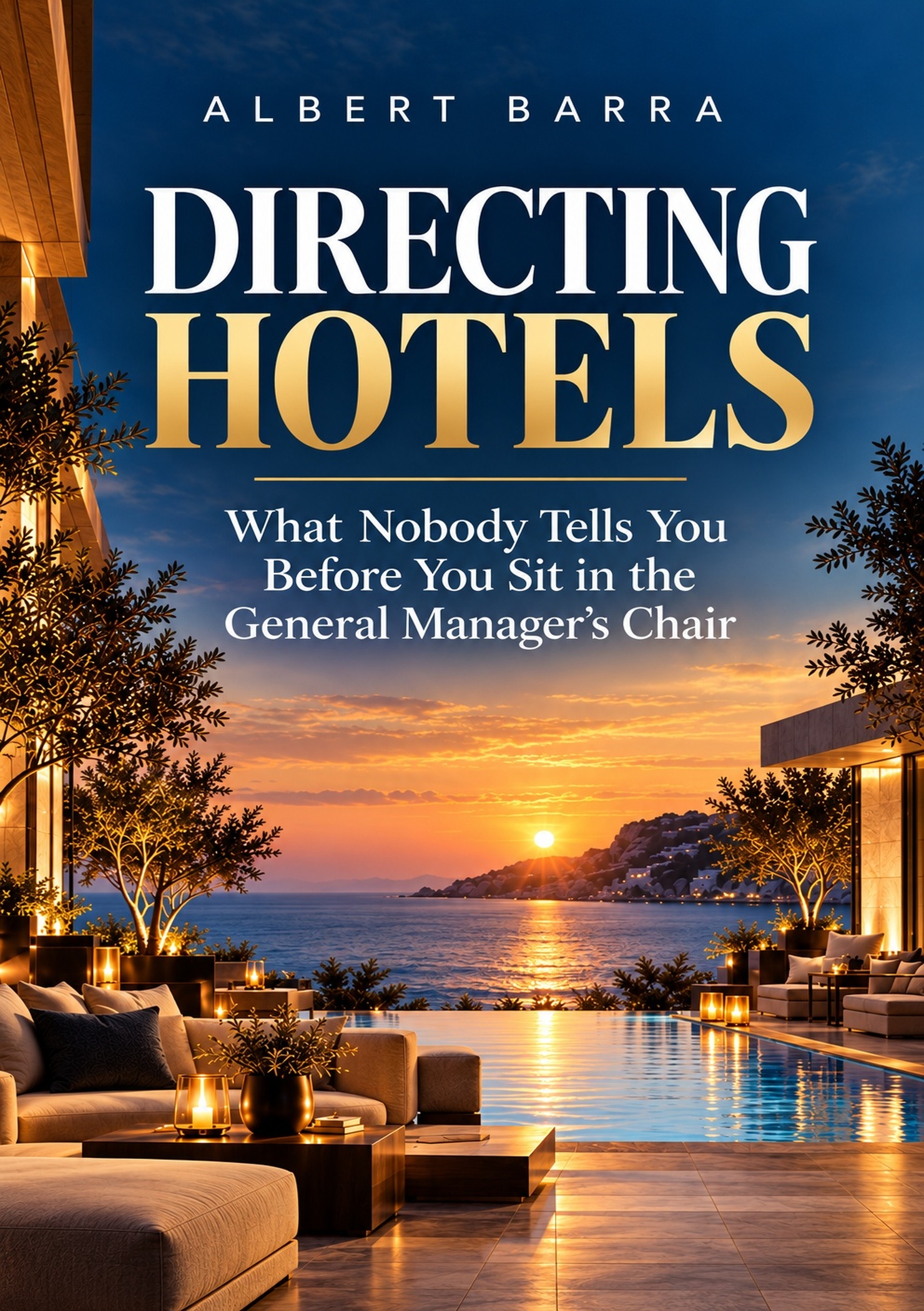 Directing HotelsWhat Nobody Tells You Before You Sit in the General Manager’s Chair
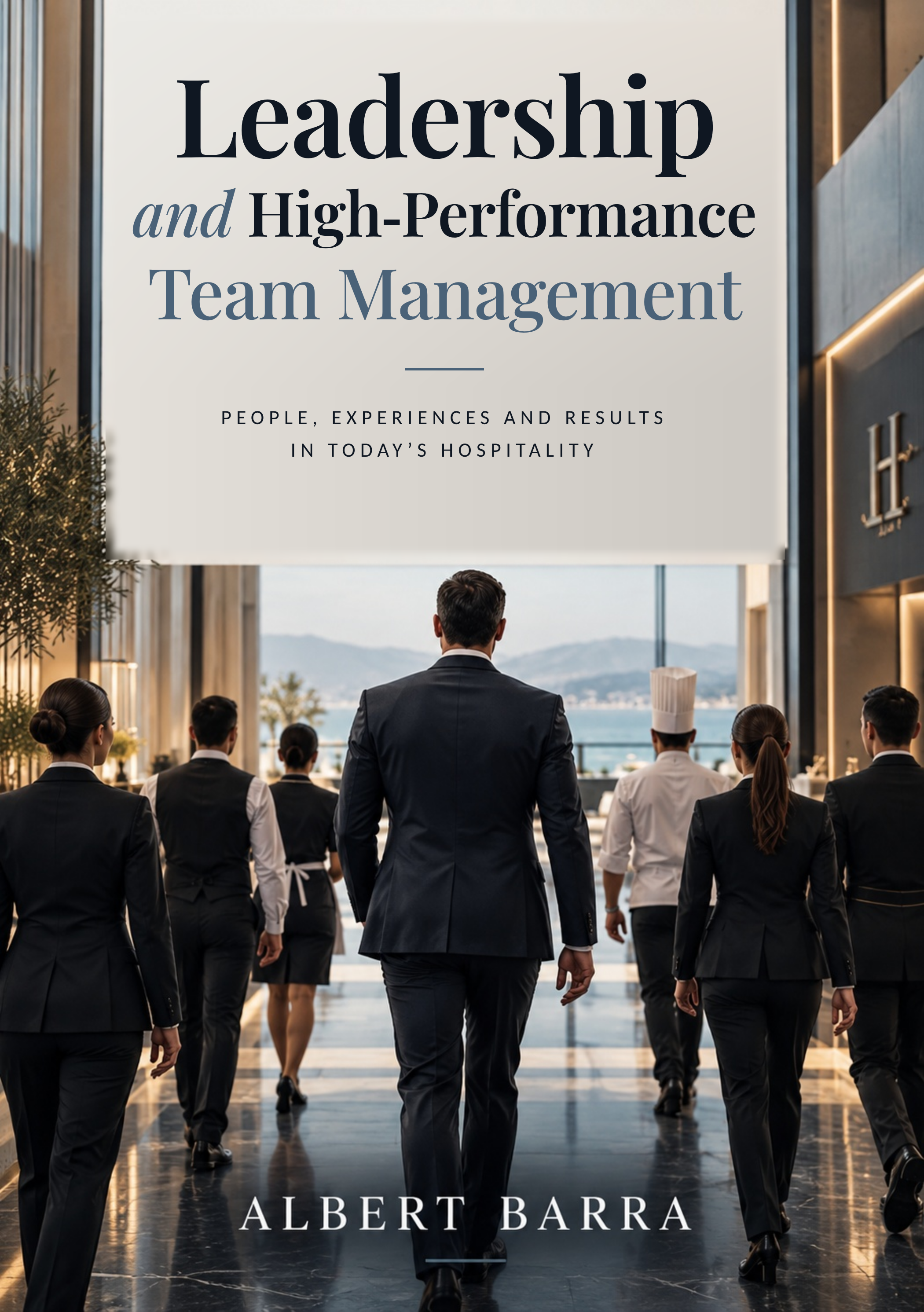 Leadership and High-Performance Team ManagementPeople, Experiences and Results in Today\\\'s Hospitality
Being different requires more than being creative: it requires knowing who we are, what we stand for and how that translates into every guest touchpoint. From the sound of our background music to the tone we use in messages written on the bathroom mirror.
Avoiding “red hammer syndrome” in your hotel
-
Define your essence with brutal honesty.
What makes your hotel truly unique? If the answer is “location” or “service”, start again. Everyone says that. Look for what is specific, emotional and impossible to replicate. -
Measure impact beyond traditional metrics.
Do guests remember what they experienced with you? Do they talk about it? Do they recommend it? A high NPS is good, but a spontaneous story in a review is worth three times as much. -
Design experiences that could not happen anywhere else.
Draw inspiration from your history, your destination, your community, your team. A menu featuring ingredients from your own garden and anecdotes from your chefs is worth more than a deconstructed dish with truffle foam. -
Review your marketing campaigns with a critical eye.
Could they belong to any other hotel? Do they use generic phrases such as “an oasis of tranquillity” or “unique experiences”? Replace them with vivid, specific language full of character. -
Invite outside voices to challenge your ideas.
Sometimes we are so close to the forest that we cannot see the trees. Listening to creatives from other sectors, former guests, artists or lateral thinkers can open up new paths.
Creating something authentic does not mean making something different simply for the sake of it. It means finding that point where who we are aligns with what the guest needs… in a way that no one else is offering. That is called relevance. And relevance always wins.
That is why, when I see a new campaign, a redesign or a sensory activation in a hotel, I no longer ask myself whether it is beautiful. I ask myself whether it has soul. Whether it has purpose. Whether it has what it takes to be remembered.
If it does, then it is not a red hammer. It is a piece of work that deserves its place. It is the spark that can ignite a connection with a guest. It is what turns a hotel from accommodation into a defining life experience.
And that, my hotelier friend, cannot be generated. It must be thought through. Felt. Defended.
This article ends here. The archive does not.
Lead Hospitality brings together 1200 English articles published since 2018: years of experiences, decisions and lessons you can keep exploring.
What would you like to explore next?
Choose a direction and keep reading around what you want to solve, learn or challenge.