
Do Hoteliers Really Know What Guests Mean by Quality?



Whenever I walk into a hotel, I ask myself the same question: do we really know what the guest understands by quality? I am not referring to what we believe. Nor to what our manuals say. Nor to what appears in an internal audit. I mean what the guest silently assesses from the moment they arrive until the moment they leave.
The answer, if we are guided by too many real-life experiences, is hardly cause for optimism. I have the feeling that, far too often, the hotel industry still focuses its proposition more on short-term profit than on genuinely understanding what the guest values. And that mistake, which may seem small or even acceptable, ends up having enormous strategic consequences.
For years, we have associated the idea of quality with the tangible: better facilities, more spectacular refurbishments, more photogenic lobbies, more modern rooms, larger bathrooms, more premium materials. All of that matters, of course. It would be absurd to deny it. Guests expect a minimum standard of comfort, maintenance, cleanliness and functionality. No one wants to sleep in a room that is impeccably serviced but outdated, uncomfortable or in disrepair. But once that minimum threshold has been met, the game changes completely.
And that is where, in my view, many hoteliers are still playing the wrong game.
Because if guests were given the choice between a hotel with outstanding facilities but cold, slow or indifferent service, and another with perfectly adequate facilities but agile, human, attentive and intelligent service, I suspect a large majority would know exactly which one to choose. The most interesting thing is that the sector, despite knowing this deep down, continues to behave as though the real answer lay in marble, design and physical investment.
I sincerely believe that approach is a mistake. And not a minor one, but one of the structural mistakes that most limits the evolution of Hospitality in many destinations.


Stop managing isolated systems. Start managing the whole hotel.
HotelGEX connects guests, operations, Revenue, F&B, Groups & Events and Management into one intelligent hotel context — so every decision starts with a clearer picture.
Quality is not defined by the hotel: it is defined by the guest
There is one idea worth repeating time and again, because it has still not been sufficiently internalised: quality is not defined by the hotel; it is defined by the guest. And that makes everything more complicated, yes, but it also clarifies everything.
It makes things more complicated because it forces us to abandon a comfortable, standardised and inward-looking view of service. It is no longer enough to think we have done things well because we followed the procedure, because check-in took less than three minutes, or because breakfast offers twenty different items. All of that may be correct and yet still fail to create a particularly high perception of quality.
And it clarifies things because it reminds us what the centre of gravity of any hotel strategy should be: understanding what guests truly value and how they value it.
The nuance matters. Not all guests are looking for the same thing. Not everyone interprets quality in the same way. For one person, quality may mean speed. For another, silence. For another, flexibility. For another, human warmth. For another, almost invisible precision. For another, feeling understood without having to explain too much. Quality is not a fixed concept. It is a variable, subjective and contextual perception.
This requires us to abandon one of hotel management's greatest temptations: believing there is a single service model that works for everyone. There is not. What exists is a constant need for observation, listening and interpretation.
That is why I am increasingly less interested in the classic question of whether a hotel offers “high quality”, and far more interested in this one: for whom does it offer quality, at what moments, and for what reasons?
That is where genuine business intelligence begins. Not in repeating slogans about excellence, but in translating the guest's real expectations into concrete operational decisions.
And here, it is worth saying something that is not always welcome: many hotels still design their value proposition from the inside out. In other words, based on what is more comfortable for them to operate, easier to sell or more profitable in the short term. But guests do not buy our operational convenience. They buy the feeling that what they receive makes sense to them.
The difference between the two may seem subtle. It is not subtle at all.
Hospitality’s great misunderstanding: believing the product matters more than the service
One of our sector's great misunderstandings has been to assume that competitive advantage is built primarily through facilities. It is easier to invest in what can be seen, touched, shown in photographs and depreciated in an Excel spreadsheet. That is understandable. Tangible assets convey a sense of control. The problem is that they do not always deliver sustainable differentiation.
Service, by contrast, is more difficult to design, harder to measure and considerably more uncomfortable to manage. It demands culture, leadership, judgement, training, recruitment, follow-up and enormous consistency. It is not enough to write standards. We must ensure that people interpret them with intelligence and humanity. And that takes us into less comfortable territory for many organisations.
The consequence is visible in far too many properties: hotels that are perfectly adequate physically but mediocre in human interaction. Impeccable spaces accompanied by impersonal experiences. Multi-million investments underpinned by weak service cultures. Commercial ambition without a genuine vocation to understand the guest.
And when that happens, a hotel may operate for a while, even for quite a long time, but it will struggle to build a memorable proposition. It may sell. It may fill rooms. It may generate revenue. But it does not necessarily build loyalty, create an emotional connection or become a benchmark for genuine value.
The real problem emerges when the sector begins to confuse occupancy with strength, or revenue with excellence. They are not the same thing. A hotel can be full and, at the same time, be sending clear signals of profound weakness in its service model. Sometimes the market takes time to penalise these mistakes. But eventually, it does.
In my view, hotel quality begins to deteriorate the moment hoteliers stop asking questions about the guest and start giving themselves answers. That is the beginning of operational self-deception.
We tell ourselves that guests want more modern facilities. That what they truly value is a great bed, a spacious shower, a wellness area or a striking refurbishment. And yes, of course they value those things. But they value them as a foundation, not as an end point. What turns that foundation into an experience is service. And not just any service, but the service the guest interprets as valuable.
That nuance changes the conversation completely.
Because it forces us to move from a supply-led logic to one based on understanding. It is no longer about deciding what we want to offer, but about understanding what guests expect to receive and how they expect to receive it.
That inevitably brings us to a fundamental issue: listening better.
Today, we have sufficient tools to do so. Reviews, online reputation, incident tracking, digital interaction, social listening, behavioural analysis, direct observation, real conversations with teams and guests. The information is there. What is often missing is the willingness to use it honestly. Because truly listening requires us to question decisions, priorities and even egos.
And we are not always willing to do that.
Quality requires operational freedom, and freedom requires cultural change
Once we accept that quality is something the guest interprets, a second truth of equal importance emerges: the effective management of that quality is only possible if we give employees the latitude to respond to guests with sound judgement.
This is where the conversation becomes truly interesting. And also more uncomfortable.
Because as soon as we talk about giving teams more freedom, we stop talking only about service and start talking about power, structure and corporate culture.
Many hotels would like to offer a more human, agile, personalised and intelligent service. But not all are willing to do what that requires internally. And what it requires is quite clear: decentralising decisions, trusting the team, accepting a degree of autonomy and training people to resolve issues, not merely execute tasks.
This means breaking with a model deeply embedded across much of the sector: the centralised, hierarchical, rigid and profoundly controlling model. A model in which quality is supposedly ensured through rules, supervision and uniformity, when in reality guests tend to value precisely the opposite: naturalness, agility, adaptation and responsiveness.
The problem is not that procedures exist. Procedures are necessary. The problem arises when procedures replace judgement. Or worse still, when they cancel it out.
An employee who cannot make a simple decision to improve a guest's experience is not delivering excellent service. They are following a script. And guests notice the difference immediately.
You can see it at a front desk that listens but does not resolve. In an incident that is processed but not truly owned. In an “I will check with management” where there should be a “leave it with me, I will sort it out”. You see it when service is designed to protect the system rather than serve the guest.
That is why I am increasingly convinced that Hospitality's great leap in quality depends less on investment in physical assets than on the cultural maturity of the organisation.
A hotel truly improves when it understands that quality is not protected through absolute control, but through carefully built trust. When it trains its people not only to comply, but to interpret. When middle managers cease to be mere conduits for instructions and become service enablers. When leadership stops monopolising decisions that should be resolved on the front line.
And this, of course, does not happen by chance.
It requires a profound change in the way Human Resources in hotels is managed. It is not enough to hire pleasant people or repeat that “the team is our greatest asset”. Everyone says that. The difficult part is building an organisation in which the team has the conditions, trust and authority needed to turn an ordinary interaction into a valuable experience.
Books to run a hotel with judgement
Written from the general manager’s chair: technology, guest experience, leadership and management.
 Directing HotelsWhat Nobody Tells You Before You Sit in the General Manager’s Chair
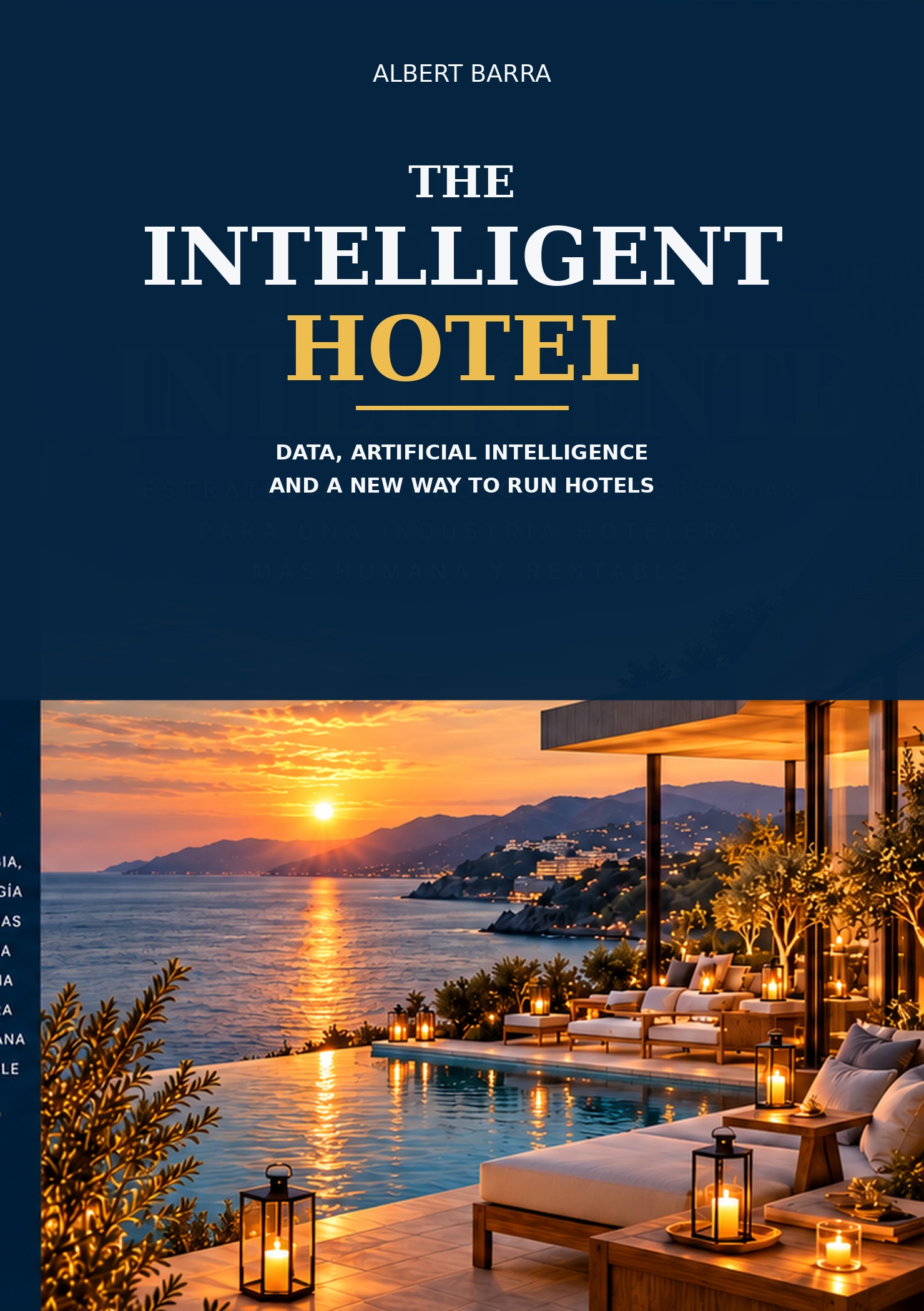 The Intelligent HotelData, Artificial Intelligence and a New Way to Run Hotels
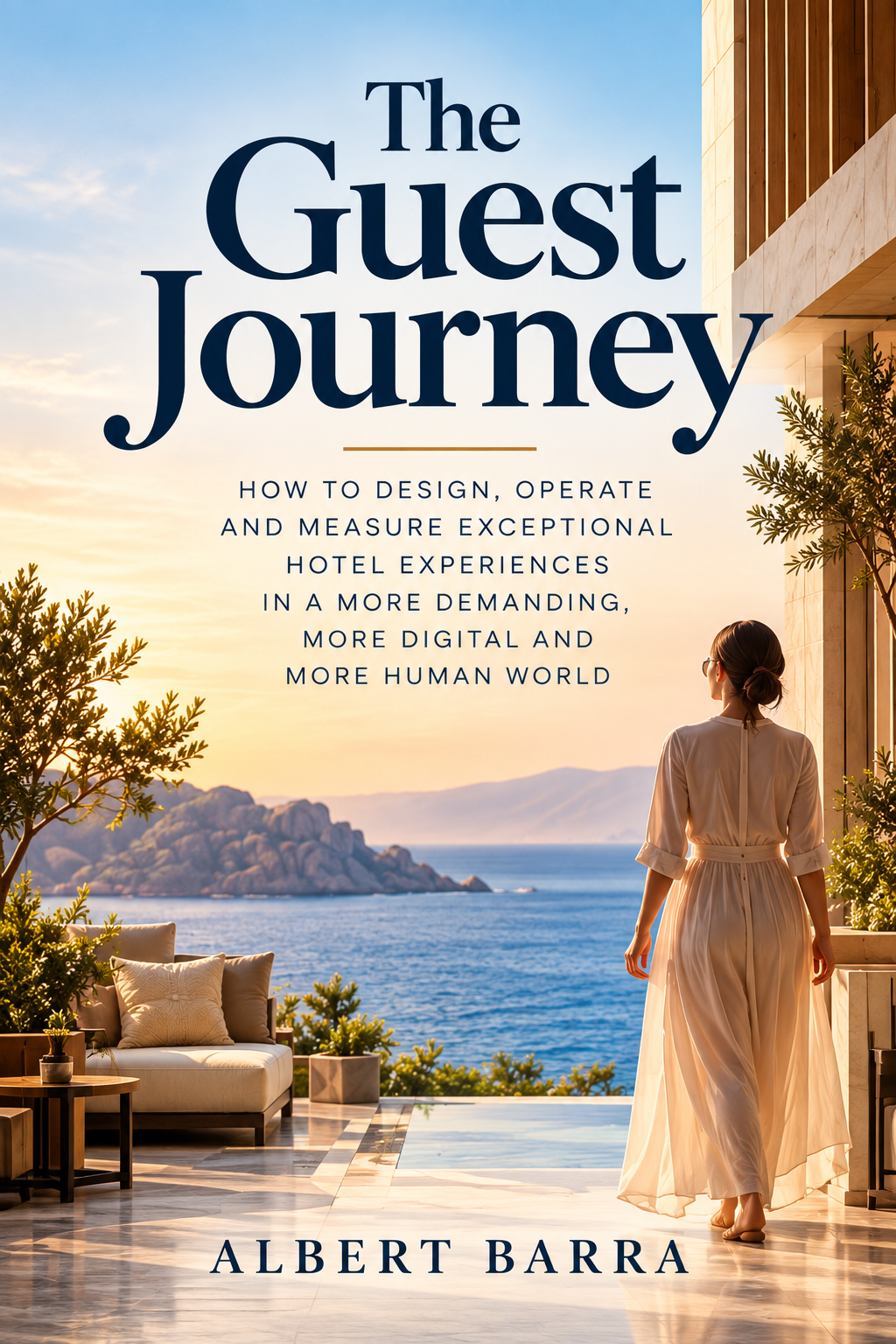 The Guest JourneyDesigning Customer Experience Across the Entire Hotel Journey
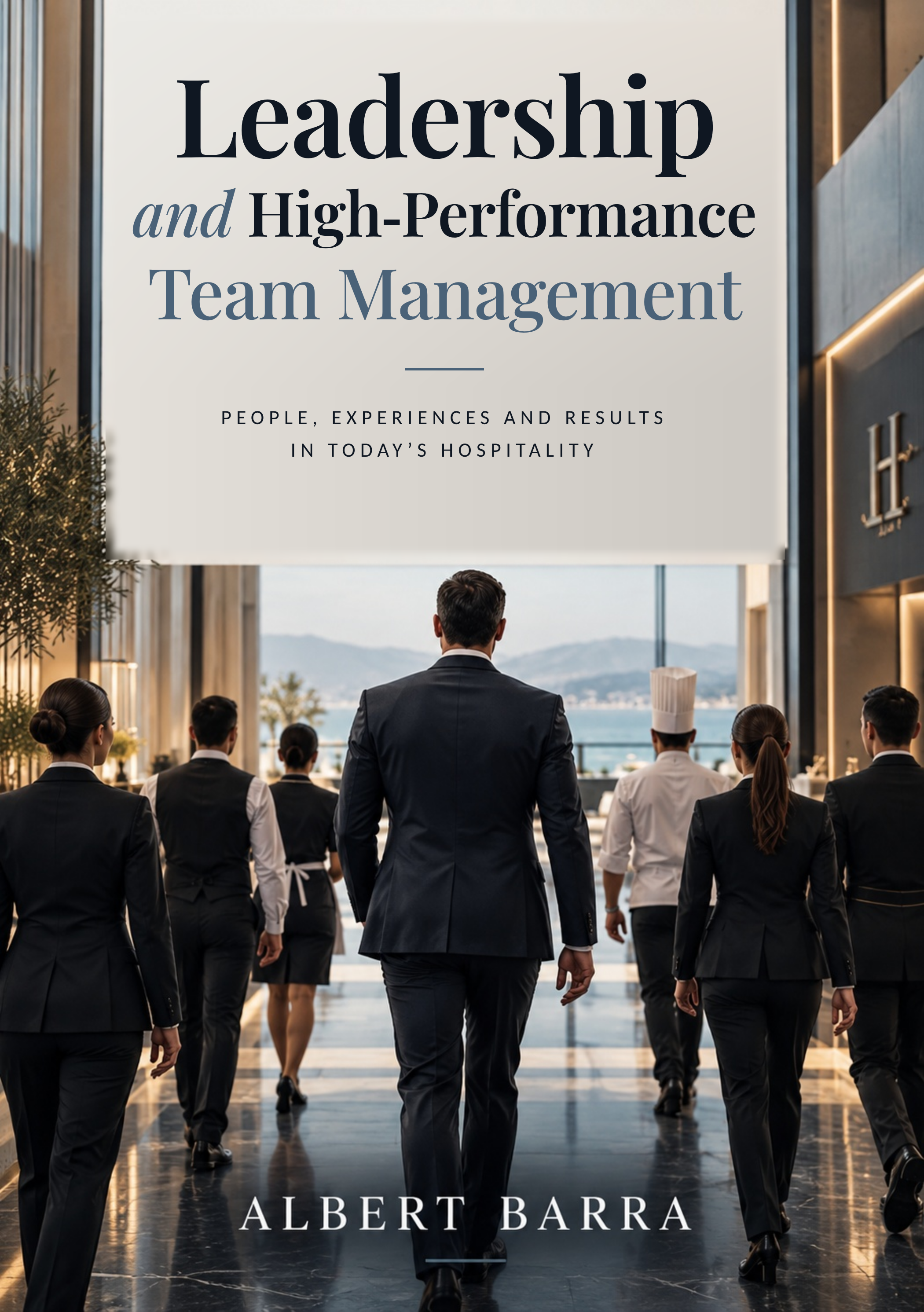 Leadership and High-Performance Team ManagementPeople, Experiences and Results in Today\\\'s Hospitality
That means reviewing many things: recruitment, training, assessment, leadership, incentives, internal communication and decision-making structures. It means accepting that quality is not a department. It is a way of leading.
And here lies one of the sector's great paradoxes. Many hoteliers complain that service does not reach the desired standard, yet they continue to manage their teams through models designed to limit autonomy. They expect initiative, but give no room to act. They ask for empathy, but punish mistakes. They want personalisation, but force uniformity. It is very difficult to move forward under those conditions.
Quality, properly understood, requires people who are prepared to decide, and that requires leaders who are prepared to let go. And letting go is very difficult. Because it means relinquishing part of the power, part of the visibility and part of the symbolic control over the operation.
But unless we make that move, we will remain trapped in a hotel industry that is very polished on the outside and far too poor on the inside.
Spain, with its extensive hotel stock… and its major unfinished task
It is often said that Spain has some of the best hotel stock in Europe, particularly in urban hotels. And, generally speaking, I agree. One need only walk through certain cities to see that the physical standard of the product is high, competitive and, in many cases, outstanding.
But precisely for that reason, I believe this statement, often used as indisputable proof of strength, should also compel us to think about what it conceals.
Because when the main praise received by a destination or a hotel country relates to its hotel stock, its hardware or its infrastructure, it is worth asking what is being left out of the sentence.
And almost always, the most important thing is left out: service.
That alone should give us pause. If the conversation constantly revolves around the physical product rather than service levels, perhaps it is because we have not yet built an equally strong reputation in the dimension that is truly decisive. And that dimension is none other than the human one.
Moreover, the distinction regarding urban hotels is not insignificant either. In a country whose tourism identity remains so closely linked to sun and beach, the fact that praise shifts towards urban hotels should raise certain concerns. Not because urban hotels do not deserve that recognition, but because it highlights the fact that we still carry weaknesses in part of our most representative holiday model.
I believe several familiar issues converge here. One is the excessive focus on short-term profit. When the model becomes obsessed with occupancy, volume and immediate returns, it tends to postpone decisions that would be strategic over the long term: smart reinvestment, genuine service improvement, dignified employment, leadership development, organisational culture and the building of a value proposition.
Another issue is that service still does not occupy the central place it should in business discussions. There is much talk of sales, distribution, costs, investment, revenue management, positioning and technology. And it is right to discuss all these things. In fact, it would be irresponsible not to. But too often, service is treated as a by-product, as though it were the automatic consequence of having a good facility and a reasonable procedure.
It is not.
Service is a complex, fragile and deeply strategic competitive advantage. It requires leadership, methodology, sensitivity and a long-term perspective. It requires a genuine belief that the guest experience is not a secondary variable, but the core of the business.
That is why I believe our weakness does not lie in a lack of physical assets. Our weakness often lies in having failed to develop an equivalent ambition in management. And that is an enormous difference.
We are not particularly strong when it comes to turning information into judgement, judgement into decisions, and decisions into consistent experiences. We do not always read the guest well. We do not always listen deeply. We do not always translate what we learn into operational redesign. And we do not always build structures capable of sustaining a genuine culture of quality.
We like to call it excellence. But sometimes it remains little more than a decorative aspiration.
The real hotel powerhouse will not be the one with the most beds, the most refurbishments or the greatest number of immaculate square metres. It will be the one that understands the guest better, manages its people better and turns service into a high-level business discipline.
That requires, among other things, abandoning a certain degree of sector-wide complacency. We need to stop congratulating ourselves so much on our hotel stock and begin demanding more of ourselves when it comes to the experience. We need to stop assuming that guests perceive us as we wish to be perceived. We need to stop assuming that selling a great deal is the same as serving well.
Because it is not.
And if we do not correct that confusion, we will remain strong in appearance and weak in what matters most.
Ultimately, the opening question remains the right one. Do we really know what the guest understands by quality? My impression is that we still do not know enough. Or at least, not with the humility, discipline and depth that the current moment demands.
Quality is not imposed through a manual, nor is it purchased through a refurbishment. It is interpreted, listened to, learned and managed. And, above all, it is delivered through people who understand that serving well is not about obeying a procedure, but about responding intelligently to a human expectation.
This requires us to rethink many of the sector's certainties. It requires restoring service to centre stage. It requires us to rethink Human Resources not as an inevitable cost, but as the living architecture of the experience. It requires accepting that guests do not value what we want to highlight, but what makes sense to them at that precise moment.
The sooner we embrace this, the sooner we will begin building hotels of genuine value. Not merely more attractive, not merely easier to sell, not merely more profitable in the short term. More valuable.
And that difference, although it may not always appear in the main image on the website, is what ultimately marks the distance between a competent hotel and a memorable one.
If I had to close this reflection with three useful ideas, they would be these. First: stop confusing quality with physical investment. Investment helps, but it does not replace service intelligence. Second: listen to guests with more humility and less self-complacency. What they say, what they do not say and what they remember are worth more than many internal meetings. And third: dare to give more authority to those who stand in front of the guest. Because real quality is almost never decided by the person in the office. It is decided by the person who is there in the moment.
This article ends here. The archive does not.
Lead Hospitality brings together 1200 English articles published since 2018: years of experiences, decisions and lessons you can keep exploring.
What would you like to explore next?
Choose a direction and keep reading around what you want to solve, learn or challenge.