
Blas de Lezo: A Powerful Lesson in Strategy, Honour and Resilience

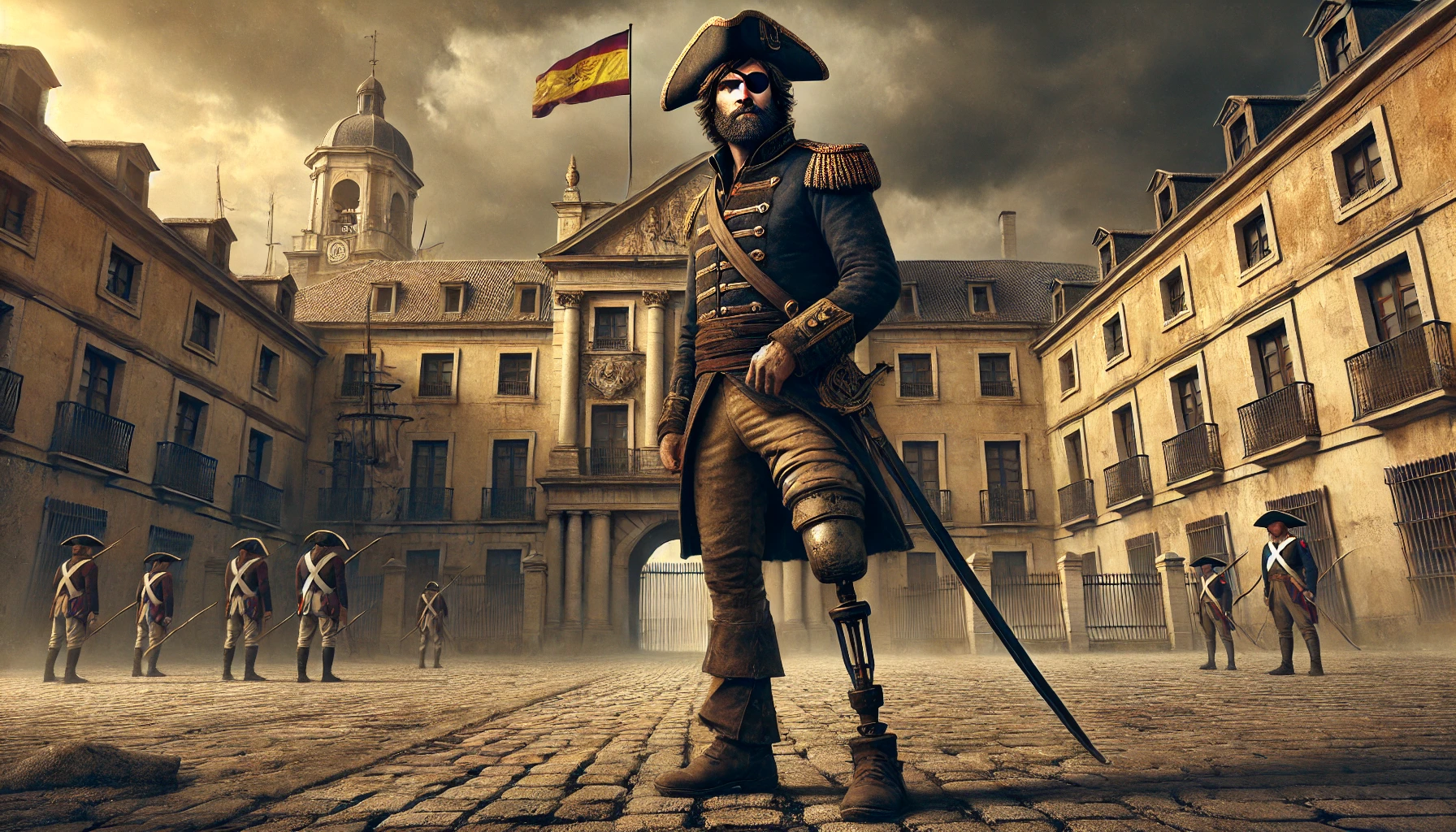

I have always believed that history is the best teacher we can have, and I admit that, among all its branches, military history has held a special fascination for me since I was young. There is something irresistible to me about those pages filled with battles, impossible decisions and leaders who stood firm in the face of adversity. Every campaign, every siege and every tactical manoeuvre holds lessons in courage, resilience and decision-making at critical moments. Perhaps that is why those who know me well, and perhaps those who read me regularly, will have noticed that this passion runs through many of my reflections on the world of hospitality.
Because, ultimately, managing a hotel is more like commanding an army than it may seem at first glance. Every day we fight our own battles: the struggle to deliver the best service, the competition to win guests, and the logistical challenges that arise when the hotel is at full occupancy. This is where my other great passion comes in: strategy. Understanding the terrain, knowing your guests as if they were your allies and your competitors as if they were your rivals, and knowing when to advance or when to fall back, are skills born both on the battlefield and at a hotel front desk in the height of high season.
Perhaps that is why, when I think of the great names in history, they inspire me not only as figures from the past, but as true masters of management and leadership. And among them all, there is one who always holds a special place in my mind and heart: Blas de Lezo, “Half-Man”, the pride of Spain. For his story is not only that of the heroic defence of Cartagena de Indias, but also the story of how determination, knowledge of one’s surroundings and quiet leadership can overcome any odds. And if there is one thing hoteliers know, it is that the finest victories are those that come when no one believed we could achieve them.
There are names that resonate powerfully in Spain’s history, but few, very few, inspire as much respect and admiration in me as Blas de Lezo. In the corridors of our hotels, where rapid decisions and operational storms are part of daily life, I often think of him. Because Blas did not merely defend Cartagena de Indias in 1741; he taught us something that transcends time: to lead with resilience, humility and courage, even when the odds are against us.
We speak a great deal in hotel management about leadership in the hospitality sector, crisis management and team empowerment in hospitality, but what better role model than someone who, maimed and almost blind, faced a fleet six times larger and emerged victorious? His story is not merely a military epic; it is a masterclass in leading amid the storm and turning weaknesses into strengths.
Blas de Lezo lost a leg, an eye and the use of one arm. Life took parts of his body from him, but never his spirit. In hospitality, when you open a hotel from scratch, build new teams or face devastating criticism on social media, you often feel the same way: as though you are missing pieces, yet you must keep going. And that is when I think of Blas, who, with half his vision and half his body, saw more clearly than anyone and acted with greater strength than many.
Strategic planning and composure under pressure
When Vernon, the English admiral, arrived before Cartagena with 186 ships and more than 27,000 men, against Lezo’s mere 3,600 defenders and 6 vessels, defeat seemed inevitable. Vernon even had coins minted celebrating his victory ahead of time. Something we sometimes experience in the hotel world as well: competitors who boast before opening their doors, multimillion-pound marketing campaigns that seem set to sweep everything aside. But Blas proved that it is not always the one with the most who wins, but the one who knows best how to play their cards.
De Lezo fortified the key points, blocked access routes and used every inch of terrain as a competitive advantage. In hospitality, this translates into knowing your product, your market and your team better than anyone else. You do not need 186 ships; you need to know where to deploy your resources, when to reinforce your front desk during high season, when to make rates more flexible, and when to launch an offer that awakens dormant demand.
Impressive figures:
- Vernon lost more than 9,000 men to combat and disease, compared with just 600 Spanish casualties.
- The siege lasted 67 days, but Spanish resistance broke the enemy’s will.
These figures remind me of occupancy reports in which a small independent hotel achieves RevPAR above that of international chains thanks to intelligent hotel revenue management strategies and a team that gives everything they have.
Quiet leadership: Heroes who do not seek applause
What moves me most about Blas de Lezo is his discretion after victory. Unlike Vernon, who rushed ahead with his medal, Blas simply did his job. He sought neither recognition nor headlines; he sought to do what was right. In hospitality, the best front office managers, the housekeeping supervisors who ensure rooms are perfect during periods of extreme occupancy, or the waiters who handle difficult guests with a smile, are often these modern-day Blas de Lezos. People who do not seek awards, but simply want the hotel to run well.



My published books
A personal anecdote: I remember a hotel opening when the PMS failed during the first weekend at 100% occupancy. It was the youngest receptionist who, with a notebook and his composure, organised manual check-in better than any software could. He reminded me of Blas in Cartagena: when all seems lost, what saves the day is character and commitment.
Lessons from Blas de Lezo applied to Hotel Management
Over the years, I have gathered a number of principles born from Blas’s feat, which I apply every day when leading hospitality teams:
- Resilience above all else: It does not matter if you have fewer resources; what matters is how you use those you have.
- Know your terrain: Knowing where your hotel’s true value lies is key: Is it personalised service? Is it gastronomy? Is it the location?
- Anticipate the enemy: The competition will always make noise, but listen to the guest and stay ahead of their expectations. No marketing budget can overcome that.
- Respect the team: Just as Blas trusted every soldier, trust your receptionists, your room attendants and your chefs. They are your strongholds.
- Do not seek medals: The greatest reward is seeing the hotel full and the guest satisfied. The fleeting glory of awards fades; the reputation earned through good work endures.
It is sad that, in many cases, the story of Blas de Lezo has been better known outside Spain than within it. But, as in hospitality, the best stories are those that transcend time and are passed on by word of mouth. Today, Blas has once again become a symbol of Spanish pride, reminding us that our history was built not only through grand feats, but through hard work, sacrifice and dignity.
When I welcome a British guest and, jokingly, they tell me that Vernon is a hero, I smile back and tell them about Blas. Some laugh, others become interested and look into it further. In either case, that story brings people together, and that is the real victory.
Because, ultimately, Blas de Lezo taught us that what matters is not winning, but how one wins. And in hospitality, as in life, that is everything.
And as a final piece of advice, one that serves me whenever I face an opening or a difficult season:
- When all seems lost, remember Blas looking out to sea, with his wooden leg, his eye patch and his immobile arm… but with his head held high. Because it is always possible to prevail. You simply have to believe it.
This article ends here. The archive does not.
Lead Hospitality brings together 1200 English articles published since 2018: years of experiences, decisions and lessons you can keep exploring.
What would you like to explore next?
Choose a direction and keep reading around what you want to solve, learn or challenge.