
The Hotel That Remembers Wins: Why Guest Recognition Builds Loyalty No Discount Can Buy

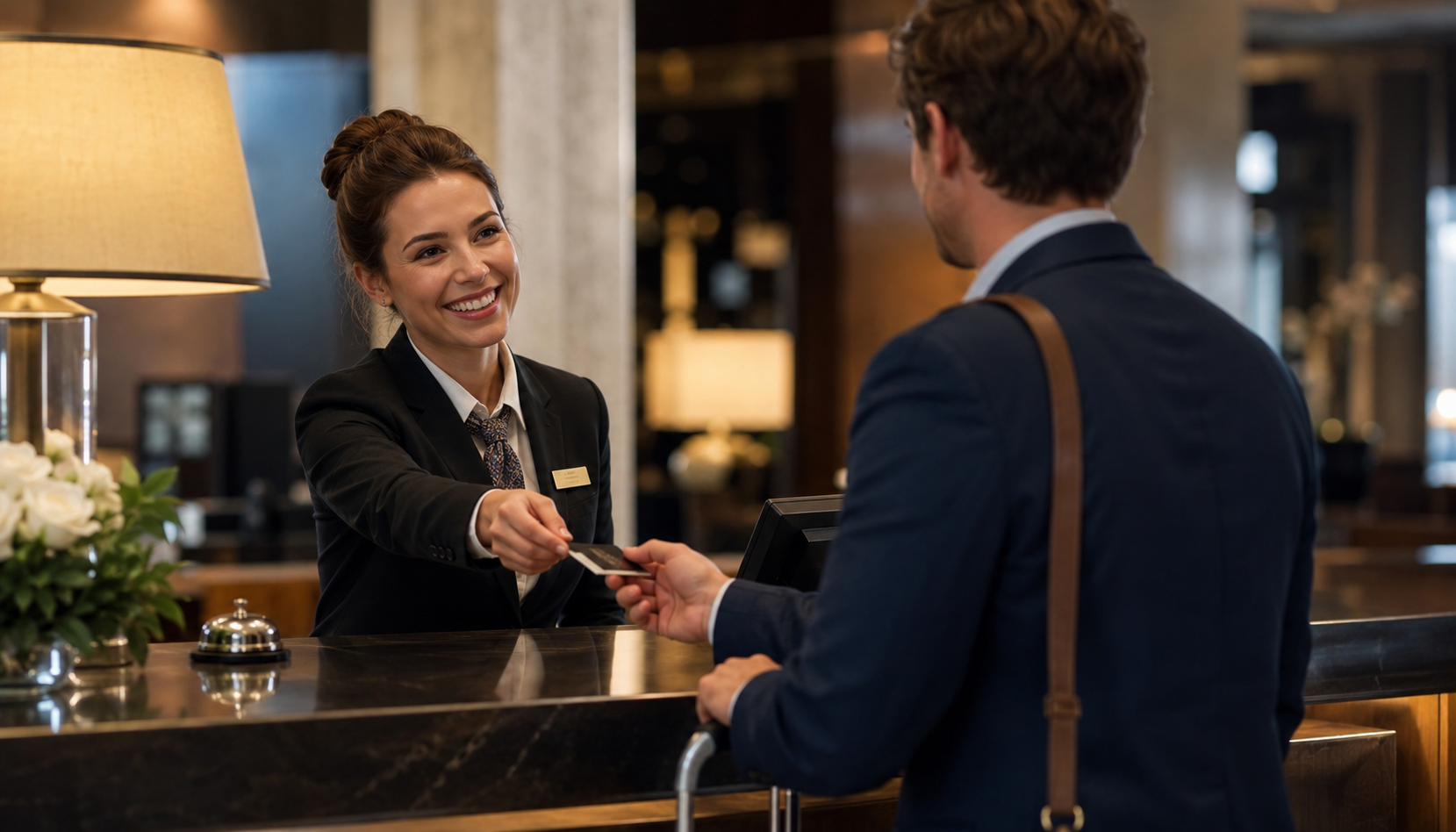

There is a scene that, after many years working in Hospitality, I still consider one of the purest expressions of our profession. A guest returns to the hotel after several months, approaches Reception and someone greets them by name. Not because they are reading the computer screen at that very moment, but because the hotel remembers them. And if, in addition, they know that the guest prefers a quiet room, takes coffee without sugar or requested a particular pillow the last time, something far more important than proper service delivery takes place: recognition appears.
For too long, we have associated hotel loyalty with points, discounts, promotional codes, upgrades and reward programmes. All of this works and has its place within a commercial strategy. But I believe there is a much deeper form of loyalty: ensuring that guests feel that they are not simply returning to a property where they have stayed before, but to a place where someone knows who they are.
The well-known Ritz-Carlton case is particularly interesting for precisely that reason. Its service philosophy has historically used information gathered during stays—preferences, observations, issues and small details—so that it can be put to use when that guest returns. What interests me is not so much the example because it is a luxury brand, but rather the principle behind it: memory can become an organisational capability.
And I find this idea extraordinarily important for any hotel, regardless of whether it has 30 rooms or 3,000. Because the issue is not having the most sophisticated CRM on the market. The real question is far more uncomfortable: what does your hotel know today about a guest who has stayed with you five times?
If the answer is little more than their name, email address, telephone number, nationality, average rate and number of stays, we probably have a great deal of data but know very little about the guest. And therein lies, in my view, one of the great opportunities for Hospitality today: transforming information into memory, memory into recognition and recognition into relationship.
A hotel CRM should remember people, not store records
There is an enormous difference between having information about a guest and knowing them.

Stop managing isolated systems. Start managing the whole hotel.
HotelGEX connects guests, operations, Revenue, F&B, Groups & Events and Management into one intelligent hotel context — so every decision starts with a clearer picture.
Our systems can accumulate a considerable amount of data. We know when they booked, which room they occupied, how much they paid, which channel they came through, how many nights they stayed, how much they spent and when they checked out. From an administrative and commercial standpoint, all of this is extraordinarily useful.
But let us imagine that a guest returns for the fourth time.
Do we know that they always request a room away from the lift?
Do we remember that they requested two additional pillows last time?
Do we know that they have breakfast very early?
Do we remember that they usually travel for their anniversary?
Do we know that they do not drink alcohol?
Do we remember that they had a maintenance issue during their previous stay?
Do we know that they always request a late check-out?
That is where another kind of information begins.
And, above all, another kind of Hospitality.
The example traditionally associated with Ritz-Carlton is interesting precisely because its system known as Mystique spent years turning observations about guest preferences into information that could be used in future stays. The key was not simply recording data, but ensuring that this information could subsequently be transformed into service.
Specialist Hospitality literature has insisted for years that guest satisfaction depends heavily on employees’ attitudes and actions, and that long-term profitability is closely linked to that satisfaction and the word of mouth it subsequently generates.
This forces us to rethink what we mean by hotel CRM.
CRM means Customer Relationship Management. Yet all too often we have ended up building magnificent Customer Record Management systems.
We record guests.
When we should be managing relationships.
And a relationship needs memory.
Let us think about how our personal relationships work. We like it when someone remembers our name, but we are far more impressed when they remember something we told them months ago.
Because remembering demonstrates attention.
And attention has enormous emotional value.
McKinsey research found that 78% of consumers said personalised communications increased their likelihood of buying again. Even more interestingly, consumers associated personalisation with the feeling that a company was investing in the relationship, rather than simply trying to secure another transaction.
In Hospitality, that difference is particularly powerful.
A room can be copied.
A bed can be copied.
A pillow menu can be copied.
A breakfast can be copied.
Spectacular décor is eventually photographed, published and, sooner or later, reinterpreted by a competitor.
But a relationship built over five stays is considerably more difficult to copy.
That is where a particularly interesting form of competitive advantage emerges. Hotel strategy is precisely about developing resources and capabilities that make it possible to do something competitors cannot easily replicate.
And few capabilities are more difficult to replicate than accumulated guest knowledge combined with a culture capable of using it properly.
We can think of this as a form of hotel relationship capital.
Every stay should increase that capital.
If a guest stays at our hotel five times and, after the fifth, we know virtually the same as we did after the first, we have squandered four extraordinary opportunities to learn.
That is why I believe we should begin to view CRM from another perspective.
- Functional preferences. Room type, floor, aspect, pillows, temperature, schedules, housekeeping, parking or any other feature that directly affects comfort. These are small details that remove friction from future stays.
- Food and beverage preferences. Usual coffee, declared intolerances, dietary restrictions, preferred wine, favourite table or particular breakfast habits. Not to turn the restaurant into an intelligence agency, of course, but to prevent a frequent guest from having to explain exactly the same thing every time they return.
- Stay context. Anniversary, birthday, business trip, regular getaway, sporting event or celebration. Context allows us to understand why the guest is visiting, not merely when.
- Issue history. I find this information particularly valuable. If a guest had a problem during a previous stay, remembering it may be even more important than remembering their preferences. Nothing is more frustrating than returning to a hotel and discovering that a recurring issue has happened again as though it had never occurred before.
- Communication preferences. Some guests appreciate a long conversation at Reception, while others want to receive their key and disappear towards the lift in roughly twelve seconds. Both expectations are entirely legitimate. Personalising also means understanding how much interaction each person wants.
- Relationship value. Frequency, total spend, food and beverage, spa, stays, direct bookings, regular companions, cancellations and future potential should help us understand the guest’s overall value. Revenue management already uses metrics that go beyond room revenue, such as TRevPAR, GOPPAR or total revenue per guest, precisely because RevPAR does not describe the full economics of a stay.
There is also a fundamental issue here: not all the information we can store should be used.
There is a rather delicate boundary between:
“How lovely, they remembered me.”
and
“How on earth do they know that?”
And crossing it can destroy the very trust we intended to build.
That is why I would always distinguish between relevant personalisation and intrusive personalisation.
A preference expressed directly by the guest during a stay clearly belongs within the realm of service. Information obtained from external sources, inferred from behaviours the guest is unaware of, or used without context can generate an entirely different feeling.
In this respect, true luxury lies in making the guest perceive human memory, not corporate surveillance.
And this brings us to something I consider even more important.
CRM personalises nothing: the team does
We can buy the best system on the market tomorrow morning and still be delivering exactly the same impersonal experience the day after tomorrow.
Because CRM only remembers.
It takes a person to recognise someone.
This distinction is fundamental.
Let us imagine an alert appears:
Returning guest. Prefers a long black coffee and usually has breakfast on the terrace.
We can do two things.
The first is to do absolutely nothing with that information. In which case we have an extraordinarily sophisticated CRM operating as an expensive digital filing cabinet.
The second is to have someone on the team say at breakfast:
“Shall I make your coffee the way you had it last time?”
That is ten words.
They probably cost nothing.
But the guest has just received something that was not included in the room rate: confirmation that someone remembers them.
That is the real return on CRM.
Not in the number of completed fields.
Not in the number of stored profiles.
Not in the dashboards.
It lies in the number of times accumulated knowledge manages to improve a real interaction with the guest.
This requires information to flow between departments.
One of the great weaknesses I observe in many hotels is that each department holds a small part of the guest.
Reception knows one thing.
Reservations knows another.
The restaurant knows another.
Housekeeping discovers another.
Management receives another through a survey.
And Marketing keeps another twenty.
The problem is that the guest is one person, but we have administratively divided them into departments.
For the guest, there is no Reception experience, Housekeeping experience, Food and Beverage experience and Reservations experience.
There is their experience with the hotel.
That is why relevant knowledge should travel with the guest.
Recent Hospitality research confirms this very evolution. In 2025, guests placed personalisation among the improvements they expected from businesses in the sector and wanted to be recognised and remembered, while loyalty programmes were evolving towards experiences and rewards based on individual preferences.
But there is something about this conversation that concerns me.
We risk confusing personalisation with gifts.
They are not the same thing.
Personalising does not necessarily mean leaving a bottle of sparkling wine in the room.
Nor does it mean giving away an upgrade.
Nor filling the bed with petals until the Housekeeping department begins seriously questioning our strategic decisions.
Personalising means reducing the gap between the hotel’s standard experience and the experience that person truly values.
Sometimes it will cost money.
Often, it will not.

My published books
It may mean assigning them a quiet room.
Preparing in advance the pillow they always request.
Avoiding a repeated question whose answer we already know.
Remembering that they arrive late.
Recognising that it is their sixth stay.
Bearing in mind a declared allergy.
Avoiding offering them something we know they do not want.
Or simply saying:
“How wonderful to see you again.”
That final example contains an enormous commercial lesson.
For decades, we have invested significant sums in getting guests to return.
But when they finally do return, all too often we treat them exactly as we would someone who has just met us.
We ask them again for information they have already provided.
We explain services they already know.
We ignore their preferences.
We make no reference to their previous visits.
And a few minutes later, we send them an email saying that they are a “very special guest to us”.
There is a certain irony in that.
Loyalty should not begin when we send a campaign.
It should become visible when the guest walks through our door again.
And here is a reflection I consider strategic for any independent hotel.
Large organisations may have extensive loyalty programmes, marketing budgets, sophisticated databases and millions of profiles.
A smaller hotel has another potentially formidable advantage:
it can truly know its guests.
It has fewer returning guests to manage.
Greater proximity between departments.
More ease in sharing information.
More capacity for personal recognition.
And possibly greater flexibility to act.
This can turn an apparent limitation of scale into a competitive advantage rooted in proximity.
I would not, therefore, try to copy a luxury model simply because it works in another organisation. I would copy the principle.
The principle is simple:
observe → record → share → act → update.
Observe what is relevant.
Record only what can improve future experiences.
Share it with those who can use it.
Act naturally when the guest returns.
And update the information because people change.
That last point is also important.
Preferences are not tattoos.
Someone may stop drinking wine.
Change their schedule.
Travel for a different reason.
No longer need that pillow.
Come with someone else.
Or simply change their mind.
An intelligent CRM should have memory without turning the guest’s past into a life sentence.
The aim is not to obsessively predict the guest.
It is to understand them a little better each time.
And this is where I believe Hospitality can recover something that has always been part of its essence.
Before we spoke of CRM, customer journeys, loyalty, segmentation or customer lifetime value, good hotels were already practising something far simpler:
they remembered their guests.
They knew who was returning.
Which table they preferred.
What they drank.
Who they travelled with.
Which room they liked.
Business scale made that personal memory difficult to maintain. Modern systems simply allow us to recover that capability.
But we should not confuse the means with the purpose.
CRM is the memory.
The team is what turns that memory into hospitality.
That is why, if I had to review a hotel’s loyalty strategy tomorrow, I would not begin by asking how many members our programme has. I would begin by selecting twenty returning guests and asking the team: what do we really know about these people, and what will we do differently the next time they come? The answers would probably reveal far more about our ability to build loyalty than any dashboard.
I would also review what information we are collecting that nobody uses. Accumulating data does not mean knowing the guest better. Every data point should pass a fairly simple test: can it help us deliver a better, simpler, more relevant or more human experience when this person returns? If the answer is no, we are probably collecting information rather than building a relationship.
And finally, I would try to turn recognition into an everyday discipline. Not through an artificial protocol in which everyone has to repeat the guest’s name five times before they reach the lift, but by creating a culture in which observing, listening and remembering are part of service. Because after many years, I still believe that one of the most powerful phrases a guest can hear when returning to a hotel contains no discount, no points and no promotion: “I remember you.”
This article ends here. The archive does not.
Lead Hospitality brings together 1200 English articles published since 2018: years of experiences, decisions and lessons you can keep exploring.
What would you like to explore next?
Choose a direction and keep reading around what you want to solve, learn or challenge.